Are Coworking Memberships Worth It? A Complete Cost-Benefit Analysis

Working from your kitchen table seemed fine at first. Then the distractions piled up, your back started hurting, and you realized you hadn’t spoken to another human in three days. Sound familiar? You’re not alone in wondering whether a coworking membership might be the answer, or just another monthly expense eating into your budget.
Coworking spaces cost between $150 and $500 monthly depending on location and amenities. They’re worth it if you value productivity gains, professional networking, and work-life separation over the flexibility of working from home. Calculate your break-even point by comparing membership fees against coffee shop spending, home utility increases, and lost billable hours from distractions.
Breaking down the real costs of coworking
Let’s talk numbers first. Most coworking spaces offer tiered pricing that confuses people at first glance.
A hot desk membership, where you grab any available seat, typically runs $150 to $300 per month in mid-sized cities. Dedicated desks that stay yours all month jump to $300 to $500. Private offices start around $500 and climb fast in major metros.
But the sticker price tells only part of the story.
Many spaces require security deposits equal to one month’s rent. Some charge setup fees ranging from $50 to $200. Others bundle printing credits, meeting room hours, or locker rentals into packages that look generous until you realize you’ll never use half the perks.
Hidden costs sneak up on you too. That $200 membership might not include:
- Guest passes for clients (often $20 to $50 per day)
- Premium meeting rooms with video equipment
- Mail handling services
- Parking in downtown locations
- After-hours access on cheaper plans
One freelance designer I know signed up for a $250 membership thinking it covered everything. Three months in, she’d spent an extra $400 on meeting room rentals and guest passes. Her effective monthly cost hit $383, not the advertised rate.
What you actually get for your money
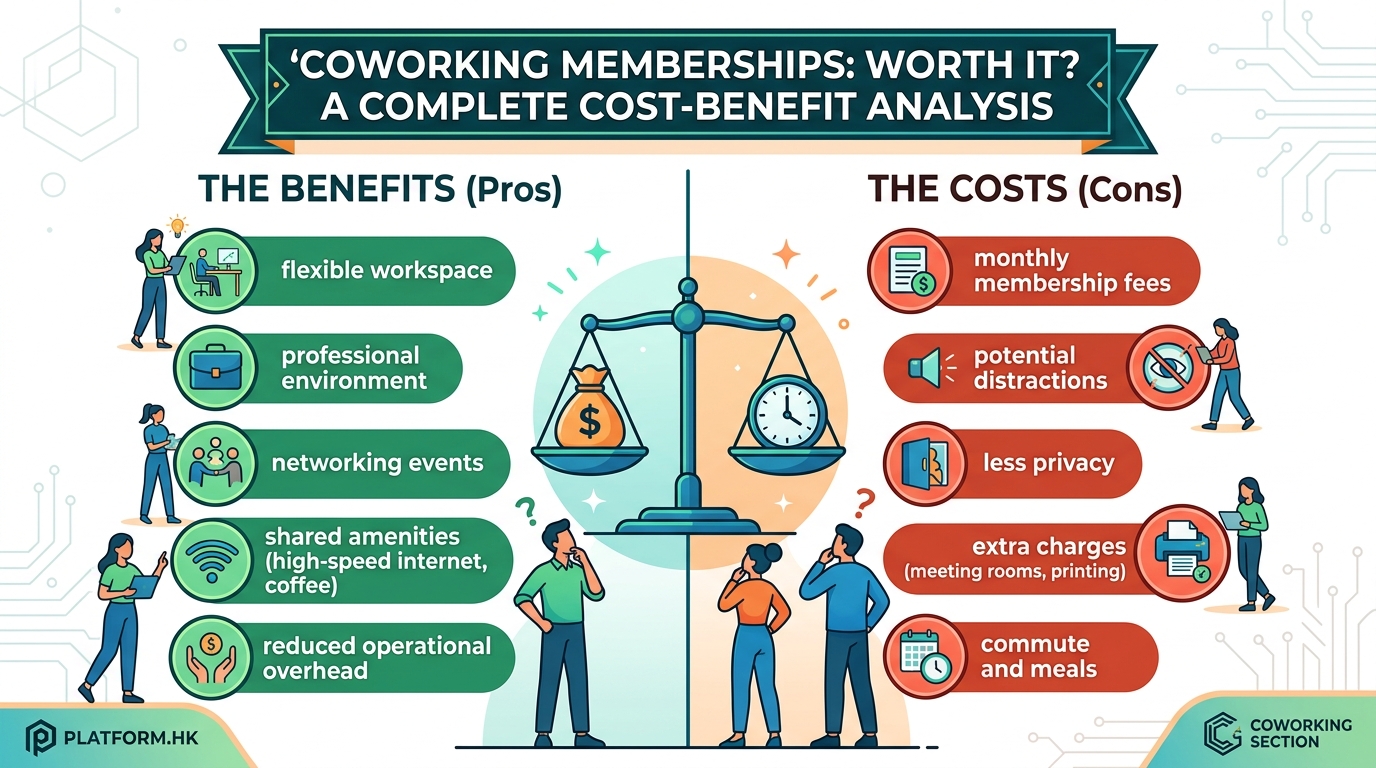
Strip away the marketing fluff and coworking spaces deliver three core benefits: infrastructure, community, and credibility.
Infrastructure means reliable internet that doesn’t drop during client calls. It means a printer that works. Coffee that’s already made. Climate control you don’t pay to run 24/7 at home. Ergonomic chairs that won’t wreck your spine.
Calculate what you’re spending now on home office upgrades. A decent desk chair costs $300 to $800. A standing desk runs $400 to $1,200. Business-grade internet with upload speeds for video calls adds $20 to $50 monthly over residential plans.
If you’re meeting clients at coffee shops, you’re buying $6 lattes as rent. Three meetings per week at $6 each totals $72 monthly. Do that for a year and you’ve spent $864 on table space and bathroom access.
Community sounds touchy-feely until you land a client through a casual conversation at the coffee station. Or troubleshoot a technical problem in five minutes instead of spending two hours on Google.
Remote workers report loneliness as their biggest challenge. Having people around, even if you don’t become best friends, changes your mental state. You dress like a professional. You show up on time. You take actual lunch breaks instead of eating over your keyboard.
Credibility matters more than people admit. Listing a professional business address beats using your home address on invoices and contracts. Some coworking spaces let you use their address for LLC registration. Meeting clients in a conference room projects competence. Hosting them in your living room does not.
The productivity question everyone asks
Here’s the uncomfortable truth: coworking spaces don’t automatically make you productive. They just remove certain obstacles.
If you’re disciplined at home, you might resent commuting 20 minutes each way to sit at a different desk. That’s 40 minutes daily, or 160 hours yearly, you could spend working or living.
But if your home is full of distractions, a coworking space forces boundaries. You can’t throw in laundry between meetings. Your kids can’t interrupt. Your roommate’s gaming session won’t bleed through the wall during client calls.
Three factors determine whether coworking boosts your output:
-
Your work style: Do you need absolute silence or energizing background buzz? Some people focus better with ambient noise. Others need library-quiet conditions. Visit spaces during your typical work hours to test the vibe.
-
Your discipline level: Can you create structure at home, or do you need external accountability? Be honest. Some people thrive with total autonomy. Others need the social pressure of others working nearby.
-
Your work type: Are you on video calls all day or doing deep focus work? If you’re constantly in meetings, you’ll need regular access to private rooms. If you’re coding or writing, a hot desk works fine.
Track your billable hours for two weeks at home. Then try a coworking day pass and track again. The difference tells you whether the environment shift actually helps.
Calculating your break-even point

Math makes this decision clearer. Let’s build a simple comparison table.
| Expense Category | Working from Home | Coffee Shops | Coworking Space |
|---|---|---|---|
| Workspace cost | $0 | $0 | $250/month |
| Internet upgrade | $30/month | $0 | Included |
| Coffee/food | $50/month | $300/month | Included |
| Utilities increase | $40/month | $0 | $0 |
| Furniture/equipment | $100/month* | $0 | Included |
| Meeting space rental | $80/month** | $150/month** | Included |
| Total monthly | $300 | $450 | $250 |
Amortized over 12 months for $1,200 in home office setup
*Based on two client meetings monthly
Your numbers will differ. A parent with young kids at home might save 10 hours weekly in recovered focus time. At $50 per billable hour, that’s $2,000 monthly in additional revenue. Suddenly a $400 coworking membership becomes a bargain.
A night owl who works best from 10 PM to 2 AM gets zero value from a 9-to-5 coworking space. The math doesn’t work.
When coworking makes perfect sense
Certain situations tilt heavily toward coworking memberships.
You’re launching a business and need credibility fast. Operating from a recognized business address signals legitimacy to clients, vendors, and investors. It separates your personal life from your business legally and practically.
Your home situation actively prevents work. Small apartments, noisy roommates, or family obligations make focused work nearly impossible. A coworking membership becomes mental health care as much as office space.
You’re relocating or traveling frequently. Many coworking brands offer networks across cities. A membership in one location grants access to hundreds of others. Digital nomads use this to maintain routine while moving between countries.
You need specific amenities you can’t afford alone. Podcast recording booths, photography studios, maker spaces with 3D printers, or event venues for workshops. Sharing these resources makes financial sense.
Your industry clusters in coworking spaces. In some cities, entire professional communities gather in specific spaces. Designers, developers, or consultants all working in proximity creates organic collaboration and referral networks.
“I calculated that my coworking membership paid for itself after landing one client through a space connection. Everything after that first project was pure profit. But it took showing up consistently for three months before those relationships formed. It’s not instant networking magic.” — Sarah Chen, Brand Consultant
When working from home beats coworking
Coworking isn’t the right answer for everyone. Plenty of situations favor staying home.
You’ve already invested in a proper home office. If you’ve got the space, equipment, and boundaries established, adding a coworking membership just duplicates costs without adding value.
Your work requires specialized equipment. Musicians with home studios, artists with dedicated spaces, or developers with multi-monitor setups can’t easily replicate their environment elsewhere.
You genuinely prefer solitude. Some people find shared spaces draining rather than energizing. If you’re productive alone and happy that way, don’t fix what isn’t broken.
You’re on a tight budget during business launch. Those first months of freelancing or starting a company are financially precarious. Cutting a $250 monthly expense might mean survival. You can always join later when cash flow stabilizes.
Your clients never visit in person. If all your work happens remotely and you never need meeting space, you’re paying for amenities you don’t use.
The key question: does this membership solve an actual problem you’re experiencing, or does it just sound nice?
Testing before committing
Don’t sign an annual contract on day one. Smart evaluation follows a process:
-
Buy day passes at three different spaces. Spend a full work day at each. Notice the noise levels, desk comfort, internet speed, bathroom cleanliness, and whether the vibe matches your style. One day pass costs $20 to $40 but saves you from a bad long-term commitment.
-
Try a month-to-month membership first. Most spaces offer flexible terms at slightly higher rates. Pay the premium for two months while you evaluate whether you actually show up and benefit. If you’re only using the space once a week, you’re wasting money.
-
Track specific metrics before and after. Don’t rely on feelings. Count billable hours, completed projects, client meetings held, and new connections made. Compare your first month of coworking against your previous month at home. Let data guide the decision.
Some spaces offer free trial days or tours during off-peak hours. Take advantage, but remember that Tuesday at 2 PM feels different than Monday at 9 AM when the space is packed.
The hybrid approach that works for many
You don’t have to choose all or nothing. Many freelancers and remote workers find a middle path.
Part-time memberships let you access spaces two or three days weekly for $100 to $150 monthly. You get the community and credibility benefits while maintaining home flexibility.
Some people buy dedicated desk memberships but only come in for client meetings and collaboration days. They do focused work at home and use coworking for visible professional activities.
Others join during busy seasons and pause during slow months. A consultant might cowork heavily during tax season or project launches, then work from home during summer when business slows.
The hybrid model requires more discipline. You need to actually use the membership on your designated days. It’s easy to let a two-day-per-week plan slip to once weekly, then twice monthly, until you’re barely going but still paying.
Making the decision stick
If you decide coworking is worth it, commit fully for at least three months. That’s long enough to form habits, build relationships, and see productivity changes.
Show up consistently at similar times. Regularity helps you meet the same people and establish routines. Popping in randomly means you’ll always feel like a visitor.
Participate in community events even if networking feels uncomfortable. The value compounds over time as relationships deepen. Someone you chat with casually today might refer a major client next quarter.
Reassess every six months. Your business changes. Your needs shift. A membership that made perfect sense when you started might become unnecessary as you grow and hire team members who work remotely.
If you decide coworking isn’t worth it, that’s equally valid. Cancel without guilt and redirect that money toward tools, training, or marketing that better serve your goals.
Finding value beyond the balance sheet
The spreadsheet tells part of the story. The rest is harder to quantify.
Working from home in pajamas sounds appealing until you realize you haven’t left the house in four days. The mental separation of commuting to a workspace, even a short trip, creates psychological boundaries that protect your personal life.
Some people report better sleep when they stop working in the same room where they sleep. Others find they actually take weekends off instead of constantly checking email because work happens “at the office” now.
The accountability of other people working nearby pushes some folks to start on time and stay focused. It’s harder to fall down a YouTube rabbit hole when someone might glance at your screen.
These soft benefits don’t show up in cost comparisons. They matter anyway.
Are coworking spaces worth it? The answer depends entirely on your specific situation, work style, and what you’re comparing against. Run the numbers honestly. Test the environment thoroughly. Then make a decision based on data rather than how cool the space looks on Instagram.
Your perfect workspace might be a bustling coworking hub, a quiet home office, or something in between. The only wrong choice is paying for something you don’t actually use or need.