Private Office vs Hot Desk vs Dedicated Desk: Which Workspace Solution Fits Your Needs?
Choosing the right workspace can make or break your productivity. You need a spot that fits your budget, supports your work style, and helps you get things done without constant distractions. But the coworking world throws three main options at you: private offices, hot desks, and dedicated desks. Each one serves different needs, and picking the wrong one can leave you frustrated or overspending.
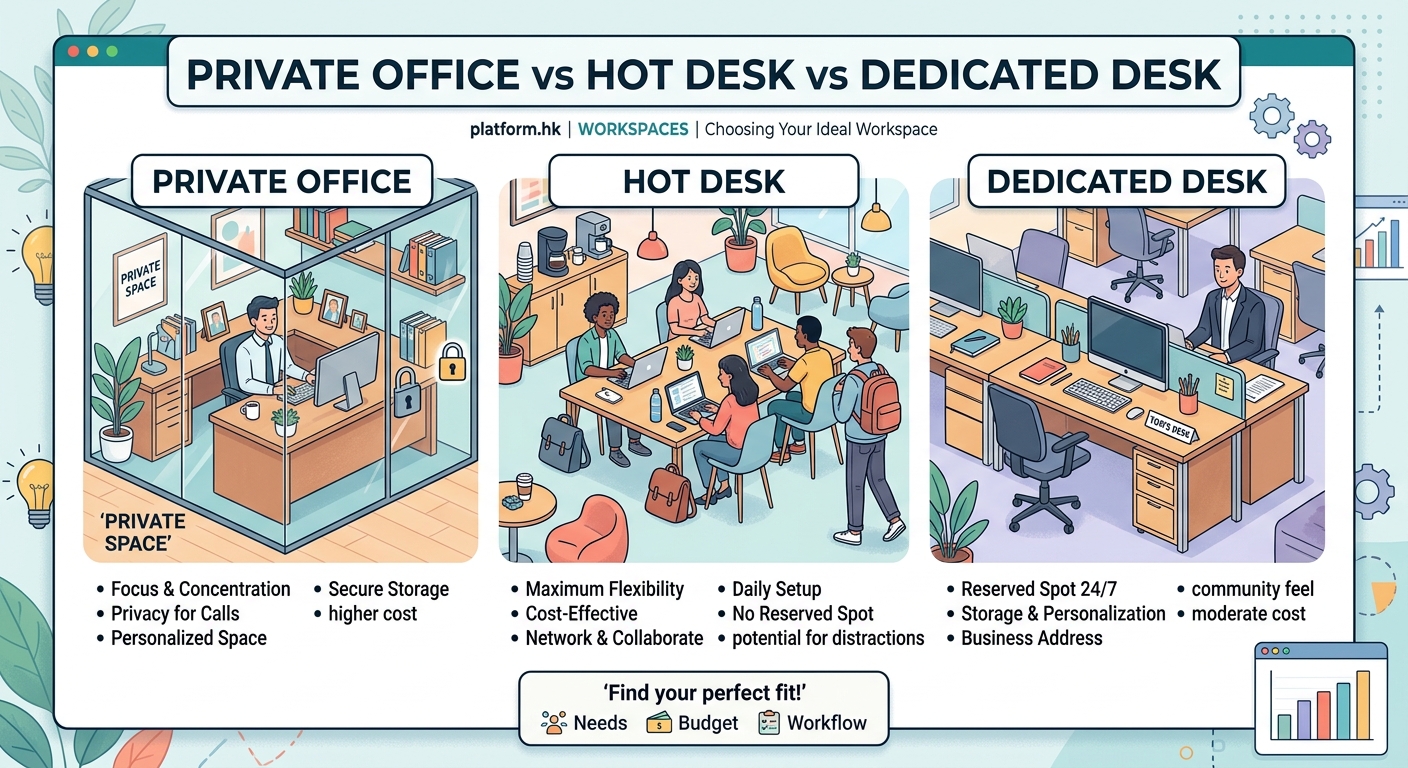
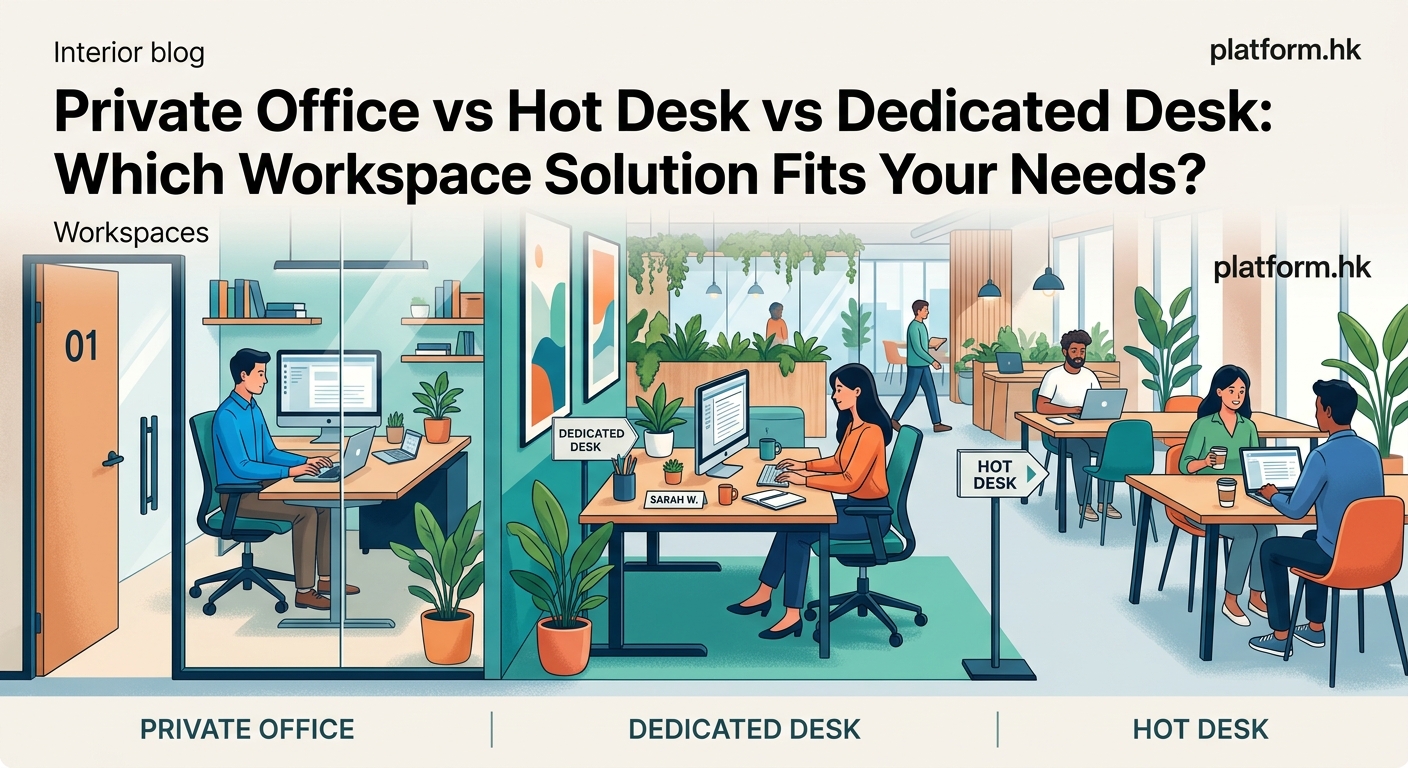
Private offices offer enclosed spaces with maximum privacy and cost more. Hot desks provide flexible seating on a first-come basis at the lowest price. Dedicated desks give you a permanent spot in a shared area with moderate pricing. Your choice depends on your need for privacy, budget constraints, team size, and how often you work from the space.
Understanding each workspace type
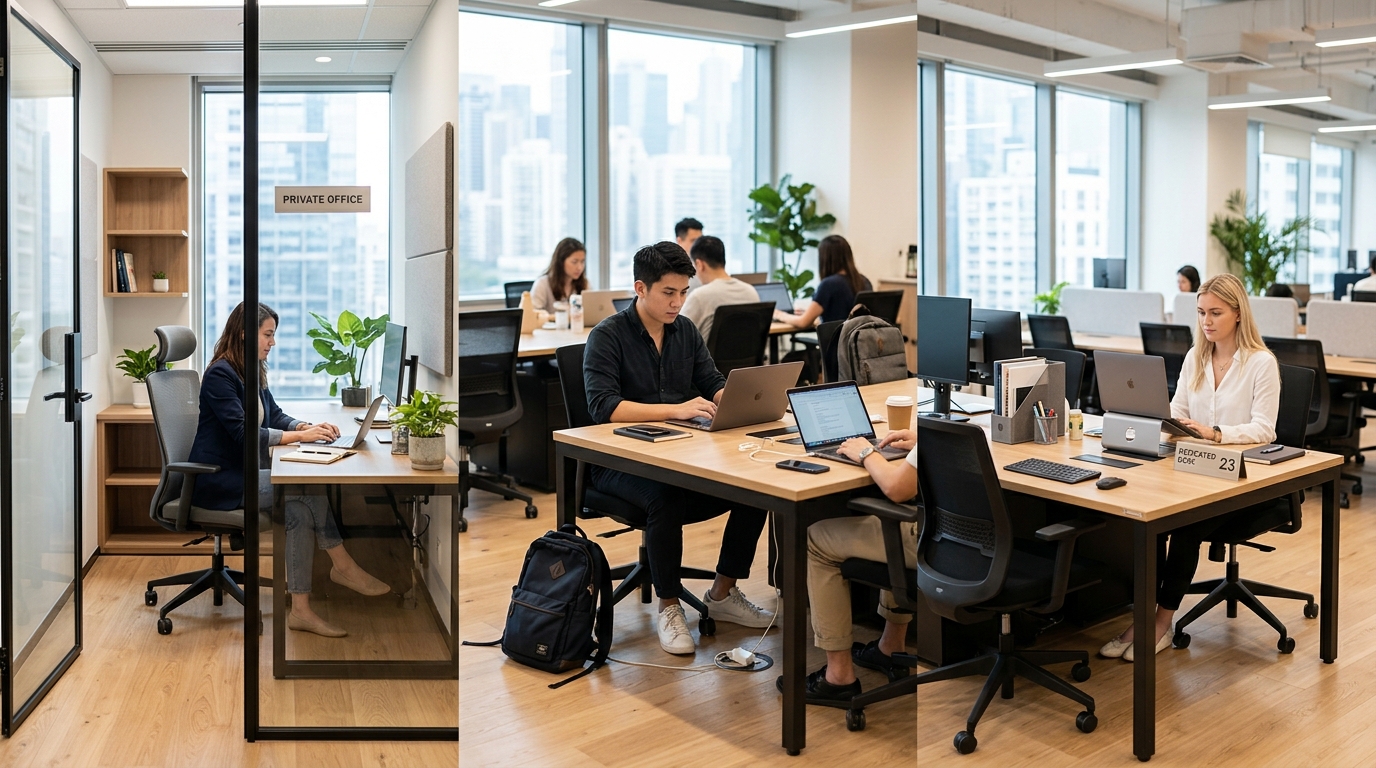
Private offices are fully enclosed rooms with walls and a door. You get complete control over who enters, how the space looks, and what equipment you keep inside. These spaces typically accommodate one to six people, depending on the size you rent.
Hot desks operate on a drop-in model. You show up, grab any available desk in the common area, and work for the day. Tomorrow you might sit somewhere else. Nothing stays at the desk overnight, so you pack up everything when you leave.
Dedicated desks give you a permanent workstation in a shared space. Your desk stays yours every day, and you can leave personal items, monitors, and supplies there. But you still share the room with other professionals who have their own dedicated spots.
Breaking down the cost differences
Price varies significantly across these three options. Understanding the financial commitment helps you budget properly and avoid surprises.
Hot desks cost the least because you share resources with everyone. Most coworking spaces charge between $100 and $300 per month for hot desk access. Some offer day passes ranging from $20 to $50 if you only need occasional access.
Dedicated desks typically run $250 to $600 monthly. You pay more for the guarantee that your spot stays yours, plus the convenience of leaving your setup intact.
Private offices represent the premium tier. Expect to pay $500 to $1,500 per month for a single-person office. Larger offices for teams can reach $3,000 or more depending on location and amenities.
| Workspace Type | Monthly Cost Range | Best For | Privacy Level |
|---|---|---|---|
| Hot Desk | $100 – $300 | Occasional users, extreme budget constraints | Low |
| Dedicated Desk | $250 – $600 | Regular users who need consistency | Medium |
| Private Office | $500 – $1,500+ | Teams, confidential work, client meetings | High |
Privacy and noise considerations
Privacy needs shape your workspace choice more than most people realize. If you handle sensitive client calls, confidential documents, or proprietary information, a hot desk creates problems. Anyone walking by can overhear conversations or glance at your screen.
Dedicated desks improve privacy slightly. You control your immediate area and can position monitors away from foot traffic. But you still work in an open environment where sound travels freely.
Private offices solve privacy concerns completely. You close the door during calls, lock up documents, and control who sees your work. This matters tremendously for lawyers, therapists, financial advisors, and anyone handling personal client information.
Choose your workspace based on your worst-case privacy scenario, not your average day. One leaked client conversation can damage your reputation permanently, making the extra cost of a private office worth every dollar.
Noise levels follow similar patterns. Hot desks expose you to every conversation, phone call, and meeting happening nearby. Some people thrive in this energy. Others find it impossible to concentrate.
Dedicated desks offer the same noise environment as hot desks. You might build familiarity with your neighbors, which can reduce disruptions as everyone learns each other’s schedules and preferences.
Private offices let you control your sound environment. You can take calls without worrying about disturbing others, play music, or enjoy complete silence.
Flexibility and commitment terms
Hot desks offer maximum flexibility. Most spaces let you pay monthly with no long-term contract. You can stop anytime if your needs change. This works perfectly for freelancers testing out coworking or people who travel frequently.
Dedicated desks usually require a three to six month commitment. Spaces need this guarantee because they reserve your specific desk and remove it from their hot desk inventory.
Private offices often demand six to twelve month leases. The longer commitment reflects the higher value of the space and the setup costs involved. Some boutique coworking spaces offer month-to-month private offices, but expect to pay a premium for that flexibility.
Team dynamics and collaboration
Your team size and structure heavily influence which option makes sense. Solo freelancers have different needs than growing startups.
Hot desks work well for solopreneurs who occasionally collaborate with others. You can book a meeting room when needed and otherwise work independently. The rotating seating actually helps you meet diverse professionals, which can lead to referrals and partnerships.
Dedicated desks suit small teams of two or three people who want to sit together daily. Many coworking spaces let you reserve adjacent dedicated desks, creating a mini team zone within the larger shared area.
Private offices become necessary when your team reaches four or more people. You need space for team discussions, brainstorming sessions, and the inevitable spontaneous conversations that drive projects forward. Trying to coordinate multiple dedicated desks creates logistical headaches and still leaves you without a private meeting space.
Professional image and client meetings
How you present yourself to clients matters. Your workspace choice communicates volumes about your business before you say a word.
Hot desks make client meetings challenging. You cannot guarantee a professional, quiet space for discussions. Most people using hot desks book conference rooms for client meetings, which adds extra costs and scheduling complexity.
Dedicated desks improve the situation slightly, but you still meet clients in a busy, shared environment. This works fine for casual industries like creative services or tech, but feels unprofessional for consulting, legal work, or financial services.
Private offices shine for client-facing work. You can brand the space with your logo, display credentials, and create an environment that reflects your professional standards. Clients feel they are meeting with an established business, not someone working from a coffee shop.
Making your decision with a simple framework
Follow these steps to identify your best workspace option:
- Calculate your monthly workspace budget including any meeting room rentals you will need.
- List your privacy requirements based on the most sensitive work you handle regularly.
- Determine how many days per week you need workspace access.
- Count how many team members need to work together in person.
- Assess how often clients or partners visit you for meetings.
Match your answers to these guidelines:
- Budget under $300, work alone, minimal client meetings, flexible schedule: Hot desk
- Budget $250-600, work alone or with one partner, need consistency, occasional meetings: Dedicated desk
- Budget over $500, handle confidential information, regular client meetings, team of two or more: Private office
Storage and equipment needs
What you need to keep at your workspace affects your choice significantly. Hot desks force you to carry everything daily. Laptop, charger, mouse, notebook, and any other tools must fit in a bag. This works fine for minimalist workers but becomes exhausting if you use multiple monitors, specialized equipment, or reference materials.
Dedicated desks let you leave most items in place. Set up your monitors, keyboard, and personal touches once. Some spaces provide lockers for valuable items, while others trust the community environment. You still need to secure laptops and important documents overnight.
Private offices give you complete storage freedom. Bring in filing cabinets, bookshelves, and equipment without worrying about space constraints or security. This matters tremendously for photographers with gear, designers with sample books, or consultants with client files.
The networking factor
Coworking spaces promise networking opportunities, but your workspace type determines how much interaction you actually get.
Hot desks force interaction. You sit next to different people constantly, leading to organic conversations and connections. This randomness can spark unexpected collaborations or referrals. But it also means you cannot control who sits nearby or how much they want to chat.
Dedicated desks create neighborhood dynamics. You develop relationships with the people around you, building deeper professional friendships than hot desk users typically form. But you miss out on meeting the wider community unless you make deliberate efforts to socialize in common areas.
Private offices can isolate you if you are not careful. You need to intentionally join community events, eat lunch in common areas, and keep your door open sometimes. The trade-off for privacy is reduced spontaneous networking.
Scaling your workspace as you grow
Your business will change. Picking a workspace that can adapt with you saves money and hassle down the road.
Starting with a hot desk gives you room to grow. When you are ready, you can upgrade to a dedicated desk at the same location without changing your routine or community connections.
Dedicated desk users can often transition to private offices within the same building. You keep your network and familiarity while gaining privacy and space.
Private office users face different scaling challenges. As your team grows, you need larger offices. Many coworking spaces offer multiple office sizes, letting you move to bigger spaces without leaving the building. But popular spaces may not have larger offices available when you need them, forcing you to plan moves months in advance.
Common mistakes people make
Choosing based solely on price leads to regret. That cheap hot desk stops feeling like a bargain when you cannot concentrate or keep losing productive hours to noise and distractions.
Overestimating your privacy needs wastes money too. If you work in a non-confidential field and rarely meet clients, a private office might give you an empty room that costs three times more than you need.
Ignoring your actual usage patterns creates problems. Some people rent dedicated desks but only show up twice a week. They would save money with a hot desk membership. Others try to make hot desks work while visiting five days a week, when a dedicated desk would provide better value and consistency.
Forgetting about meeting rooms in your budget causes stress. Hot desk and dedicated desk users often need to book conference rooms for calls or meetings. Factor in $50 to $200 monthly for meeting room time when comparing total costs.
Finding the workspace that fits your actual life
Stop thinking about the ideal workspace and focus on your real work patterns. Track how you actually work for two weeks. Note when you need silence, when you take calls, how often you meet people, and what equipment you use daily.
Your workspace should support your natural rhythms, not force you to adapt to its limitations. The right choice feels invisible because it just works. The wrong choice creates constant friction that drains your energy and productivity.
Test before committing when possible. Many coworking spaces offer day passes or week-long trials. Spend real working time in each setup before signing a contract. Pay attention to how you feel at the end of the day, not just how the space looks in photos.
Your workspace is not permanent. As your business evolves, your needs will shift. Choose the option that serves you best right now, knowing you can change later. The flexibility of coworking spaces is their greatest advantage, so use it.