How to Evaluate a Workspace Before Signing Your Membership Agreement

Choosing the wrong coworking space can drain your budget and kill your productivity. You might end up in a noisy corner with spotty WiFi, locked into a six-month contract you regret by week two. The good news? A solid evaluation process helps you spot red flags early and find a workspace that actually supports how you work.
Evaluating a coworking space requires testing the physical environment, reviewing membership terms carefully, and assessing community fit. Visit during your typical work hours, compare pricing structures across multiple spaces, check contract flexibility, and talk to current members. A thorough evaluation prevents costly mistakes and ensures the space matches your work style, budget, and growth plans.
Start with Location and Commute Reality
Location sounds obvious until you realize how much a bad commute affects your work life. A space that looks perfect online might sit in a neighborhood with terrible parking or require two bus transfers.
Test your commute during actual work hours. Drive or take public transit at 8:30 AM on a Tuesday. Time it. Check parking availability if you drive. Look for nearby coffee shops, lunch spots, and banks. These details matter when you’re working there five days a week.
Consider these location factors:
- Distance from your home or clients
- Public transit access and frequency
- Parking costs and availability
- Safety of the neighborhood at different times
- Proximity to restaurants and services
- Noise levels from surrounding businesses
A space in a trendy district might cost more but save you hours each week. A suburban location might offer free parking but limit your lunch options to fast food chains.
Visit During Your Actual Work Hours
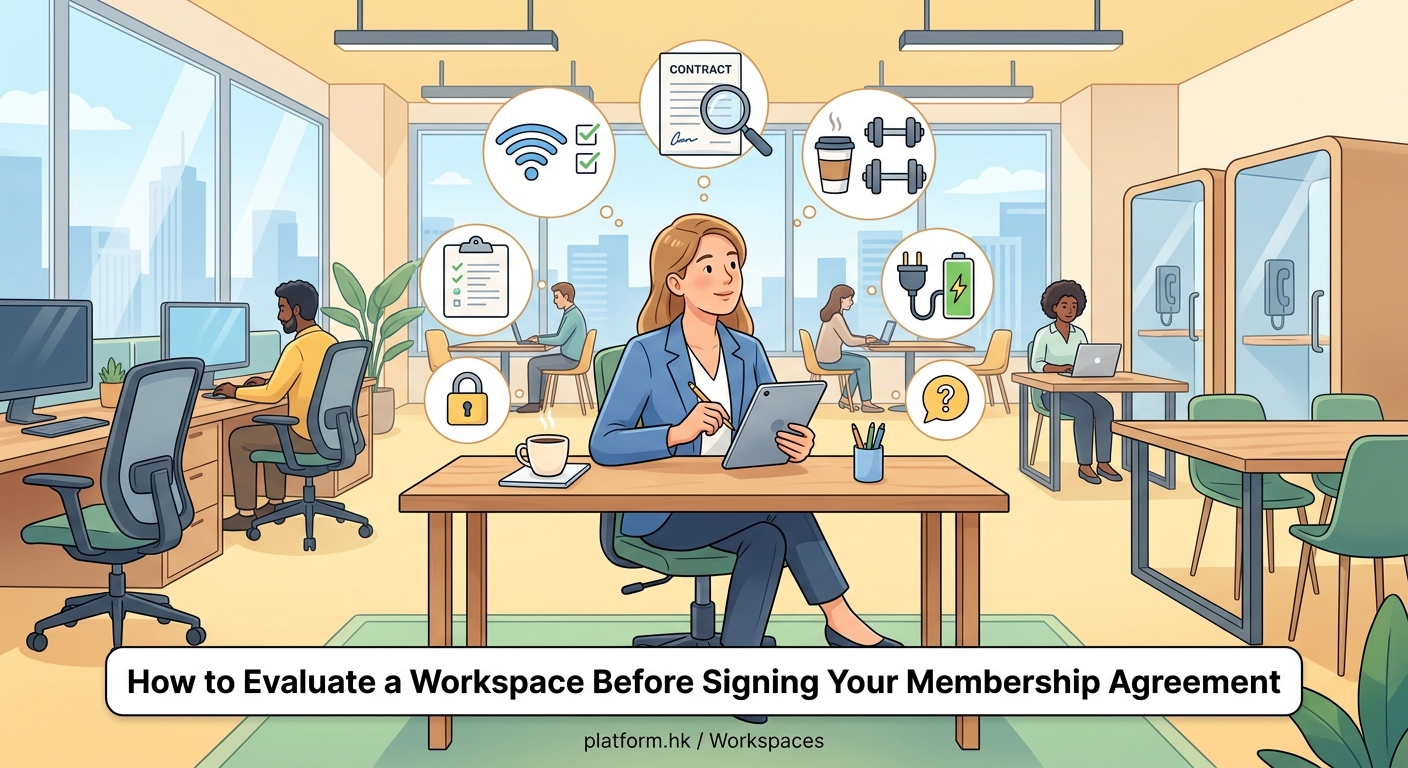
Touring a coworking space at 2 PM on a quiet Wednesday tells you nothing about Monday morning chaos. Spaces transform throughout the day and week.
Book visits during the hours you’d actually work there. If you’re an early bird who starts at 7 AM, show up then. See if the space is even open. Check if other members are there or if you’d be working alone in an empty building.
Pay attention to noise levels during peak hours. That beautiful open floor plan might turn into a call center by 10 AM. Notice how sound travels. Can you hear conversations from across the room? Do phone booths actually block sound?
Test the internet speed yourself. Bring your laptop and connect to their WiFi. Run a speed test. Try uploading a large file or joining a video call. Some spaces advertise high-speed internet but deliver barely functional connections during busy periods.
Assess the Physical Workspace Options
Different work styles need different setups. A graphic designer needs desk space for dual monitors. A consultant who takes calls all day needs reliable phone booth access.
Look at what’s actually available:
- Dedicated desks vs. hot desks and their availability
- Private office options for teams or sensitive calls
- Meeting room sizes and booking systems
- Phone booths and their typical wait times
- Quiet zones for focused work
- Collaboration areas for team projects
Sit at a few desks. Check the chair quality. Bad ergonomics lead to back pain fast. Look at desk sizes. Will your laptop, monitor, notebook, and coffee mug actually fit?
Check the lighting. Harsh fluorescent lights cause headaches. Insufficient natural light makes spaces feel like caves. Notice if you can control desk lamps or window blinds.
Examine Amenities and Their Real Value
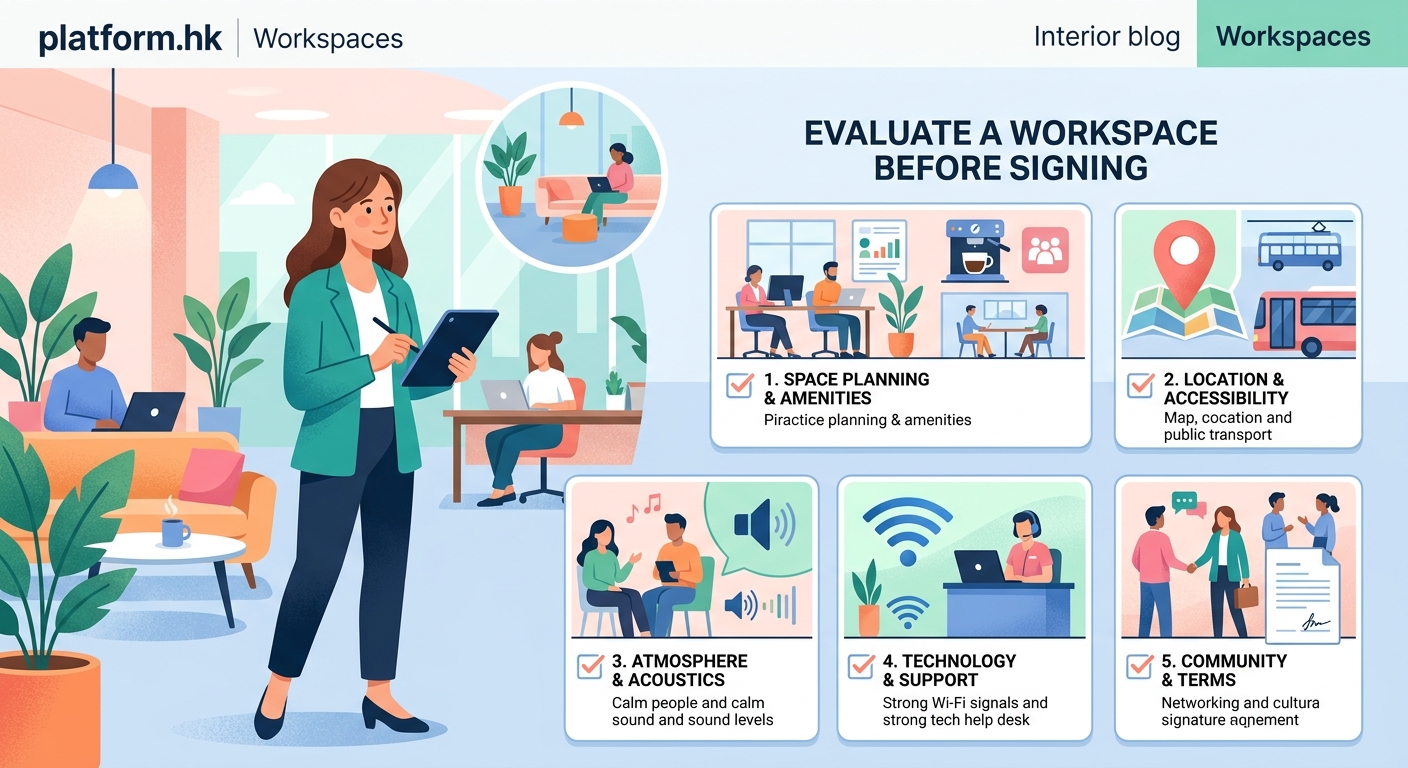
Coworking spaces love listing amenities. Free coffee sounds great until you taste it and realize it’s the cheapest bulk option available. A fully stocked kitchen means nothing if the fridge is always full and you can’t find space for your lunch.
Here’s a comparison of common amenities and their actual value:
| Amenity | Advertised Benefit | Reality Check |
|---|---|---|
| Free coffee | Unlimited drinks | Quality varies; might be undrinkable |
| Printing services | Included in membership | Often limited pages or charged per page |
| Meeting rooms | Available when needed | Require advance booking; popular times fill fast |
| Kitchen facilities | Store and prepare meals | Fridge space limited; dishes pile up |
| Mail handling | Professional business address | May charge extra for package acceptance |
| Event space | Networking opportunities | Events might not match your industry |
Ask about usage limits. “Unlimited printing” often means 50 pages per month. “24/7 access” might exclude holidays. “Free meeting rooms” could mean two hours per month.
Test amenities during your visit. Make a coffee. Check if the printer works. Look inside the fridge. These small details reveal how well the space maintains its facilities.
Review Membership Terms and Hidden Costs
The advertised monthly rate rarely tells the full story. Setup fees, deposits, and usage charges add up fast.
Get clear answers on these costs:
- Security deposit amount and refund terms
- Setup or onboarding fees
- Guest pass costs and limits
- Additional charges for meeting room time
- Printing and mailing fees
- Locker or storage rental costs
- Early termination penalties
Read the membership agreement before your tour ends. Don’t wait until signing day. Look for automatic renewal clauses. Check notice periods for cancellation. Some spaces require 60 or 90 days notice, meaning you pay for months after you’ve decided to leave.
“The biggest mistake I see is people focusing only on the monthly rate. They sign up for a great price, then get hit with a $500 deposit, $50 monthly locker fee, and discover they can only use meeting rooms twice a month. Always ask for the total first-year cost including all fees.” – Sarah Chen, Remote Work Consultant
Test the Community and Culture Fit
A coworking space is more than desks and WiFi. You’ll spend significant time around these people. The wrong culture fit makes every day uncomfortable.
Observe current members during your visit. Do they seem focused or distracted? Are people chatting constantly or working quietly? Notice the age range and industries represented. A space full of sales teams making cold calls won’t suit someone who needs silence for writing.
Ask to speak with current members. Most spaces will introduce you to someone. Ask honest questions:
- How responsive is management to issues?
- Do networking events feel forced or natural?
- Is the community supportive or cliquey?
- How often do amenities break down?
- Would they renew their membership?
Check online reviews but take them with context. One angry review about a billing issue might not reflect the overall experience. Multiple complaints about the same problem signal a real issue.
Compare Flexibility and Growth Options
Your needs will change. A hot desk works great now, but what happens when you hire someone? Can you upgrade to a dedicated desk or small office without breaking your lease?
Understand the space’s flexibility:
- Can you upgrade or downgrade membership levels?
- What’s the process and timeline for changes?
- Are there penalties for switching plans?
- Can you pause membership for travel or slow seasons?
- Do they offer day passes if you need occasional access after leaving?
Some spaces lock you into rigid contracts. Others let you scale up or down monthly. This flexibility matters for freelancers with variable income or small businesses planning to grow.
Ask about their member retention rate. High turnover suggests problems. Spaces where members stay for years indicate satisfaction and stability.
Evaluate Management Responsiveness
Great facilities mean nothing if management ignores problems. A broken air conditioner in summer or malfunctioning door lock creates real issues.
During your visit, test their responsiveness. Ask a question via their contact form or chat system. See how long they take to respond. Notice how staff interact with current members. Are they friendly and helpful or dismissive?
Check if they have dedicated community managers. Large spaces often have someone focused on member experience. Smaller operations might have one person handling everything, leading to slower response times.
Look for signs of good management:
- Clean, well-maintained facilities
- Working equipment and amenities
- Clear communication about events and changes
- Responsive staff during your visit
- Organized booking systems
- Regular updates and improvements
Poor management shows up in small ways. Overflowing trash bins. Broken chairs left unfixed. Outdated information on bulletin boards. These details reveal how much they care about member experience.
Check Insurance and Liability Terms
Most people skip this part. Don’t. Understanding liability and insurance protects you from unexpected costs.
Confirm what insurance the space carries. Do they have liability coverage if someone trips and gets injured during your client meeting? What happens if your equipment gets stolen from your dedicated desk?
Review what you’re responsible for insuring. Many membership agreements require you to carry your own insurance for equipment and liability. If you’re running a business from the space, your homeowner’s or renter’s insurance might not cover it.
Ask about security measures. Are there cameras? Who has access to the building after hours? How secure are lockers and storage areas? These questions aren’t paranoid; they’re practical.
Make Your Decision with Clear Criteria
After visiting multiple spaces, the options blur together. Create a simple scoring system to compare objectively.
Rate each space on factors that matter to you:
- Location and commute (1-10)
- Workspace quality and options (1-10)
- Amenities and their condition (1-10)
- Total monthly cost including fees (1-10)
- Community and culture fit (1-10)
- Contract flexibility (1-10)
- Management responsiveness (1-10)
Total the scores. The highest number isn’t automatically the winner, but it helps clarify which space meets most of your needs.
Trust your gut too. If a space checks all boxes but feels wrong, that instinct matters. You’ll be spending hours there every week. Comfort and fit affect your productivity and happiness.
Finding Your Workspace Match
Evaluating a coworking space takes time, but it’s time well spent. A thorough assessment now prevents months of frustration and wasted money later. Visit during real work hours, test everything yourself, read contracts carefully, and talk to current members. The perfect space exists, you just need to know what questions to ask and what red flags to watch for. Start your evaluation process this week, and you’ll be working in a space that actually supports your goals.