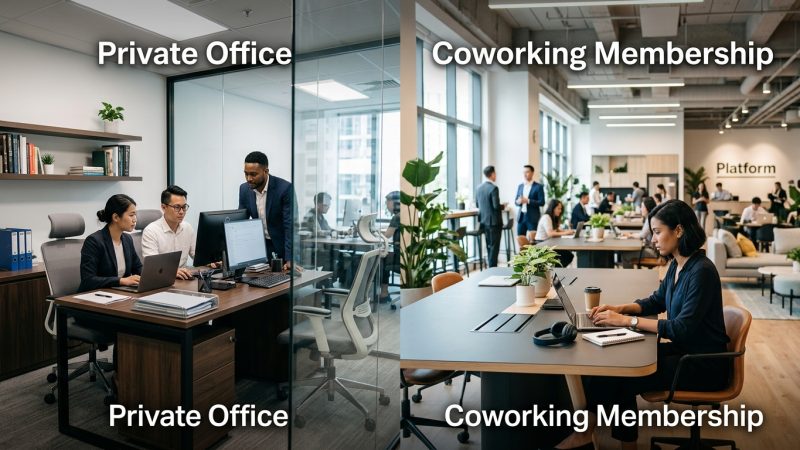
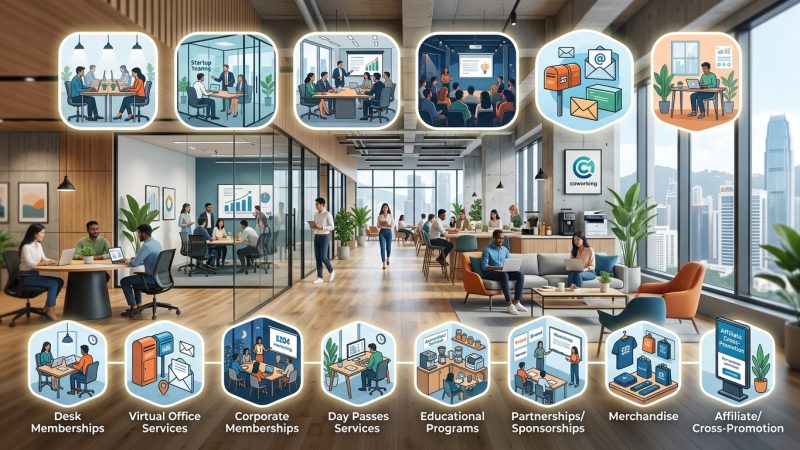
Why Traditional Office Leases Are Becoming Obsolete for Startups

Signing a three-year office lease felt like the right move for Sarah’s SaaS startup. Six months later, her team went remote, and she was stuck paying $8,000 monthly for empty desks. That expensive lesson taught her what many founders learn too late: traditional leases weren’t built for how startups actually grow.
Traditional office leases lock startups into rigid, multi-year contracts with high upfront costs and zero flexibility. Flexible office spaces offer month-to-month terms, all-inclusive pricing, and the ability to scale up or down instantly. For companies prioritizing cash flow and agility, flexible spaces eliminate the financial risk and operational burden of conventional leases while providing professional environments ready from day one.
The hidden costs traditional leases don’t advertise
Most founders see the monthly rent figure and think they understand the total cost. They don’t.
Traditional office leases come with a stack of expenses that never appear in the advertised rate. Security deposits typically equal three to six months of rent. That’s $24,000 to $48,000 upfront for a modest 2,000 square foot space at $4 per square foot.
Then comes the buildout. Empty commercial space needs desks, chairs, conference rooms, kitchen equipment, and technology infrastructure. Budget another $50 to $150 per square foot for basic furnishings and setup. You’re looking at $100,000 to $300,000 before anyone sits down to work.
Utilities, internet, cleaning services, maintenance, and insurance add 20% to 30% on top of base rent. A $6,000 monthly lease becomes $7,800 when you factor in the real operational costs.
Here’s what catches founders off guard:
- Property taxes often passed through to tenants
- Common area maintenance fees that fluctuate yearly
- HVAC repairs and replacements
- Pest control and regular maintenance
- Liability insurance requirements
- Technology upgrades and IT infrastructure
- Reception or front desk staffing
Flexible office spaces bundle everything into one predictable monthly fee. No surprise bills. No vendor management. No negotiating with the landlord about who pays for the broken air conditioner.
Why three-year commitments kill startup agility
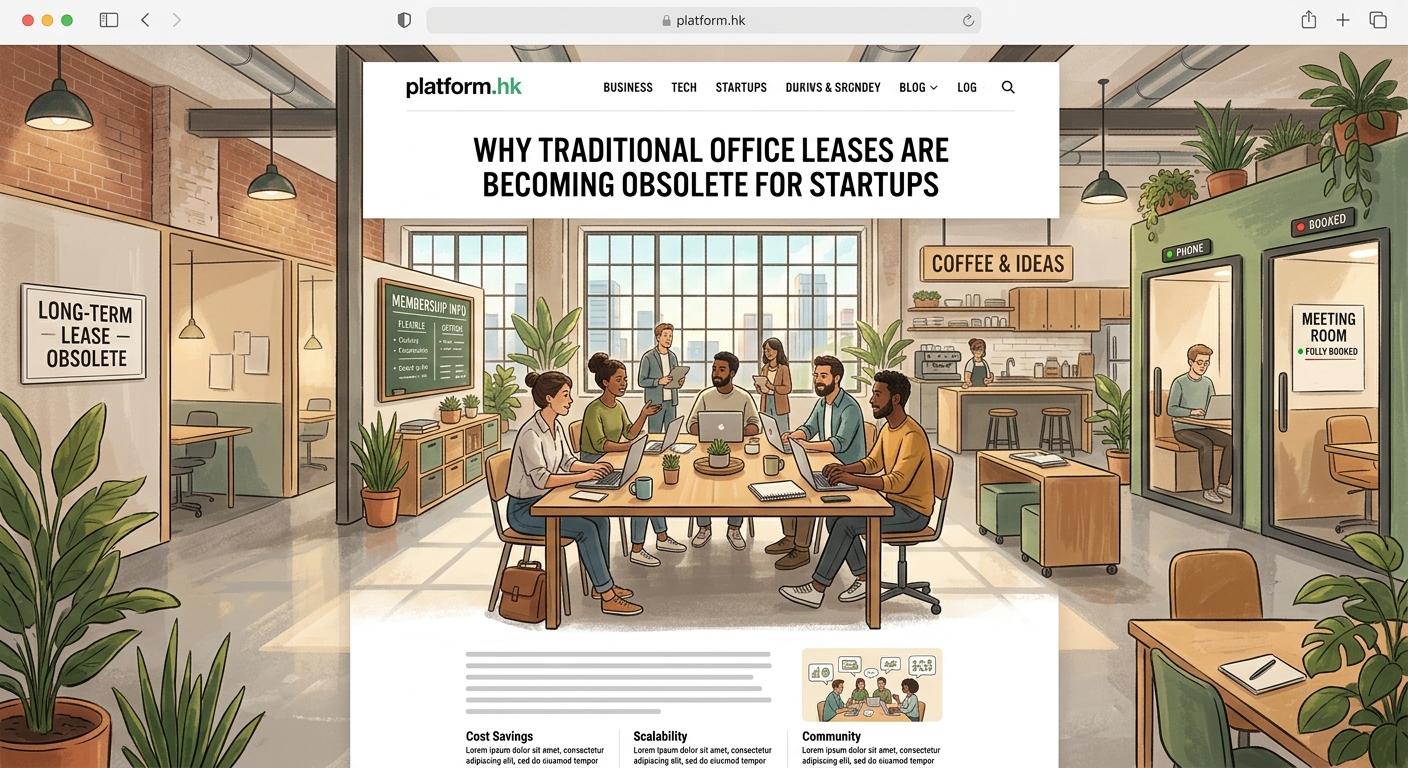
Startups change fast. Teams double in six months or shrink after a pivot. Product market fit remains elusive for most companies in year one.
Traditional leases demand you predict your space needs three to five years out. That’s impossible when you’re still figuring out your business model.
Consider these common scenarios:
- You sign a lease for 10 people, planning to grow to 30
- Your product launch underperforms and you stay at 8 people for two years
- You’re paying for 20 empty desks while burning through runway
Or the opposite happens. You go viral, hire 40 people in four months, and your lease won’t let you expand until year three. Now you’re splitting teams across multiple locations or turning away talent because you have nowhere to seat them.
Breaking a traditional lease costs serious money. Early termination penalties range from six months to the full remaining term. That $6,000 monthly space could cost you $72,000 to exit with two years left.
Flexible spaces let you add desks this month and drop them next month. No penalties. No negotiations. Just email your space provider and adjust.
The real difference in how you pay
Let’s compare actual numbers for a 15-person startup in a major city.
| Cost Category | Traditional Lease | Flexible Office Space |
|---|---|---|
| Monthly base cost | $7,500 | $12,000 |
| Security deposit | $22,500 | $12,000 |
| Buildout costs | $125,000 | $0 |
| Utilities & internet | $800/month | Included |
| Furniture | $35,000 | Included |
| Cleaning service | $600/month | Included |
| Conference rooms | Limited to your space | Access to multiple rooms |
| First year total | $228,300 | $144,000 |
| Commitment period | 36 months minimum | Month to month |
The traditional lease looks cheaper monthly but costs $84,300 more in year one. And that’s assuming nothing goes wrong, no buildout delays, and your space needs stay exactly the same.
Year two and three flip the math if your team size stays perfectly stable. But how many startups maintain the exact same headcount for three years straight?
The flexibility premium pays for itself in reduced risk. You’re not gambling on your growth trajectory. You’re buying the ability to adapt.
What you actually get with flexible spaces
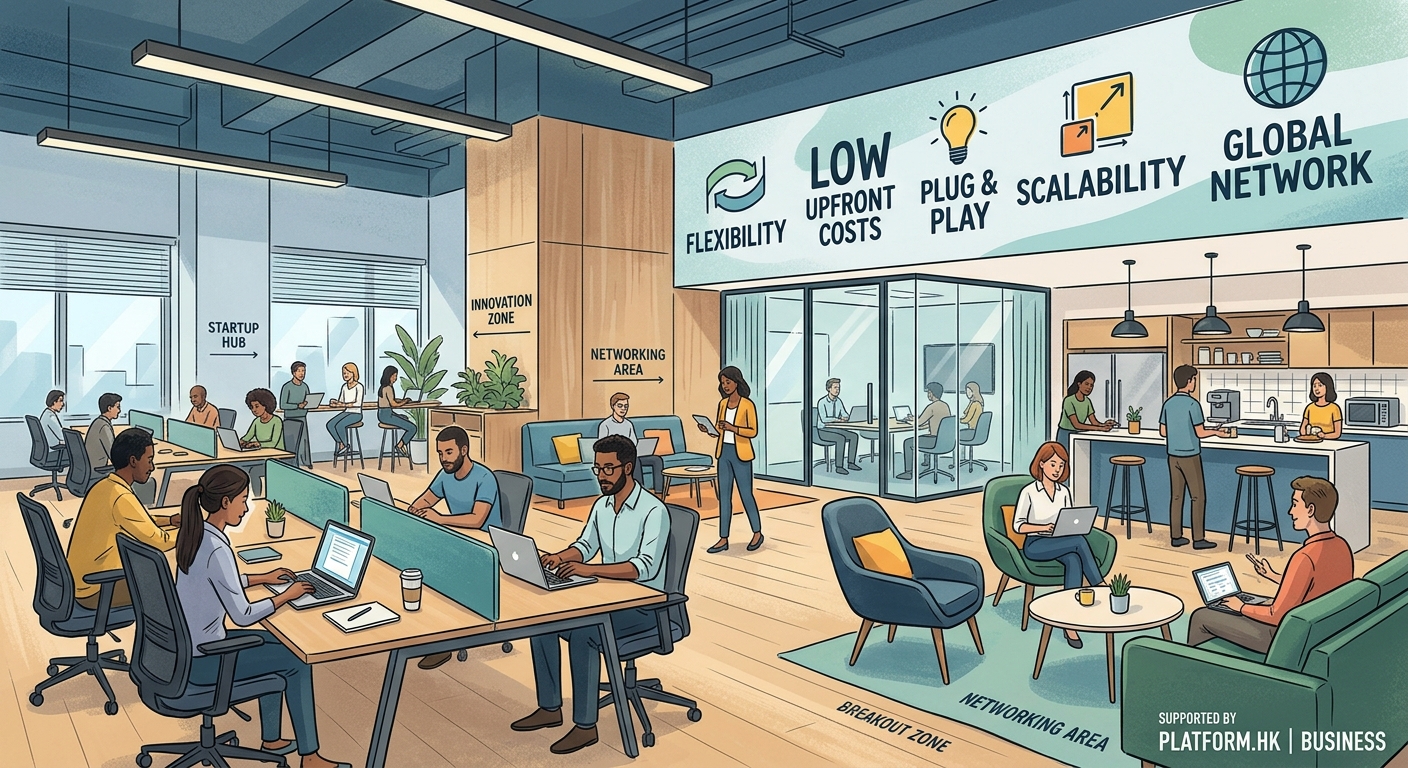
Walking into a flexible office space on day one means your team starts working immediately. Desks are there. Internet works. Coffee is brewing. Conference rooms are bookable through an app.
Compare that to traditional leases where you spend two to four months managing contractors, ordering furniture, setting up internet, and dealing with building management before your first employee sits down.
Flexible spaces include amenities that would cost thousands to replicate:
- Professional reception and mail handling
- Multiple conference rooms with video equipment
- Phone booths for private calls
- Kitchen facilities with coffee and snacks
- Printing and office supplies
- 24/7 building access
- Regular cleaning and maintenance
- Community events and networking
These aren’t luxuries. They’re table stakes for attracting talent who’ve worked at companies with proper office infrastructure.
Your team also gains access to a professional business address. That matters when you’re pitching enterprise clients who might hesitate if your LLC lists a residential apartment.
When traditional leases actually make sense
Flexible spaces aren’t always the right answer. Some situations genuinely favor traditional leases.
Companies with 50+ employees who’ve maintained stable growth for multiple years can benefit from the lower per-desk cost of traditional space. If you’re confident about your three-year headcount, the upfront investment pays off.
Businesses needing highly specialized buildouts, like medical practices or manufacturing operations, require custom spaces that flexible offices can’t provide. You need to own your improvements.
“We stayed in flexible space for our first three years and 40 employees. When we hit consistent $10M ARR and knew we’d be 75+ people within 18 months, signing a traditional lease made financial sense. But not a day before we had that certainty.” – Former CTO, B2B software company
Companies in smaller markets without quality flexible office options might find traditional leases as their only professional choice. Not every city has the coworking infrastructure of San Francisco or New York.
If your business model requires street-level retail visibility or specific geographic positioning, traditional leases offer location options flexible spaces can’t match.
How to calculate your real break-even point
Stop looking at monthly rent in isolation. Calculate total cost of occupancy.
Here’s the formula:
- Add up all traditional lease costs for year one including deposit, buildout, furniture, monthly rent, utilities, services, and insurance
- Multiply your flexible space monthly rate by 12 and add the deposit
- Divide the difference by your monthly flexible space cost
That number tells you how many months of flexibility you’re buying with the premium.
For most startups, the answer lands between 8 and 18 months of “free” flexibility. You pay the same total amount but get the option to change direction without financial penalty.
Factor in opportunity cost too. That $125,000 buildout budget could fund two senior engineers for six months. Which investment moves your business forward faster?
The questions landlords hope you won’t ask
Traditional lease negotiations favor landlords who do this professionally versus founders signing their first commercial lease.
Ask these questions before signing anything:
- What’s the actual total cost including all fees and pass-throughs?
- Can I see the previous tenant’s final year of operating expenses?
- What happens if I need to expand or contract?
- Who pays for what repairs and when?
- What are the exact early termination terms and costs?
- Are there any pending building assessments or major repairs?
- What’s included in common area maintenance?
Landlords often offer “tenant improvement allowances” that sound generous. Read carefully. These allowances come with strings: longer lease terms, higher base rent, or restrictions on how you use the money.
Everything is negotiable, but only if you know what to negotiate. Most founders don’t, which is why they end up with unfavorable terms.
Why your team might prefer flexible space anyway
Talent acquisition matters more than ever. Engineers and designers have options. They choose companies partly based on work environment.
Flexible spaces typically offer better locations in walkable neighborhoods with restaurants and transit access. Traditional office buildings often sit in cheaper, less convenient areas.
The vibe differs too. Flexible spaces design for collaboration and energy. Traditional offices feel corporate and sterile unless you invest heavily in design.
Your team also values the optionality. Knowing the company can adapt space to actual needs rather than being stuck in an oversized or undersized office creates psychological safety. People see leadership making smart financial decisions.
Some flexible spaces create community across companies. Your developers chat with developers from other startups. Your sales team networks with potential partners. These organic connections rarely happen in isolated traditional offices.
Making the choice that fits your stage
Early stage startups with under 20 people almost always benefit from flexible space. The math works. The flexibility matters. The reduced operational burden lets you focus on building product and finding customers.
Growth stage companies between 20 and 50 employees should evaluate based on growth certainty and cash position. If you’re profitable with predictable expansion, traditional leases become viable. If you’re still fundraising and pivoting, stay flexible.
Mature companies above 50 employees with established business models can optimize for cost efficiency through traditional leases. You’ve earned the stability that makes long commitments sensible.
But even large companies increasingly use flexible space for satellite offices, temporary project teams, or specific departments. The model works at any scale when applied strategically.
Your decision should match your risk tolerance and capital efficiency goals. Optimizing for the lowest possible monthly cost often creates the highest total risk.
Space decisions that match how startups actually grow
The office space you choose today shapes your options tomorrow. Traditional leases bet everything on accurate long-term planning. Flexible spaces bet on your ability to adapt.
Most startups fail not because they picked the wrong office, but because they ran out of money before finding product market fit. Every dollar locked into deposits, buildouts, and rigid commitments is a dollar you can’t spend on customers, product, or team.
Choose the option that keeps the most doors open. You can always sign a traditional lease later when you’ve earned the certainty it requires. You can’t easily escape one when your business needs to change direction fast.
The best office is the one that disappears into the background while your team builds something people want. Everything else is just overhead.