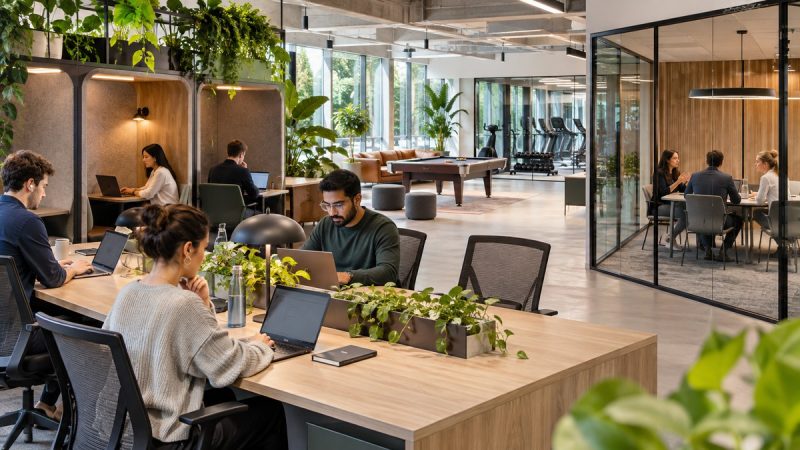
Why Coworking Is the Ultimate Productivity Hack for Solopreneurs in 2026

You are sitting at your kitchen table. Your laptop is open. Your to-do list is a graveyard of half-finished tasks. The laundry is calling. So is the fridge. You tell yourself you will start in five minutes. Three hours later, you have scrolled through social media, answered three non-urgent emails, and somehow feel more tired than when you sat down. Sound familiar? This is the solopreneur trap. You run the whole show. But that also means you are the only one holding yourself accountable. Distraction is your biggest expense. In 2026, the most effective productivity hacks for solopreneurs are not about doing more. They are about building a system that makes focus inevitable.
Solopreneurs in 2026 face a unique challenge: complete autonomy meets endless distraction. The single most effective productivity hack is not a new app or a complicated method. It is changing your environment to one that naturally encourages focus. Coworking spaces provide that environment. Combined with intentional routines, they can double your output without burning you out. This guide shows you exactly how to build that system.
Why Your Home Office Is Failing You
Working from home sounds like a dream. No commute. No dress code. No boss looking over your shoulder. But the reality is different. Your home is full of context switches. The dishes in the sink. The mail on the counter. The comfortable couch that calls you for a nap at 2 PM. Every single one of these things is a tax on your attention.
Research from 2025 and 2026 consistently shows that context switching costs workers up to 40% of their productive time. You are not lazy. You are swimming against a current of environmental triggers designed to pull you away from deep work. The solution is not willpower. Willpower is a limited resource. The solution is to remove the triggers entirely.
This is where a coworking space becomes your most powerful tool. When you walk into a space dedicated to work, your brain switches modes. The couch is not there. The dishes are not there. Your brain says, “We are here to work.” That simple environmental shift is worth more than any productivity app on the market.
The 3 Step Coworking Focus System
Let us get practical. You cannot just show up at a coworking space and expect magic to happen. You need a system. Here is a simple three step process that top solopreneurs use in 2026 to turn a coworking space into a productivity machine.
Step 1: The Arrival Ritual
Do not sit down and open your email. That is a trap. Email is reactive. It puts you in a defensive mode for the rest of the day. Instead, follow this arrival ritual:
- Walk in. Grab a coffee or water.
- Find your spot. A quiet desk away from the high traffic areas.
- Take out a physical notebook. Write down your single most important task for the day. Not three tasks. One.
- Set a timer for 90 minutes.
That is it. The whole ritual takes five minutes. It tells your brain that the day has a clear direction.
Step 2: The Deep Work Block
The 90 minute timer is your best friend. During this block, you do not check your phone. You do not open social media. You do not answer the phone. You work on that one task. If your mind wanders, write the distraction down on a piece of paper and get back to work. The paper acts as a parking lot for stray thoughts.
Step 3: The Reset
After the 90 minutes are up, stand up. Walk around the space. Refill your water. Say hello to someone you recognize. This is not wasted time. This is your brain resetting. Then, if you have energy, set another 90 minute block for a secondary task. If you are tired, stop. You have already done more deep work than most people do in a full day.
Common Productivity Mistakes Solopreneurs Make
Even with a great system, it is easy to fall into traps. Here is a table that outlines three common mistakes and how to fix them using a coworking environment.
| Mistake | Why It Hurts | The Coworking Fix |
|---|---|---|
| Multasking everything | Splits attention, lowers quality of all work | Use the space’s quiet zones to enforce single task focus. |
| Working without breaks | Leads to burnout and decision fatigue | Schedule a 15 minute walk around the block or a chat in the communal kitchen after each block. |
| Isolating completely | Kills motivation and new ideas | Sit in the open area for part of the day. Let ambient energy fuel you. Join a lunch group once a week. |
Building Your Perfect Coworking Routine
Not all coworking spaces are the same. Some are loud and social. Some are library quiet. Some are a mix of both. The key is to match your work style to the space. Here is a bulleted list of questions to ask yourself before you pick a membership:
- Do I need absolute silence for deep writing or coding?
- Do I thrive on the energy of a busy room?
- Do I need private phone booths for client calls?
- Is the commute short enough that I will actually go?
- Does the space offer a day pass so I can test it first?
Once you know your answers, you can choose the right environment. For example, if you are a graphic designer who needs to get into a flow state, a quiet coworking space with dedicated desks might be best. If you are a consultant who needs to network, a more social space with regular events could be a better fit. You can read more about how to evaluate a workspace before signing your membership agreement.
The 3 Digital Tools That Amplify Your Coworking Day
Your environment is set. Your routine is solid. Now, let us talk about the digital layer. In 2026, the best tools are the ones that get out of your way. Here are three that work perfectly with a coworking schedule.
- A Focus Timer App. Use the Pomodoro technique or a custom 90 minute timer. The app should block distracting websites during your focus block. Do not use your phone for this. Use the computer.
- A Task Manager with a “Today” View. Do not look at your whole project list. That is overwhelming. Use a tool that lets you pull just three tasks into a “Today” column. That is your entire focus for the day.
- A White Noise or Ambient Sound App. Coworking spaces have a hum. That hum is good. It covers up distracting conversations. But sometimes you need a little extra sound masking. A good ambient app can help you tune out the world.
What to Do When Motivation Is Low
Even with the perfect setup, some days are hard. You sit down at your desk in the coworking space and your brain feels empty. This is normal. Do not fight it. Instead, use the “five minute rule.”
“On days when you have zero motivation, commit to working on your task for just five minutes. Set a timer. You can stop after five minutes. Almost always, you will keep going. The hardest part is starting.”
This advice from a veteran solopreneur in a 2026 productivity forum is gold. The coworking space helps with the starting part. You have already made the effort to get there. The environment is primed. Now you just need to begin. The five minute rule breaks the mental barrier.
The Cost Benefit of Your Focus
Some solopreneurs hesitate at the cost of a coworking membership. They compare it to the “free” cost of their home office. But your home office is not free. It costs you in lost productivity. Let us look at the math.
A basic coworking membership in a US city in 2026 runs between $150 and $300 per month. A dedicated desk might be $400 to $600. Think about your hourly rate. If you are a freelancer charging $75 per hour, you only need to gain two to four extra hours of focused work per month to break even. That is one solid morning. Most solopreneurs report gaining ten to fifteen hours of productive time per month after switching to a coworking space. That is a massive return on investment. For a more detailed breakdown, see are coworking memberships worth it? a complete cost-benefit analysis.
A Sample Productive Day in a Coworking Space
Let us put it all together. Here is what a highly productive day looks like for a solopreneur using a coworking space in 2026.
- 8:00 AM: Arrive. Do the arrival ritual. Write down the one big task. Set the 90 minute timer.
- 8:05 AM: Deep work block. No phone. No email. Just the task.
- 9:35 AM: Stand up. Walk around. Get water. Chat with a neighbor for two minutes.
- 9:45 AM: Second deep work block. Focus on a secondary task or continue the first one.
- 11:15 AM: Break. Grab a proper coffee. Check messages. Stretch.
- 11:30 AM: Lighter work block. Answer emails. Do admin tasks. Schedule social media.
- 12:30 PM: Lunch. Either bring it or walk to a nearby spot. Do not work through lunch.
- 1:30 PM: Afternoon focus block. This is for creative work or client projects.
- 3:00 PM: Wind down. Review what you accomplished. Plan the next day. Leave.
This schedule uses the natural energy peaks of the day. It respects your need for breaks. It puts deep work first. It is a framework, not a prison. Adjust the times to fit your life.
How to Start Tomorrow
You do not need to overhaul your entire life. Just take one step. Tomorrow morning, do not work from home. Go to a coworking space. Even if you only buy a day pass. Even if you only stay for two hours. Use the arrival ritual. Write down one task. Set the timer. See what happens.
The hidden costs of working from home nobody talks about are real. They drain your energy and your bank account. A coworking space is not an expense. It is an investment in your ability to produce high quality work. It is the ultimate productivity hack because it fixes the root cause of distraction: your environment.
Make the Switch Stick
The first day will feel strange. The second day will feel easier. By the end of the first week, you will wonder why you waited so long. The community in a good coworking space also provides a subtle form of accountability. You see other people working hard. It raises your own standards. You can learn more about [how coworking spaces are revolutionizing networking for introverted freelancers). That sense of shared purpose is hard to replicate at home.
Your business deserves your best focus. You deserve an environment that supports that focus. Do not let another week slip by in the distraction of your home office. Take the step. Find a space. Build your routine. Your productivity in 2026 will thank you.