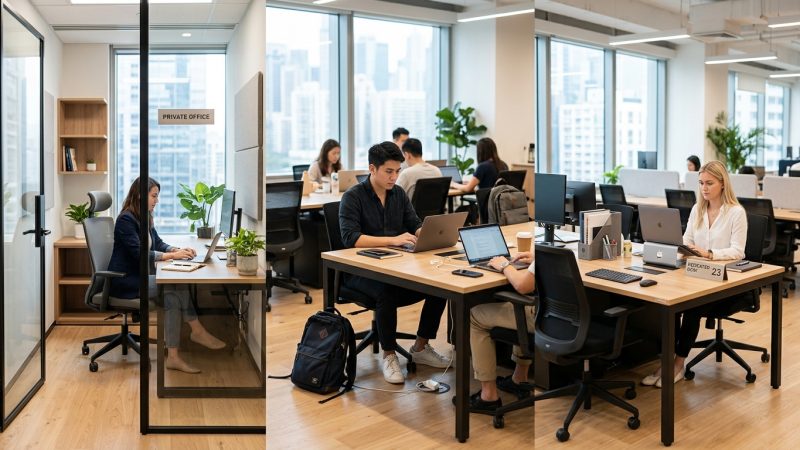
15 Essential Features Every Modern Workspace Should Have in 2026
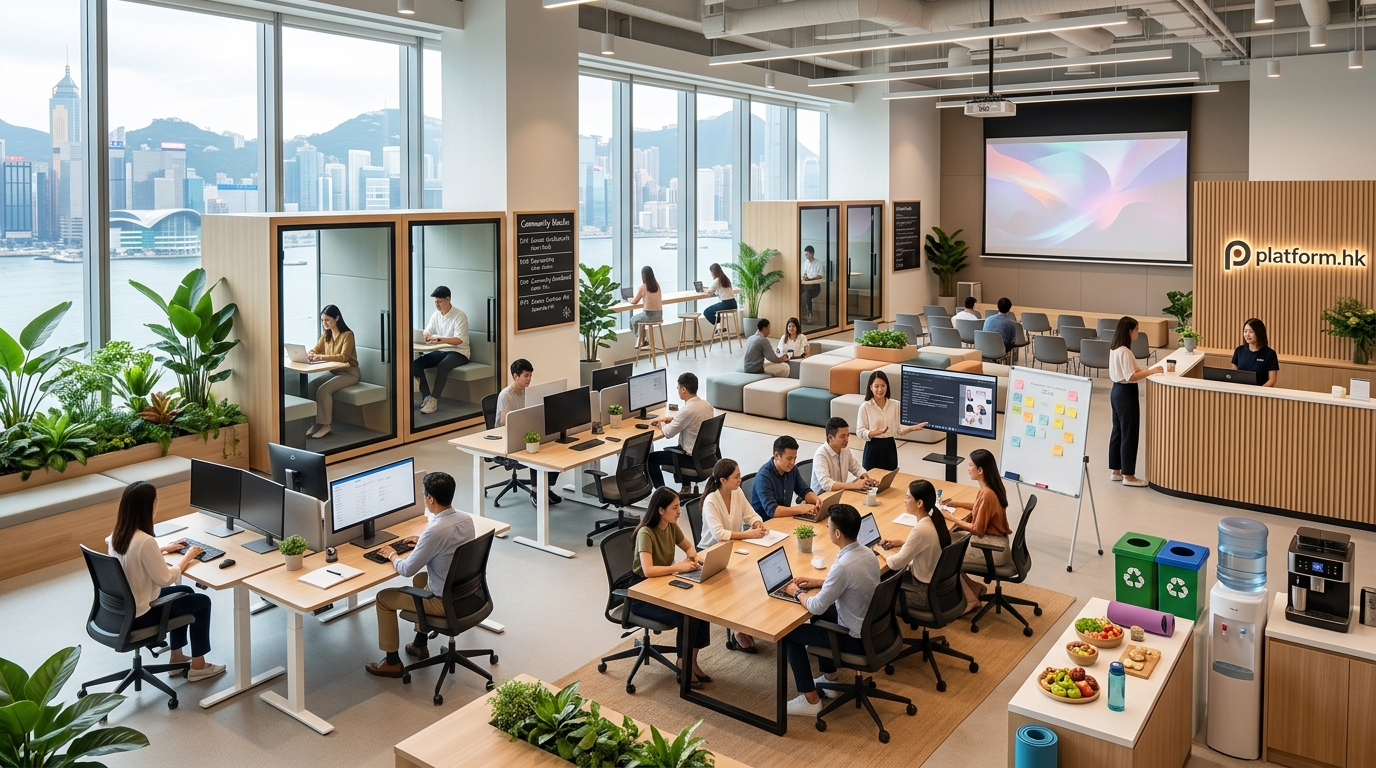
The office is no longer just a place to sit and work. Today’s employees expect spaces that adapt to their needs, support their wellbeing, and make collaboration feel natural. If your workspace still looks like it did five years ago, you’re already behind.
Modern workspace features in 2024 prioritize flexibility, technology integration, and employee wellbeing. The most successful offices combine adaptable furniture, acoustic privacy, [biophilic design](https://en.wikipedia.org/wiki/Biophilic_design), and smart systems. These elements attract top talent, reduce turnover, and create environments where people actually want to work. Implementing even a few of these features can dramatically improve productivity and satisfaction across your team.
The shift to hybrid work changed everything. Employees now compare your office to their home setup, their favorite coffee shop, and the coworking space down the street. You’re competing with all of those options every single day.
This guide covers the 15 essential features that define modern workspaces in 2024. Some require investment. Others just need smart planning. All of them address what employees actually care about when they choose to come into the office.
Flexible furniture that moves with your team
Fixed desks and permanent cubicles don’t match how teams work anymore. Modern offices need furniture that adapts throughout the day.
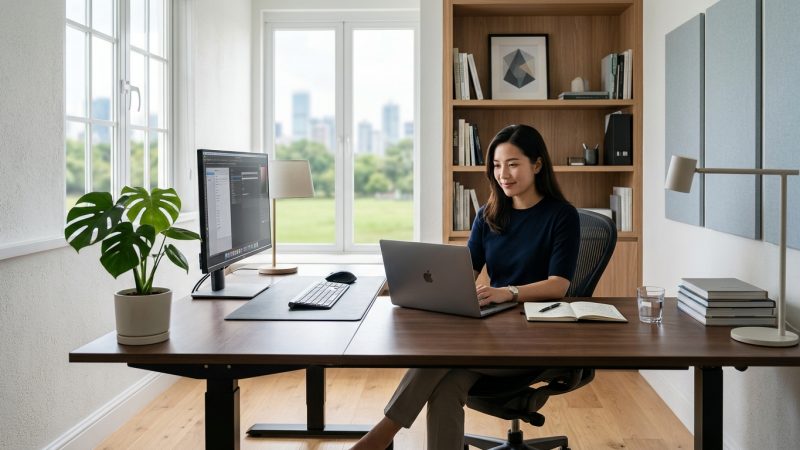
Height-adjustable desks let people switch between sitting and standing without losing momentum. Mobile whiteboards move between team areas. Modular seating creates different configurations for different meetings.
The goal is simple: your furniture should support the work, not dictate it.
Look for pieces with wheels, folding mechanisms, and lightweight materials. When you can reconfigure a space in 10 minutes instead of 10 hours, you can actually respond to how your team works.
Acoustic privacy in open environments
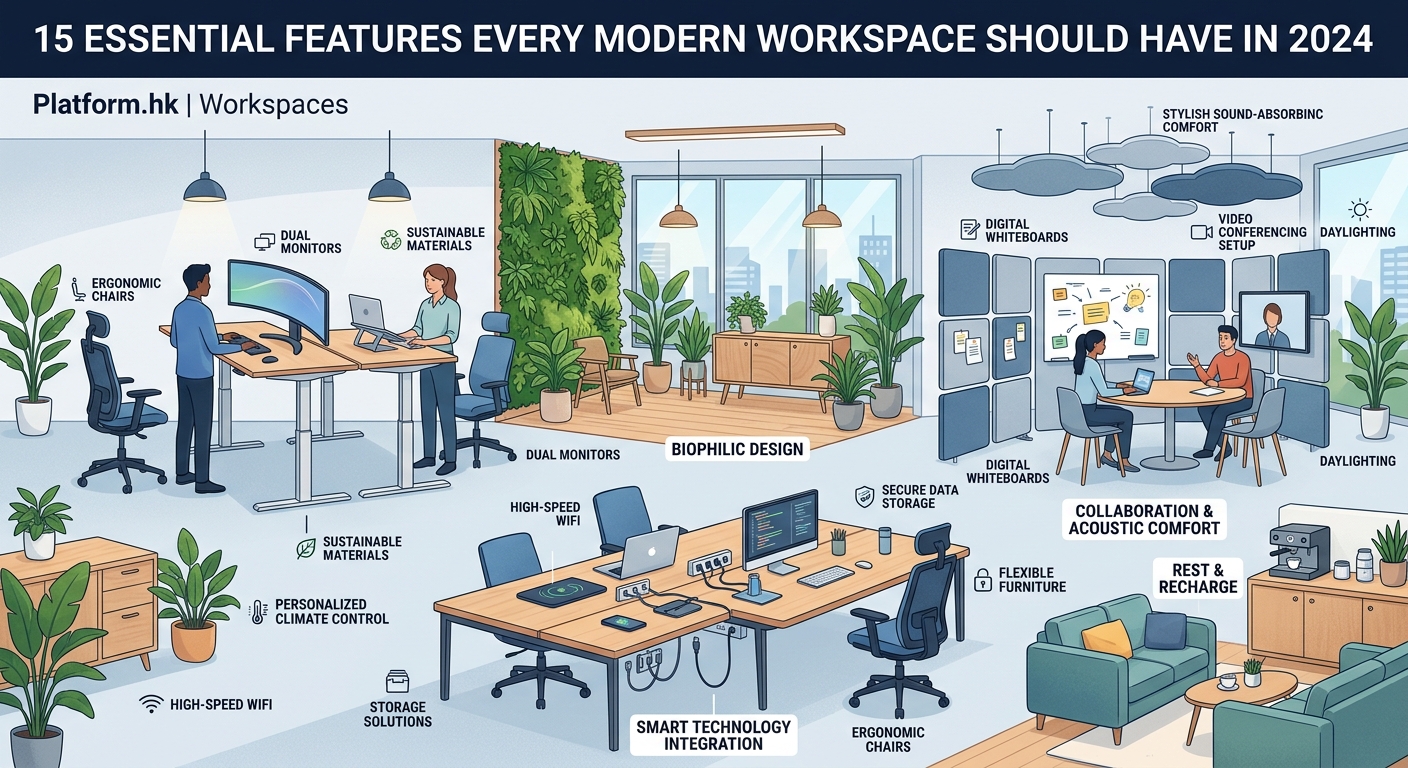
Open offices failed because they ignored one fundamental truth: people need to concentrate. The modern workspace features of 2024 solve this with intentional acoustic design.
Phone booths give people a place for private calls without booking a conference room. Acoustic panels on walls and ceilings absorb sound instead of bouncing it around. Soft materials in furniture and flooring reduce ambient noise.
“The number one complaint we hear from employees in open offices is noise. Solving acoustic issues isn’t optional anymore. It’s the difference between people choosing to work from home or coming into the office.” — Workplace design consultant
These solutions don’t require walls. They just require thinking about sound as seriously as you think about lighting or temperature.
Technology that actually works
Nothing frustrates employees faster than technology that fails during important moments. Modern workspaces need reliable, intuitive systems.
Your essential technology checklist:
- Wireless presentation systems that connect in seconds
- Video conferencing setups with quality cameras and microphones
- Fast, reliable WiFi throughout the entire space
- Enough power outlets and USB ports at every workstation
- Cloud-based booking systems for desks and meeting rooms
- Digital wayfinding for larger offices
The test is simple: can a new employee or visitor use your technology without asking for help? If not, it’s too complicated.
Biophilic design elements
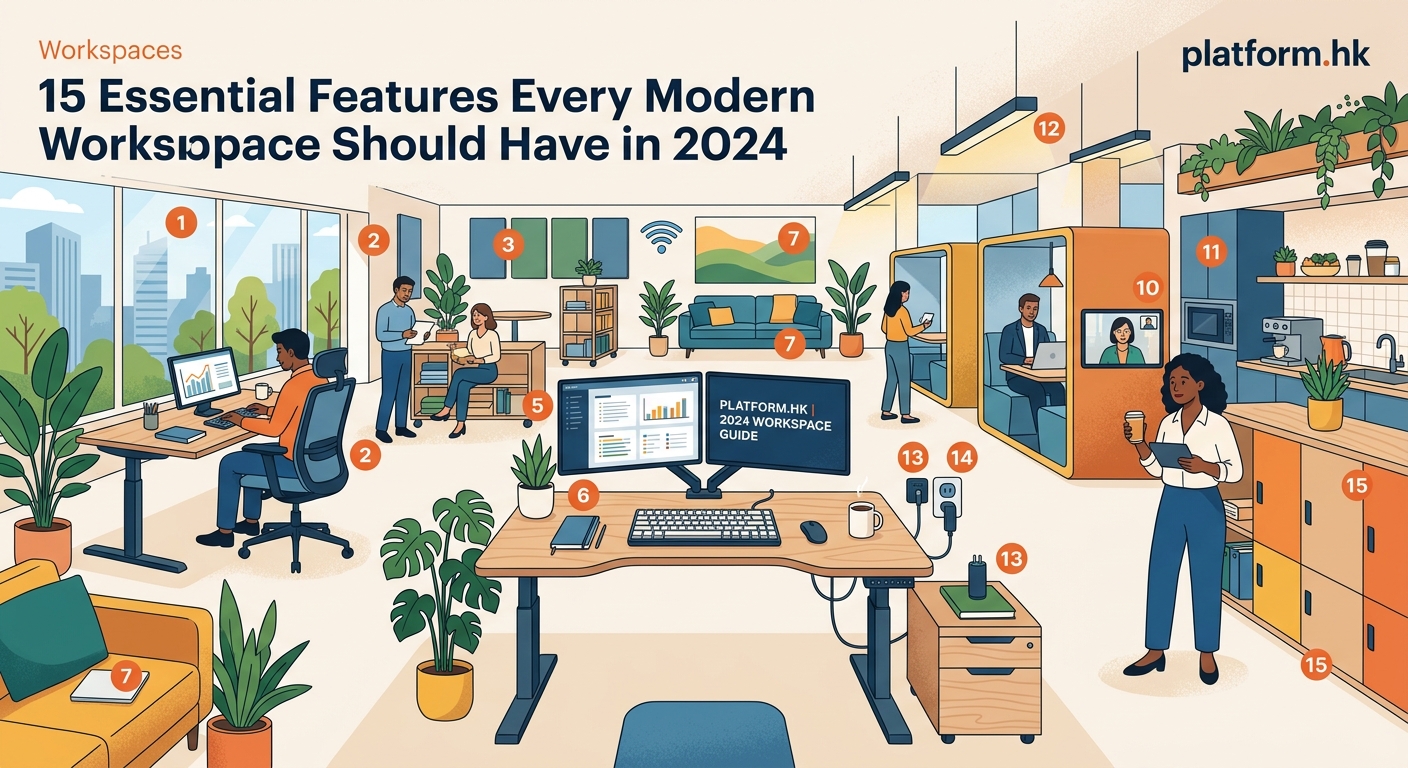
Bringing nature indoors isn’t just aesthetic. It reduces stress, improves air quality, and helps people focus.
Plants are the obvious starting point, but biophilic design goes further. Natural light, wood textures, water features, and views of outdoor spaces all contribute.
Even small touches make a difference. A living wall in the lobby. Planters between desks. Wood-grain finishes instead of plain plastic. Natural colors that mirror outdoor environments.
Studies consistently show that employees in spaces with biophilic elements report higher satisfaction and lower stress levels.
Dedicated collaboration zones
Hybrid teams need spaces designed specifically for group work. Not just meeting rooms, but areas where collaboration feels natural.
These zones should include:
- Large displays or projectors for sharing work
- Comfortable seating arranged to encourage discussion
- Writable surfaces on walls or mobile boards
- Access to power for multiple devices
- Acoustic treatment so conversations don’t disturb nearby workers
The furniture should be movable. The technology should be simple. The space should feel different from individual work areas.
When collaboration zones work well, people use them constantly. When they don’t, they become expensive storage rooms.
Focus rooms for deep work
The flip side of collaboration is concentration. Modern offices need quiet spaces where people can think without interruption.
Focus rooms differ from traditional offices. They’re smaller, bookable by the hour, and available to everyone. Think of them as the opposite of collaboration zones.
Essential features include:
- Sound isolation from the rest of the office
- Comfortable seating for extended periods
- Adjustable lighting to reduce eye strain
- Minimal distractions or visual clutter
- A door that actually closes
These rooms should be easy to book and impossible to monopolize. Set time limits. Use scheduling software. Make sure everyone has equal access.
Wellness amenities beyond the basics
Coffee and snacks are table stakes now. Modern workspace features in 2024 address physical and mental health more comprehensively.
Consider adding:
- Standing desk converters or full standing desks
- Ergonomic chairs with proper lumbar support
- Meditation or quiet rooms
- Bike storage and shower facilities
- Air purification systems
- Circadian lighting that adjusts throughout the day
The ROI shows up in reduced sick days, lower healthcare costs, and better retention. Employees notice when you invest in their wellbeing.
Smart climate control
Temperature complaints are endless in traditional offices. Some people are always cold. Others are always hot. Centralized systems can’t make everyone happy.
Modern solutions include:
- Zone-based climate control
- Personal desk fans or heaters
- Operable windows where building codes allow
- Smart thermostats that learn patterns
- Air quality monitoring with automatic adjustments
When people can adjust their immediate environment, complaints drop dramatically.
Multi-purpose spaces
Real estate costs too much to dedicate rooms to single functions. The best modern offices create spaces that transform.
A training room becomes an event space. A large meeting room divides into smaller breakout areas. A cafeteria hosts all-hands meetings.
This requires:
- Movable furniture that stores easily
- Flexible technology connections
- Acoustic solutions that adapt
- Storage for different configurations
Think about how each space gets used throughout the week. If a room sits empty most of the time, it needs to serve multiple purposes.
Inclusive design considerations
Modern workspaces need to work for everyone, regardless of physical ability, neurodiversity, or working style.
| Design Element | Inclusive Feature | Why It Matters |
|---|---|---|
| Doorways | Minimum 36-inch width | Wheelchair accessibility |
| Lighting | Adjustable brightness and color temperature | Supports different vision needs and reduces migraines |
| Acoustics | Quiet zones and sound masking | Helps neurodivergent employees concentrate |
| Furniture | Range of heights and styles | Accommodates different body types and preferences |
| Signage | Clear, high-contrast, multiple formats | Supports various reading abilities |
Inclusive design benefits everyone, not just people with specific needs. Curb cuts help wheelchair users, but also parents with strollers and delivery workers with carts.
Sustainable materials and practices
Employees increasingly care about environmental impact. Your workspace should reflect those values.
Choose furniture made from recycled or sustainably sourced materials. Install LED lighting. Use low-VOC paints and finishes. Create robust recycling and composting programs.
Energy-efficient HVAC systems cost more upfront but save money over time. Same with high-quality insulation and smart building controls.
Sustainability isn’t just good ethics. It’s good business. Companies with strong environmental practices attract better talent and often qualify for tax incentives.
Touchdown spaces for hybrid workers
Not everyone needs an assigned desk anymore. Touchdown spaces give hybrid workers a place to land when they come in.
These areas include:
- Comfortable seating with laptop tables
- Power and data connections
- Nearby lockers for personal storage
- Proximity to collaboration areas
- Coffee or refreshments
Touchdown spaces work best near building entrances and common areas. People using them typically stay for a few hours, not a full day.
Kitchen and social areas that build community
The best conversations often happen away from desks. Modern offices create inviting spaces where people naturally gather.
Your kitchen should be more than a microwave and refrigerator. Consider:
- Quality coffee equipment
- Comfortable seating for small groups
- Natural light
- Games or activities
- Displays for company updates or employee recognition
These spaces build relationships that make collaboration easier. When people know each other personally, they communicate better professionally.
Secure storage solutions
In a flexible office, people need places to store personal items and work materials. Traditional filing cabinets don’t cut it anymore.
Modern storage includes:
- Personal lockers that can be reserved or assigned
- Secure areas for valuables
- Shared storage for team materials
- Mobile pedestals that move with employees
- Digital document management to reduce paper
Storage seems boring until you don’t have it. Then it becomes a daily frustration.
Branding that reinforces culture
Your office should feel like your company. Modern workspace features in 2024 include intentional branding that goes beyond logos on walls.
Think about:
- Colors that match your brand identity
- Artwork from local artists or employees
- Displays showing company achievements
- Spaces named after company values
- Design elements that tell your story
This isn’t about ego. It’s about creating an environment where employees feel connected to something larger than their individual tasks.
Making these features work together
The magic happens when these elements complement each other. Biophilic design improves the social area. Smart climate control makes focus rooms more comfortable. Inclusive design benefits everyone in collaboration zones.
Start with what matters most to your team. Survey employees. Watch how they use current spaces. Identify the biggest pain points.
You don’t need to implement everything at once. Prioritize based on:
- Impact on employee satisfaction
- Cost and complexity
- Alignment with your company culture
- Space constraints and opportunities
Some changes cost almost nothing. Rearranging furniture, adding plants, or creating new room booking policies can happen immediately. Others require budget and planning.
Common mistakes to avoid
Even with good intentions, workspace projects often stumble. Watch out for these issues:
| Mistake | Why It Happens | How to Avoid It |
|---|---|---|
| Copying another company’s design | Saw a cool office tour online | Design for your actual team and culture |
| Ignoring employee input | Assuming you know what people need | Survey and interview before making decisions |
| Prioritizing aesthetics over function | Wanting Instagram-worthy spaces | Test usability before committing |
| Underestimating acoustic needs | Not understanding how sound travels | Hire an acoustic consultant |
| Insufficient power and data | Forgetting about technology needs | Plan for more connections than you think necessary |
The worst mistake is creating a beautiful space that people don’t actually want to use. Function always beats form.
Your workspace reflects your priorities
Every decision about your office sends a message. Open collaboration areas say you value teamwork. Focus rooms say you respect concentration. Wellness amenities say you care about employee health.
These modern workspace features for 2024 aren’t trends that will disappear next year. They address fundamental human needs: flexibility, comfort, connection, and control over your environment.
Start small if you need to. Add acoustic panels. Bring in plants. Create one great focus room. Each improvement makes your office more competitive in the fight for talent.
The employees who have options will choose workspaces that support how they actually work. Make sure yours is one of them.