How to Build a Profitable Coworking Space in 2026

Starting a coworking space sounds like a dream business. You get to create a vibrant community, help remote workers and startups thrive, and build recurring revenue. But turning that vision into actual profit takes more than just renting an office and buying some desks. You need a solid plan, smart financial decisions, and a clear understanding of what makes members stay and pay month after month.
Launching a profitable coworking space requires strategic location selection, diversified revenue streams, and community-focused design. Success depends on understanding your target market, optimizing space utilization, controlling operational costs, and creating an environment that keeps members engaged. Most profitable spaces blend flexible memberships with additional services like meeting rooms, events, and partnerships that generate income beyond basic desk rentals.
Understanding the coworking business model
Coworking spaces make money primarily through memberships. Members pay monthly fees for access to desks, offices, meeting rooms, and amenities. But the most successful operators don’t stop there.
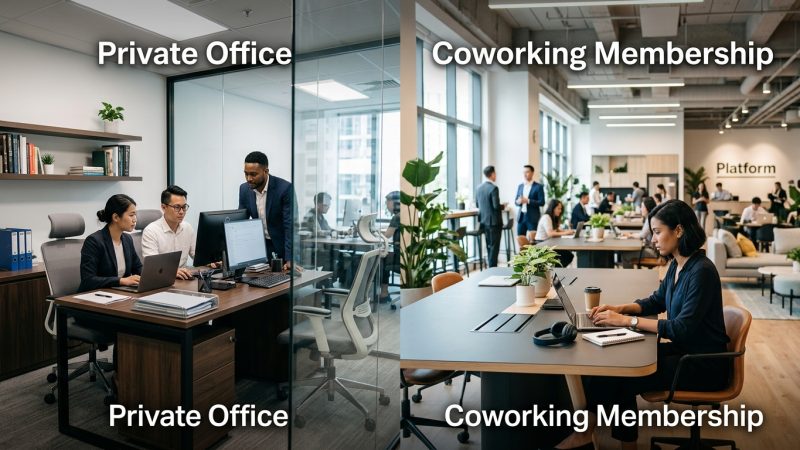
The traditional model offers three main membership tiers. Hot desks let members work anywhere in the open space. Dedicated desks give someone their own spot. Private offices serve teams that need privacy and branding space.
Each tier commands different pricing. Hot desks might run $200 to $400 monthly in mid-sized cities. Dedicated desks typically cost $300 to $600. Private offices can range from $800 to $3,000 depending on size and location.
But memberships alone rarely cover all costs in the first year. Smart operators add revenue streams that use existing resources. Meeting room rentals, event hosting, mail handling, printing services, and coffee bars all contribute to the bottom line.
The key is understanding your break-even point. Calculate your total monthly costs including rent, utilities, staff, insurance, and maintenance. Then determine how many members at each tier you need to cover those expenses and generate profit.
Choosing the right location and space
Location determines everything. Pick wrong and you’ll struggle to fill desks no matter how beautiful your space looks.
Target areas with high concentrations of freelancers, remote workers, and small startups. Downtown business districts work well, but so do neighborhoods near universities or residential areas with limited home office options.
Look for spaces between 3,000 and 10,000 square feet for your first location. Smaller spaces limit revenue potential. Larger ones create too much overhead before you’ve proven the concept.
Accessibility matters more than prestige. Members need easy parking or public transit access. Ground floor or elevator access beats third floor walk-ups. Natural light, high ceilings, and good ventilation make spaces feel premium without premium costs.
Lease terms should give you flexibility. Negotiate for shorter initial terms with renewal options. Some landlords will offer tenant improvement allowances or reduced rent during buildout. Use that leverage.
Calculate your rent to revenue ratio carefully. Your base rent should not exceed 30% of projected revenue at full occupancy. That leaves room for other expenses and profit margins.
Designing for profitability and community
Layout directly impacts how many paying members you can accommodate. But cramming desks together destroys the experience that makes coworking valuable.
Plan for 60 to 80 square feet per hot desk when accounting for circulation space, amenities, and common areas. Dedicated desks need similar square footage. Private offices require 100 to 150 square feet per person.
Create distinct zones for different work styles. Open areas for collaboration. Quiet zones for focused work. Phone booths for calls. Lounge areas for breaks. This variety attracts diverse members and justifies premium pricing.
Invest in quality fundamentals before fancy extras. Fast, reliable wifi is non-negotiable. Comfortable chairs prevent complaints and health issues. Adequate power outlets at every seat save frustration. Good lighting reduces eye strain and creates better ambiance.
Meeting rooms generate significant revenue but require careful planning. A space with 50 desks should have at least two meeting rooms that seat 4 to 6 people and one larger room for 10 to 12. Members book these by the hour, creating income streams independent of membership fees.
Storage lockers, phone booths, and printing stations can all generate additional monthly fees. Price these add-ons at $20 to $50 monthly to boost average revenue per member without major cost increases.
Building multiple revenue streams
Successful coworking spaces rarely depend on membership fees alone. Diversification protects you when occupancy dips and maximizes profit when it’s high.
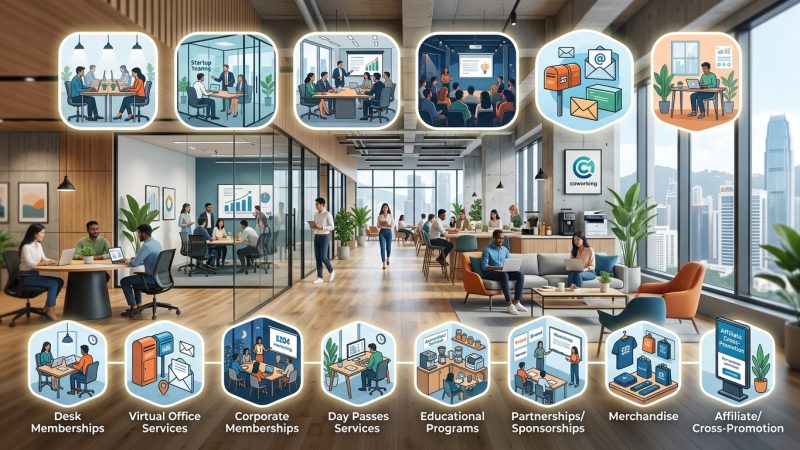
Here are proven revenue streams beyond basic memberships:
- Meeting room rentals to non-members at $25 to $75 per hour
- Day passes for occasional workers at $20 to $40 per day
- Virtual office services including mail handling and business addresses
- Event hosting for workshops, networking sessions, and corporate meetings
- Beverage and snack sales through vending, coffee bars, or partnerships
- Printing and office supply services at modest markups
- Sponsored community events where local businesses pay for exposure
- Affiliate partnerships with service providers members need
Each stream requires minimal additional infrastructure but compounds your income. A space earning $15,000 monthly from memberships might add $3,000 to $5,000 from these supplementary sources.
The table below shows how different revenue streams compare in terms of setup effort and profit potential:
| Revenue Stream | Setup Effort | Monthly Profit Potential | Best For |
|---|---|---|---|
| Hot desk memberships | Medium | $5,000 to $15,000 | Core revenue foundation |
| Private offices | Medium | $3,000 to $10,000 | Stable, predictable income |
| Meeting room rentals | Low | $1,000 to $3,000 | Maximizing existing space |
| Day passes | Low | $500 to $1,500 | Filling empty capacity |
| Event hosting | Medium | $1,000 to $4,000 | Community building and income |
| Virtual offices | Low | $500 to $2,000 | Passive recurring revenue |
| Coffee and snacks | Medium | $300 to $1,000 | Convenience and margins |
Managing costs without sacrificing quality
Profitability comes from both revenue and cost control. Cut too much and you lose the premium feel that justifies your pricing. Overspend and margins disappear.
Your three largest expenses will be rent, utilities, and staff. Rent is fixed, so negotiate hard upfront. Utilities can be managed through energy-efficient lighting, smart thermostats, and member education about conservation.
Staffing presents the biggest opportunity for optimization. Start lean. One community manager can handle 50 to 75 members. Add part-time help for reception and events as you grow. Avoid hiring full-time staff until you’re consistently at 70% occupancy.
Technology reduces labor costs significantly. Automated access control systems eliminate the need for constant reception coverage. Booking software lets members reserve meeting rooms without staff intervention. Accounting platforms track payments and send automated reminders.
Furnish strategically. Buy quality chairs and desks that last years, not months. But skip expensive artwork and decorative items initially. Members care more about function than aesthetics in early stages.
Negotiate with suppliers for volume discounts on coffee, cleaning supplies, and paper goods. Join buying groups with other coworking operators to increase purchasing power.
Maintenance costs surprise new operators. Budget 5 to 10% of revenue for ongoing repairs, deep cleaning, equipment replacement, and unexpected fixes.
Marketing your space to ideal members
You can build the perfect coworking space, but it won’t generate profit sitting empty. Marketing fills desks and keeps them occupied.
Start marketing before you open. Build a website and social media presence three months ahead of launch. Collect email addresses from interested prospects. Offer founding member discounts to create urgency and initial occupancy.
Your ideal members aren’t everyone who works remotely. Define your niche clearly. Are you targeting tech startups, creative professionals, consultants, or remote employees from larger companies? Each group has different needs and responds to different messaging.
Content marketing builds credibility and attracts organic traffic. Write about productivity tips, remote work strategies, and local business resources. This positions you as a community leader, not just a space landlord.
Partner with local businesses that serve your target market. Accountants, lawyers, web designers, and business coaches all work with your ideal members. Cross-promote through referral arrangements where both parties benefit.
Tours convert prospects into members. Make booking a tour effortless through your website. Train staff to highlight community benefits, not just amenities. People join coworking spaces for connection as much as desks.
Retention matters more than acquisition. A 5% increase in member retention can increase profits by 25 to 95%. Focus on community building, regular events, and personal relationships that make leaving feel like a loss.
Creating financial projections that work
Numbers tell you whether your coworking space idea makes financial sense before you sign a lease.
Start with a realistic occupancy ramp-up timeline. Most spaces take 12 to 18 months to reach 80% occupancy. Plan for 20% occupancy in month one, adding 5 to 10% monthly as marketing gains traction.
Your startup costs will include:
- Security deposit and first month’s rent
- Buildout and renovation expenses
- Furniture and equipment purchases
- Technology infrastructure and software
- Initial marketing and branding costs
- Legal and licensing fees
- Working capital for the first three to six months
Total startup costs typically range from $50,000 to $200,000 depending on space size and condition. Undercapitalization kills more coworking spaces than bad locations.
Monthly operating expenses should account for:
- Base rent and common area maintenance fees
- Utilities including internet, electricity, water, and gas
- Staff salaries and benefits
- Insurance covering liability and property
- Marketing and advertising costs
- Software subscriptions for booking and management
- Cleaning and maintenance services
- Office supplies and member amenities
- Reserve fund for unexpected expenses
Calculate your break-even occupancy rate. If monthly expenses total $12,000 and average revenue per member is $300, you need 40 paying members to break even. Add desired profit margins on top of that baseline.
“The biggest mistake new coworking operators make is underestimating how long it takes to reach profitable occupancy. Build a financial cushion that lets you operate for at least 12 months below break-even. That runway gives you time to build community and reputation without panic decisions.” – Industry consultant with 15 years managing shared workspaces
Avoiding common profitability mistakes
Learning from others’ mistakes saves money and frustration. These errors repeatedly sink coworking ventures.
Overbuilding before proving demand wastes capital. Start with essential amenities. Add premium features after you’ve validated the market and achieved consistent occupancy.
Underpricing to compete destroys margins. If competitors charge $250 for hot desks, don’t drop to $150 hoping volume compensates. Lower prices attract price-sensitive members who leave for the next cheap option. Focus on value, not lowest cost.
Ignoring community building turns your space into a commodity. Members stay for relationships and belonging. Host regular events, facilitate introductions, and create communication channels that foster connection.
Poor member screening causes problems. One disruptive member can drive away ten good ones. Implement application processes that filter for cultural fit, not just ability to pay.
Neglecting financial tracking leads to cash flow surprises. Use accounting software from day one. Review financial statements monthly. Track metrics like occupancy rate, revenue per square foot, and customer acquisition cost.
Expanding too fast before solidifying operations creates chaos. Master one location before opening a second. Prove your systems work and generate profit consistently for at least 12 months.
Failing to build reserves for slow periods creates crisis situations. Coworking can have seasonal fluctuations. Budget conservatively and maintain three to six months of operating expenses in reserve.
Legal and operational foundations
Proper legal structure protects your personal assets and provides tax advantages. Most coworking operators choose LLC or S-corp structures. Consult an attorney and accountant to determine what fits your situation.
Insurance requirements include general liability, property coverage, and workers compensation if you have employees. Some landlords require specific coverage levels. Budget $3,000 to $8,000 annually for comprehensive protection.
Licensing varies by location. You’ll likely need a business license and may need special permits for serving food or alcohol at events. Check local zoning to confirm coworking is permitted in your chosen space.
Membership agreements protect both you and members. These contracts should specify payment terms, cancellation policies, acceptable use guidelines, and liability limitations. Have an attorney review your template before using it.
Payment processing needs to be automated and reliable. Use platforms that handle recurring billing, send payment reminders, and integrate with your accounting software. Failed payments happen. Have clear policies for handling them.
Access control systems let members enter 24/7 without staffing those hours. Key cards, smartphone apps, or keypad codes work well. Choose systems that let you deactivate access immediately when memberships end.
Technology that drives efficiency
The right software reduces administrative burden and improves member experience. But too many tools create complexity and subscription costs.
Essential technology includes:
- Coworking management software for bookings, billing, and member communication
- Accounting platform for financial tracking and reporting
- Access control system for secure entry
- Fast business-grade internet with backup connectivity
- Wifi network management for stability and security
- Booking system for meeting rooms and resources
Integrated platforms that handle multiple functions cost more upfront but save time and reduce errors from manual data transfer between systems.
Member communication platforms create community beyond physical presence. Slack channels, member apps, or simple email newsletters keep people connected and informed about events, updates, and opportunities.
Analytics help you make data-driven decisions. Track which membership types sell best, which hours see peak usage, which marketing channels convert, and which revenue streams perform strongest.
Automation handles repetitive tasks. Set up automatic billing, payment reminders, access expiration, and welcome sequences for new members. This frees staff to focus on relationship building instead of administrative work.
Building a space that keeps members coming back
Profitability depends on retention as much as acquisition. Long-term members provide stable revenue and reduce marketing costs.
Community is your competitive advantage. Large corporate operators can match your amenities, but they struggle to create genuine connection. Host regular events, facilitate introductions, and create traditions that members look forward to.
Responsiveness builds trust. When members report issues, address them promptly. When they suggest improvements, consider them seriously. When they achieve milestones, celebrate with them.
Flexibility attracts diverse members. Some need quiet focus. Others thrive on collaboration. Some work 9 to 5. Others prefer evenings. Design your space and policies to accommodate different work styles.
Cleanliness and maintenance show you care. Nothing drives members away faster than dirty bathrooms, broken equipment, or neglected common areas. Invest in regular professional cleaning and address maintenance issues immediately.
Professional development adds value beyond desks. Bring in speakers, organize skill-sharing sessions, and create mentorship opportunities. Members who grow their businesses in your space become loyal advocates.
Feedback loops identify problems before they cause departures. Regular surveys, casual conversations, and suggestion systems give you early warning about issues. Act on feedback to show members their voices matter.
Your path to profitable coworking starts with preparation
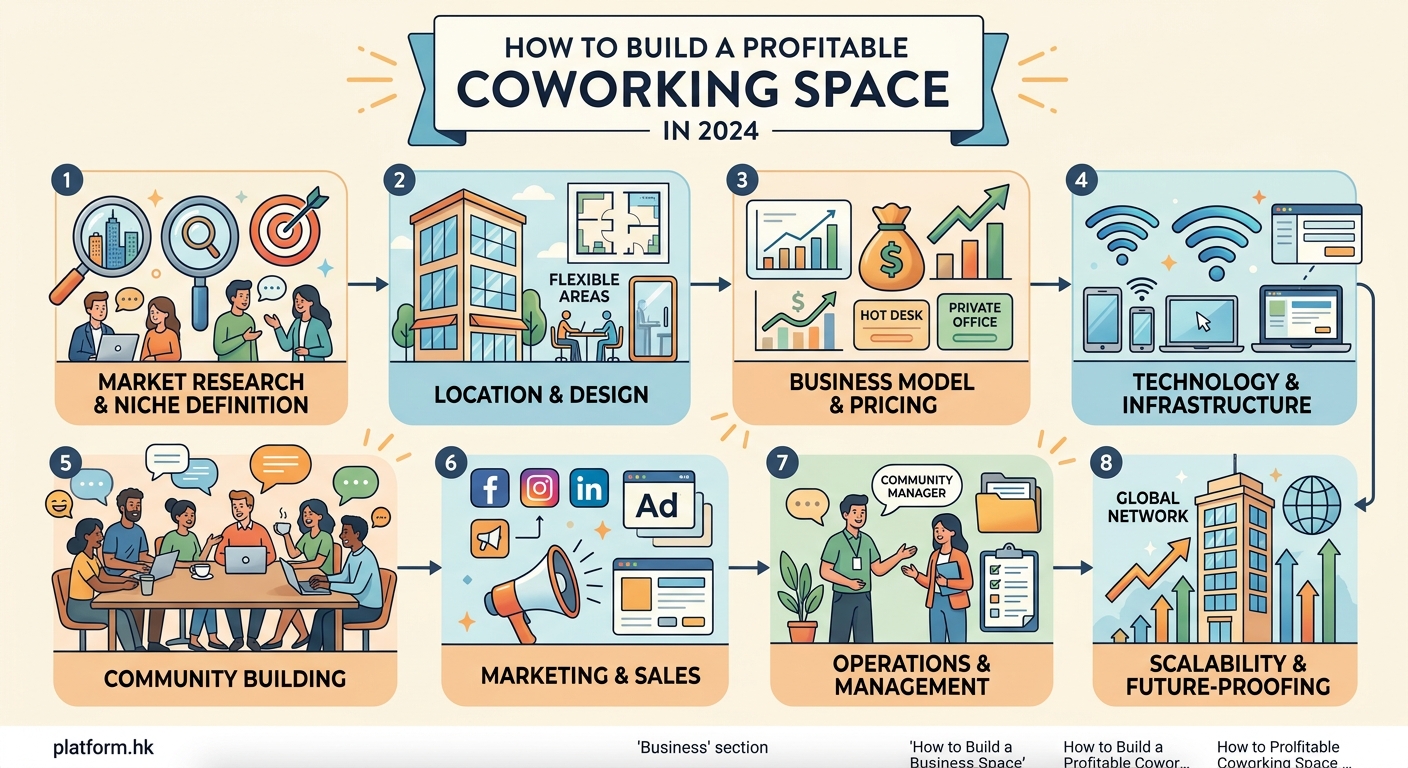
Starting a profitable coworking space is absolutely achievable, but it requires more than enthusiasm and a lease. Success comes from thorough market research, realistic financial planning, strategic design decisions, and relentless focus on community building. The operators who thrive treat their spaces as businesses first and passion projects second, carefully managing both revenue growth and cost control while creating environments where members genuinely want to spend their workdays.
Take time to build solid foundations before opening your doors. Test your financial assumptions. Visit successful spaces in other cities. Talk to potential members about what they actually need. The investment you make in planning pays dividends in profitability and sustainability for years to come.