How Remote Teams Build Culture Without an Office

Remote teams don’t fail because of distance. They fail because nobody built a culture that works across time zones, screens, and scattered home offices. The companies thriving right now aren’t the ones forcing people back to desks. They’re the ones who figured out how to make distributed work feel connected, intentional, and human.
Building culture in remote teams requires intentional rituals, transparent communication, and systems that create belonging across distances. Success comes from treating culture as infrastructure, not an accident. This guide covers practical frameworks for HR managers and founders to foster genuine engagement without relying on physical proximity or expensive perks.
Why Traditional Culture Strategies Fall Apart Remotely
Office culture relied on proximity doing the heavy lifting. Water cooler chats. Overhearing a colleague solve a problem. Lunch runs that turned into brainstorming sessions. These weren’t planned. They just happened.
Remote work strips all that away. What’s left is intentional or nothing.
Most teams try to replicate office culture online. They schedule happy hours on Zoom. They create Slack channels for random chat. Then they wonder why engagement tanks and people feel isolated.
The problem isn’t remote work. It’s trying to copy something that only worked because of physical space. Remote culture needs its own blueprint.
The Foundation: What Culture Actually Means Without Walls
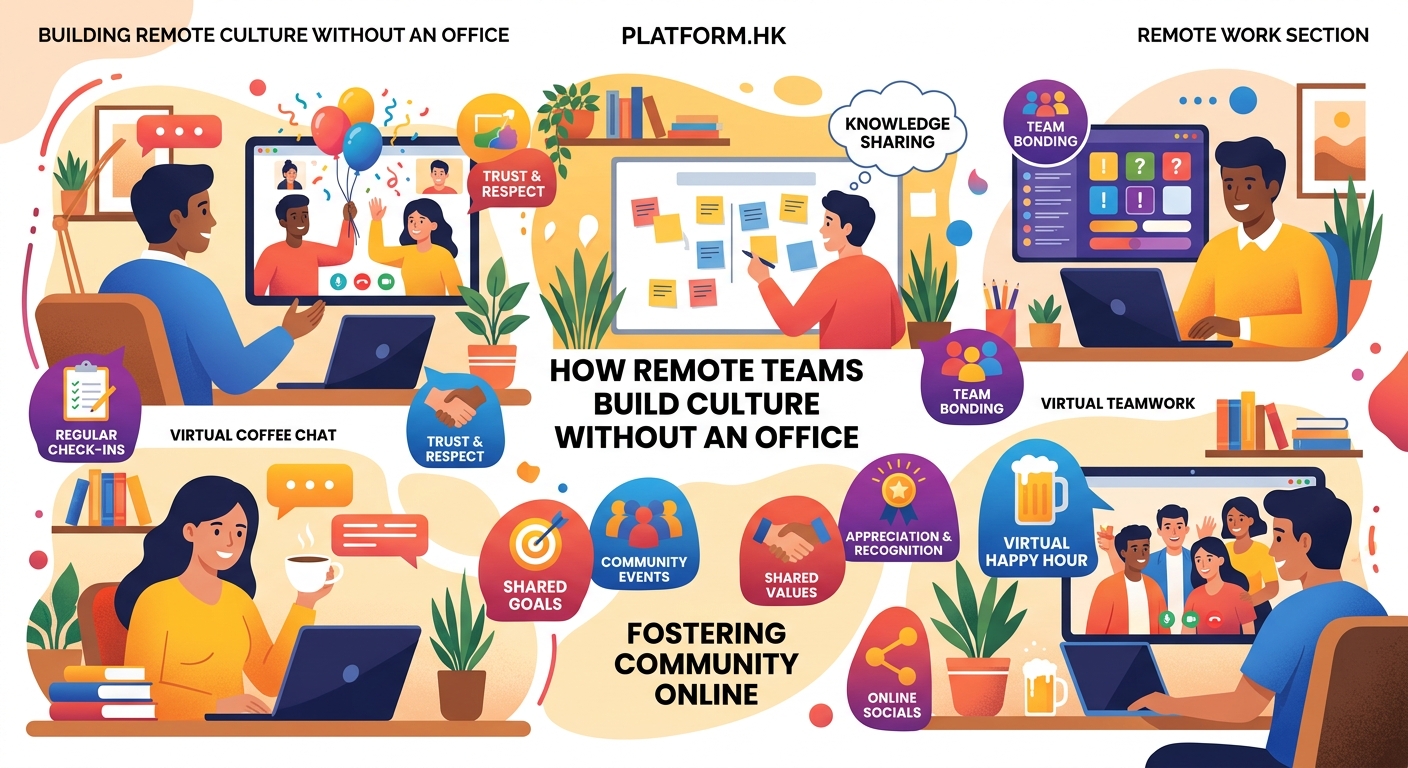
Culture isn’t pizza Fridays or branded swag. It’s how decisions get made when nobody’s watching. It’s whether people feel safe asking dumb questions. It’s the unwritten rules about when to message someone at 9 PM or whether cameras need to be on.
For remote teams, culture lives in three places:
Communication patterns. How information flows. Who gets included in decisions. Whether transparency is real or performative.
Rituals and rhythms. The recurring touchpoints that create predictability and belonging. Not random events, but reliable structures people can count on.
Values in action. What actually gets rewarded, not what’s written on the careers page. Does “work-life balance” mean people get praised for logging off, or subtly punished for not being always available?
Get these right, and culture becomes the operating system. Get them wrong, and you’re just managing a collection of freelancers who happen to share a Slack workspace.
Building Blocks: Practical Systems That Create Connection
Here’s how to construct culture that survives distributed work.
1. Design Communication Architecture
Remote teams need explicit rules about how to communicate. Not guidelines. Rules.
Create a communication charter that answers:
- Which tools for which conversations (Slack for fast, email for formal, Loom for explanations)
- Expected response times by channel
- When to default to async vs. sync
- How to signal urgency without creating panic
One startup we know color-codes messages. Green means “read whenever.” Yellow means “today if possible.” Red means “drop what you’re doing.” Simple, clear, no guessing games.
Document your norms. Make them visible. Update them when they stop working.
2. Install Rituals That Build Belonging
Belonging doesn’t happen accidentally when people never share physical space. You have to engineer it.
Effective rituals for remote teams:
- Weekly all-hands with a human element. Not just metrics. Include a “wins and learns” section where people share both successes and failures. Makes vulnerability normal.
- Rotating show-and-tell. Each week, someone shares something non-work. Their hometown. A hobby. A pet. Fifteen minutes that remind everyone they’re working with humans.
- Monthly cross-team pairings. Randomly match people from different departments for a 30-minute coffee chat. No agenda. Just connection.
- Quarterly offsites (if budget allows). Even once a year makes a difference. Face time creates deposits in the relationship bank that sustain remote work.
The key is consistency. Random events don’t build culture. Reliable rhythms do.
3. Make Recognition Visible and Frequent
In an office, great work gets noticed. Someone sees you staying late to help a colleague. Your manager overhears you handling a tough client call.
Remote work makes contributions invisible unless you create systems to surface them.
Set up public recognition channels. Not just manager-to-employee. Peer-to-peer matters more. When teammates celebrate each other, it signals that noticing good work is everyone’s job, not just leadership’s.
One team uses a “#props” Slack channel. Anyone can shout out anyone. The rule: be specific. Not “great job,” but “Sarah jumped on a call at 7 AM her time to unblock the design team, and we shipped two days early because of it.”
Specificity makes recognition meaningful. Vagueness makes it feel like participation trophies.
The Communication Playbook: How to Keep Everyone in the Loop
Information hoarding kills remote culture faster than anything else. When people don’t know what’s happening, they fill the gaps with anxiety and rumors.
Overcommunicate by default. What feels repetitive to you is probably the first time half your team is hearing it.
Create a Single Source of Truth
Pick one place where important information lives. A wiki. A Notion database. A shared Google Drive with clear naming conventions. Doesn’t matter what tool. Matters that everyone knows where to look.
Document everything:
- Meeting notes (with decisions and action items)
- Project status updates
- Company strategy and goals
- Team structures and who owns what
- How to get things done (approval processes, tools, workflows)
If someone has to DM a colleague to find information, your documentation failed.
Default to Public Channels
Private messages create information silos. When conversations happen in DMs, knowledge doesn’t spread.
Make “public by default” a team norm. Use private channels only for sensitive topics (HR issues, confidential projects, personal matters).
This doesn’t mean no privacy. It means being intentional about when to keep things private versus when transparency serves the team.
Run Better Async Updates
Not everything needs a meeting. Most things don’t.
Use async updates for:
- Project progress reports
- Decision explanations
- Weekly team summaries
- Strategic context sharing
Format matters. Wall-of-text updates get skipped. Use structure:
- What happened this week
- What’s coming next week
- Where I need help or input
- Decisions made (and why)
Short paragraphs. Bullet points. Skimmable.
Record video updates when tone matters. A 3-minute Loom explaining a tough decision lands better than a 500-word email that people misread.
Measuring What Matters: Culture Health Checks
You can’t manage what you don’t measure. But most culture metrics are garbage.
Forget about:
- “Engagement scores” from annual surveys nobody trusts
- Slack activity metrics (quantity doesn’t equal quality)
- Meeting attendance (showing up doesn’t mean showing up)
Track things that actually signal culture health:
| Metric | What It Reveals | How to Measure |
|---|---|---|
| Response time distribution | Whether people feel pressure to be always-on | Track message response times across team |
| Cross-team collaboration | If silos are forming | Count projects involving multiple departments |
| Voluntary participation | Genuine engagement vs. obligation | Attendance at optional events and discussions |
| Retention by manager | Which leaders build strong culture | Exit interview patterns by team |
| Knowledge sharing frequency | Whether people help each other | Contributions to documentation and forums |
Run quarterly pulse checks. Keep them short (10 questions max). Ask specific things:
- “I know who to ask when I’m stuck.”
- “I understand how my work connects to company goals.”
- “I feel comfortable sharing bad news with my manager.”
- “I have meaningful connections with at least 3 teammates.”
Track trends over time. One bad quarter doesn’t mean disaster. Consistent decline means something’s broken.
Common Traps and How to Avoid Them
Even well-intentioned teams make predictable mistakes.
Trap 1: Assuming everyone works the same hours.
Remote doesn’t mean flexible if you require 9-to-5 availability. True flexibility means trusting people to manage their time and judging them on output, not online status.
Solution: Set core hours for overlap (maybe 10 AM to 2 PM in primary time zone). Outside that, let people work when they work best.
Trap 2: Letting extroverts dominate.
In-person offices favor extroverts. Remote work can too, if you only value people who speak up in video calls.
Solution: Use multiple participation formats. Async written input. Anonymous surveys. Small group discussions. Give different personality types different ways to contribute.
Trap 3: Forgetting about onboarding.
New hires in offices absorb culture by osmosis. Remote hires get a laptop and a Slack invite, then drown.
Solution: Assign an onboarding buddy (not their manager). Create a 30-60-90 day plan with specific cultural touchpoints. Schedule informal chats with people across the company. Make feeling connected part of the job, not an afterthought.
Trap 4: Treating remote work like a temporary experiment.
If leadership keeps hinting about “getting back to normal,” nobody invests in remote culture. Why bother if it’s all going away?
Solution: Commit. Publicly. Make it clear that remote or hybrid is the long-term model. Then resource it properly.
Advanced Tactics: Taking Culture to the Next Level
Once you’ve got the basics solid, these strategies separate good remote culture from great.
Create Learning Loops
Dedicate time for teams to reflect on how they work, not just what they produce.
Run monthly retrospectives:
- What’s working well in how we collaborate?
- What’s creating friction?
- What should we try differently next month?
Make changes based on feedback. Nothing kills trust faster than asking for input and then ignoring it.
Build Async-First Workflows
Meetings should be the exception, not the default. If your calendar is back-to-back video calls, you’re doing remote wrong.
“The best remote teams operate like open source projects. Most work happens async, with clear documentation and thoughtful written communication. Synchronous time becomes precious, reserved for relationship building and complex problem-solving that benefits from real-time interaction.” — Remote work consultant who’s studied 100+ distributed companies
Before scheduling a meeting, ask:
- Could this be a document?
- Could this be a recorded video?
- Could this be a threaded discussion?
If yes, don’t meet.
Celebrate Milestones Intentionally
Birthdays. Work anniversaries. Project launches. Promotions. These moments matter.
In an office, someone brings cupcakes. Remote teams need their own rituals.
One company sends a care package for every work anniversary. Another has a “#celebrations” channel where the CEO personally congratulates every milestone. A third does monthly “highlight reels” featuring recent wins.
Pick something. Make it consistent. Show people they’re seen.
Invest in Face Time
If you can afford it, bring people together occasionally. Even once a year changes the dynamic.
Use in-person time for things that benefit from physical presence:
- Strategic planning and brainstorming
- Team building and relationship development
- Difficult conversations
- Collaborative problem-solving
Don’t waste it on presentations that could’ve been emails or updates that work fine async.
Tools That Support Culture (Not Replace It)
Technology enables culture. It doesn’t create it.
Useful categories:
Communication platforms. Slack, Microsoft Teams, Discord. Pick one. Use it consistently. Don’t let people scatter across tools.
Async video. Loom, Vidyard. For explanations that need tone and personality but don’t need real-time response.
Documentation. Notion, Confluence, Coda. Somewhere to build institutional knowledge that survives employee turnover.
Social connection. Donut (for random pairings), Gather (virtual office space), Discord (for casual hangouts). Optional but helpful for teams that want more informal interaction.
Recognition. Bonusly, Kudos, or just a well-used Slack channel. Matters less which tool, more that you have a system.
Don’t tool-shop your way out of culture problems. Fix the underlying issues first, then find tools that support your solutions.
What Great Remote Culture Actually Feels Like
You’ll know you’ve built strong culture when:
- New hires feel connected within their first month
- People volunteer information without being asked
- Teams resolve conflicts directly instead of escalating everything
- Employees refer talented friends to join
- People take time off without guilt or fear
- Cross-team collaboration happens naturally
- Bad news travels up as fast as good news
- Turnover stays low even when competitors recruit aggressively
Culture isn’t something you build once and forget. It’s something you tend constantly, like a garden. It needs attention, adjustment, and care.
But unlike office culture, which relied on physical proximity to paper over weak systems, remote culture forces you to be intentional. That’s actually an advantage.
The teams that treat culture as infrastructure, not accident, end up with something stronger than what they had in an office. Something portable. Something that scales.
Making Culture Work Across Distance
Building culture in remote teams isn’t harder than in-person. It’s different. It requires systems where offices got by with proximity. It demands intentionality where face time used to be enough.
But the fundamentals stay the same. People want to feel connected to something bigger than their task list. They want to know their work matters. They want relationships with colleagues who see them as humans, not just Slack avatars.
Create the structures that make those things possible. Communicate relentlessly. Build rituals people can count on. Make recognition visible. Measure what actually matters. Adjust when things stop working.
Your team isn’t scattered. They’re distributed. And with the right approach, that distribution becomes a strength, not a limitation.
Start with one thing. Pick the ritual, system, or communication norm that would make the biggest difference for your team right now. Implement it this week. Get feedback next week. Iterate.
Culture compounds. Small, consistent actions create big results over time. You don’t need to fix everything at once. You just need to start building intentionally.