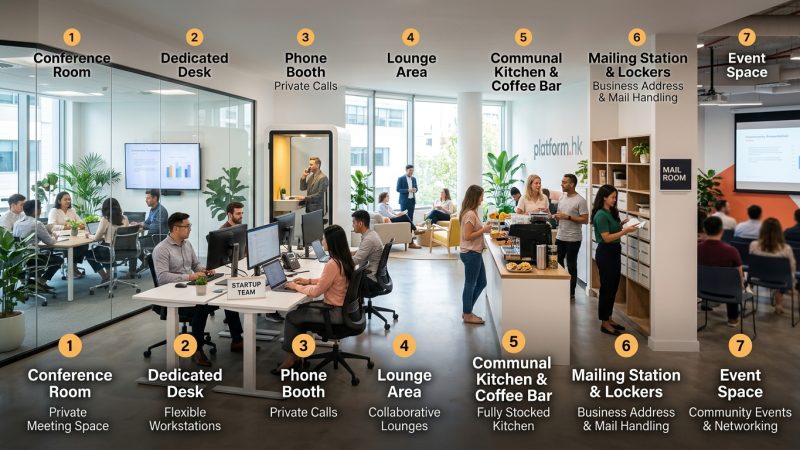
What Successful Startups Look for When Choosing Their First Workspace

You’ve been working from your apartment for months. The coffee shop phase is over. Your team has grown from two to five, and video calls from your bedroom are getting awkward. It’s time for a real workspace.
Choosing office space for startup teams is different from what established companies do. You need flexibility, not a ten-year lease. You need affordability, not marble lobbies. And you need room to grow without breaking your budget in month three.
Picking your first office means balancing budget constraints with growth potential. Focus on flexible lease terms, accessible locations, and spaces that support your team culture. Avoid long commitments and fancy extras you don’t need yet. The right space adapts as you scale, keeps costs predictable, and helps your team do their best work without unnecessary distractions or financial strain.
Know your actual space needs before you start looking
Most founders overestimate how much room they need. Or they underestimate it and end up cramped in three months.
Start by counting heads. How many people work for you today? How many will join in the next six months? Be realistic. If you’re planning to hire three developers by July, factor them in.
Then think about how your team works. Do people need private desks, or can they hot-desk? Do you need meeting rooms, or will a corner table work? Will clients visit, or is this purely for internal work?
Write down your requirements in order of priority:
- Number of desks needed today
- Number of desks needed in six months
- Meeting space requirements
- Storage for equipment or inventory
- Kitchen or break area
- Reception or client-facing space
This list keeps you focused when you tour spaces. It’s easy to fall in love with a loft that has exposed brick and floor-to-ceiling windows. But if it only fits four people and you need eight, the brick won’t matter.
Budget for more than just rent

Rent is the obvious cost. But it’s rarely the only one.
Here’s what most first-time office renters forget:
- Security deposits (often two to three months’ rent)
- Utilities (electricity, water, internet)
- Furniture (desks, chairs, shelves)
- Insurance (liability and property)
- Maintenance fees or common area costs
- Parking fees if applicable
- Setup costs (painting, minor renovations, signage)
A $2,000 monthly rent can easily become $3,500 when you add everything up. Budget for the full picture, not just the lease amount.
If cash is tight, consider spaces that include utilities and furniture. Coworking spaces and serviced offices cost more per square foot, but they eliminate surprise expenses. You pay one bill and get desks, internet, and coffee.
Traditional office leases are cheaper per square foot but require upfront investment. You’ll need to buy furniture, set up internet, and handle repairs. That’s fine if you have capital. But if you’re bootstrapped, bundled pricing makes sense.
Location matters more than you think
Your office location affects three things: recruitment, client perception, and daily life.
If you’re hiring locally, pick a spot that’s easy to reach by public transit. Talented people won’t join you if the commute takes ninety minutes. Check transit maps. Look at parking availability. Ask yourself if you’d want to travel there five days a week.
If clients visit your office, location signals credibility. A space in a recognized business district or tech hub makes you look established. A basement office in a residential neighborhood does the opposite. That doesn’t mean you need a downtown tower. But it does mean location shapes how people see you.
Daily life matters too. Is there lunch nearby? Coffee shops for informal meetings? A gym or park for breaks? Your team will spend forty hours a week in this area. Make it somewhere they don’t dread.
“We chose an office two blocks from a subway stop and near a food hall. Recruitment got easier because candidates could see themselves working there. It wasn’t fancy, but it was convenient.” – Founder of a Series A SaaS company
Flexibility beats fancy features every time
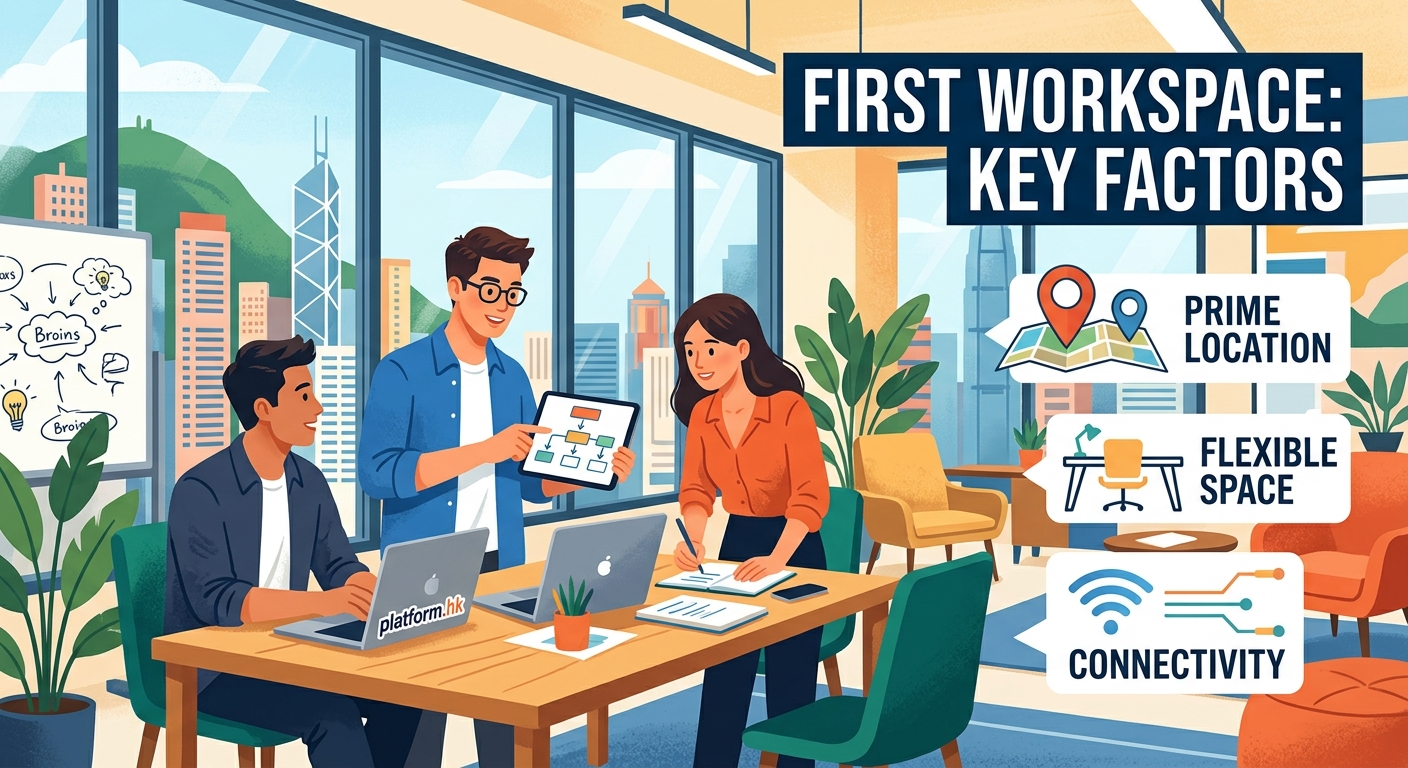
Startups change fast. You might pivot your product. You might double your team. You might decide remote work is better after all.
Long-term leases lock you in. A five-year commitment feels safe to landlords, but it’s risky for you. What if you outgrow the space in eighteen months? What if funding dries up and you need to downsize?
Look for these flexible options:
- Month-to-month agreements
- Leases with early termination clauses
- Subleasing rights
- Expansion options in the same building
Coworking spaces offer the most flexibility. You can add or remove desks with a month’s notice. Serviced offices offer similar terms with more privacy. Traditional leases are the least flexible but the cheapest per square foot.
Match your lease term to your confidence level. If you’re pre-revenue and experimenting, go month-to-month. If you’ve raised a seed round and have twelve months of runway, a one-year lease makes sense. If you’re Series A with a clear growth plan, consider two years.
Test the space before you commit
Photos lie. Floor plans don’t show you the noise from the street or the lack of natural light.
Visit every space you’re considering. Go during work hours. Sit in the area where your team would work. Make a phone call. Check the wifi speed. Use the bathroom.
Bring a team member with you. Two perspectives catch things one person misses. Your co-founder might notice the lack of power outlets. Your lead developer might spot that the meeting room has glass walls and no soundproofing.
Ask these questions during your visit:
- Can I hear conversations from neighboring offices?
- Is the temperature comfortable?
- Does the wifi handle video calls?
- Are there enough bathrooms for the number of tenants?
- Is the building well-maintained?
- Does the space feel safe at night?
If possible, ask to work from the space for a day before signing. Some coworking spaces offer day passes. Some landlords will let you test a serviced office for a week. This trial period is worth the cost.
Understand what different office types offer
Not all office spaces work the same way. Each type has trade-offs.
| Office Type | Best For | Pros | Cons |
|---|---|---|---|
| Coworking Space | Teams of 1-10, flexible needs | No setup costs, networking opportunities, month-to-month terms | Less privacy, can be noisy, limited branding |
| Serviced Office | Teams of 5-20, need privacy | Private space, included furniture and services, flexible terms | Higher cost per square foot, less control over layout |
| Traditional Lease | Teams of 10+, stable growth | Lowest cost per square foot, full control over space | High upfront costs, long commitments, maintenance responsibility |
| Hybrid/Hot-Desking | Remote-first teams, occasional in-person work | Very low cost, flexibility, minimal commitment | No dedicated space, requires booking, limited storage |
Most early-stage startups start with coworking or serviced offices. You get a professional space without the risk of a long lease. As you grow and stabilize, you can move to a traditional lease.
Some founders skip the office entirely and stay remote. That’s fine if your team works well distributed. But if you’re building hardware, need in-person collaboration, or want to establish a local presence, a physical space helps.
Make sure the space supports your culture
Your office shapes how your team works and feels.
If you value collaboration, open layouts with shared tables work well. If you need focus time, private offices or quiet zones matter. If you want a casual vibe, look for spaces with lounge areas and flexible seating. If you need to project professionalism, formal meeting rooms and clean design help.
Think about the impression you want to create. A creative agency might want colorful walls and quirky furniture. A fintech startup might want clean lines and minimalist design. Your space should feel like an extension of your brand.
Also consider practical culture needs. Do you have team lunches? You’ll need a kitchen or nearby restaurants. Do people bike to work? Look for bike storage. Do you host events or workshops? Make sure there’s space for that.
Your first office won’t be perfect. But it should feel like yours. Walk in and imagine your team there. If it doesn’t feel right, keep looking.
Read the lease like your business depends on it
Because it does.
Leases are legal contracts with real consequences. A bad lease can cost you thousands in unexpected fees or trap you in a space you’ve outgrown.
Pay attention to these terms:
- Lease length: How long are you committed?
- Rent increases: Does rent go up annually? By how much?
- Termination clauses: Can you leave early? What’s the penalty?
- Maintenance responsibilities: Who fixes things when they break?
- Subleasing rights: Can you sublease if you need to leave?
- Deposit terms: When do you get your deposit back?
- Included services: What’s covered in rent vs. billed separately?
If the lease is more than two pages, have a lawyer review it. This costs a few hundred dollars but can save you from expensive mistakes. Look for a lawyer who works with startups. They’ll know what terms to push back on.
Don’t be afraid to negotiate. Landlords expect it. Ask for shorter terms, lower deposits, or rent-free months for buildout. The worst they can say is no.
Visit at different times before deciding
A space that feels great at 10 a.m. on a Tuesday might be a nightmare at 6 p.m. on a Friday.
Visit during morning rush hour. Is parking impossible? Is the elevator packed? Visit at lunch. Are there food options nearby? Visit in the evening. Does the area feel safe? Is the building still accessible?
If the space is in a mixed-use building, check what else is there. A ground-floor restaurant might mean great lunch options. Or it might mean cooking smells and noise all day. A gym in the building is convenient. Unless it’s directly below you and you hear weights dropping.
Pay attention to your gut feeling. If something feels off, there’s usually a reason. Trust your instincts.
Plan for growth without overcommitting
You want room to grow. But you don’t want to pay for empty desks.
A good rule: lease space for your current team plus 20 to 30 percent growth. If you have ten people today, look for space that fits twelve or thirteen. This gives you breathing room without wasting money.
Some buildings offer expansion options. You might lease a smaller space now with the right to take over adjacent space later. This works if you’re confident you’ll grow but not sure when.
Another option: start with a coworking space that lets you add desks as needed. You pay for five desks in month one, eight in month three, and twelve in month six. This scales with your hiring.
Avoid the temptation to lease a huge space because rent per square foot is cheaper. Empty space costs money. It also makes your team feel small and scattered. A full, energetic office beats a half-empty warehouse.
Your space should work for you, not against you
Choosing office space for startup teams isn’t about finding the perfect loft or the trendiest neighborhood. It’s about finding a space that fits your budget, supports your team, and adapts as you grow.
Start with your actual needs. Budget for the full cost. Prioritize flexibility. Test the space before you sign. And read every word of the lease.
Your first office won’t be your forever office. That’s okay. It just needs to be the right office for right now. Pick a space that helps your team do great work, and the rest will follow.