10 Global Cities with the Most Innovative Coworking Ecosystems

The modern workplace has scattered across continents. Remote workers now choose their office location based on community, cost, and opportunity rather than corporate headquarters. Cities compete to attract digital talent by building vibrant coworking ecosystems that blend workspace innovation with lifestyle perks.
The best cities for coworking spaces combine affordable living costs, strong internet infrastructure, diverse networking communities, and supportive startup ecosystems. Cities like Lisbon, Bali, and Austin lead globally by offering flexible workspaces, entrepreneur visas, and thriving [digital nomad](https://en.wikipedia.org/wiki/Digital_nomad) communities. Your ideal location depends on budget, industry focus, visa requirements, and lifestyle preferences. This guide compares top destinations to help you choose where to work and grow your business.
What makes a city great for coworking
Not every city with shared desks qualifies as a coworking hub. The best locations create ecosystems where professionals connect, collaborate, and build businesses together.
Strong internet infrastructure forms the foundation. Fiber connections, backup power systems, and reliable mobile networks keep remote teams productive. Cities that invest in digital infrastructure attract more coworking operators and remote talent.
Affordability matters for sustainability. Monthly workspace memberships, apartment rent, daily meals, and transportation costs add up. Cities where $2,000 covers comfortable living plus workspace access win over expensive metros where the same budget barely covers rent.
Community density creates opportunities. When hundreds of entrepreneurs, developers, designers, and marketers work nearby, spontaneous collaborations happen. Coffee breaks turn into partnerships. Lunch conversations spark new projects.
Visa policies either welcome or block remote workers. Countries offering digital nomad visas, startup visas, or extended tourist stays make it easier to stay legally while building a business.
Top global destinations for remote workers
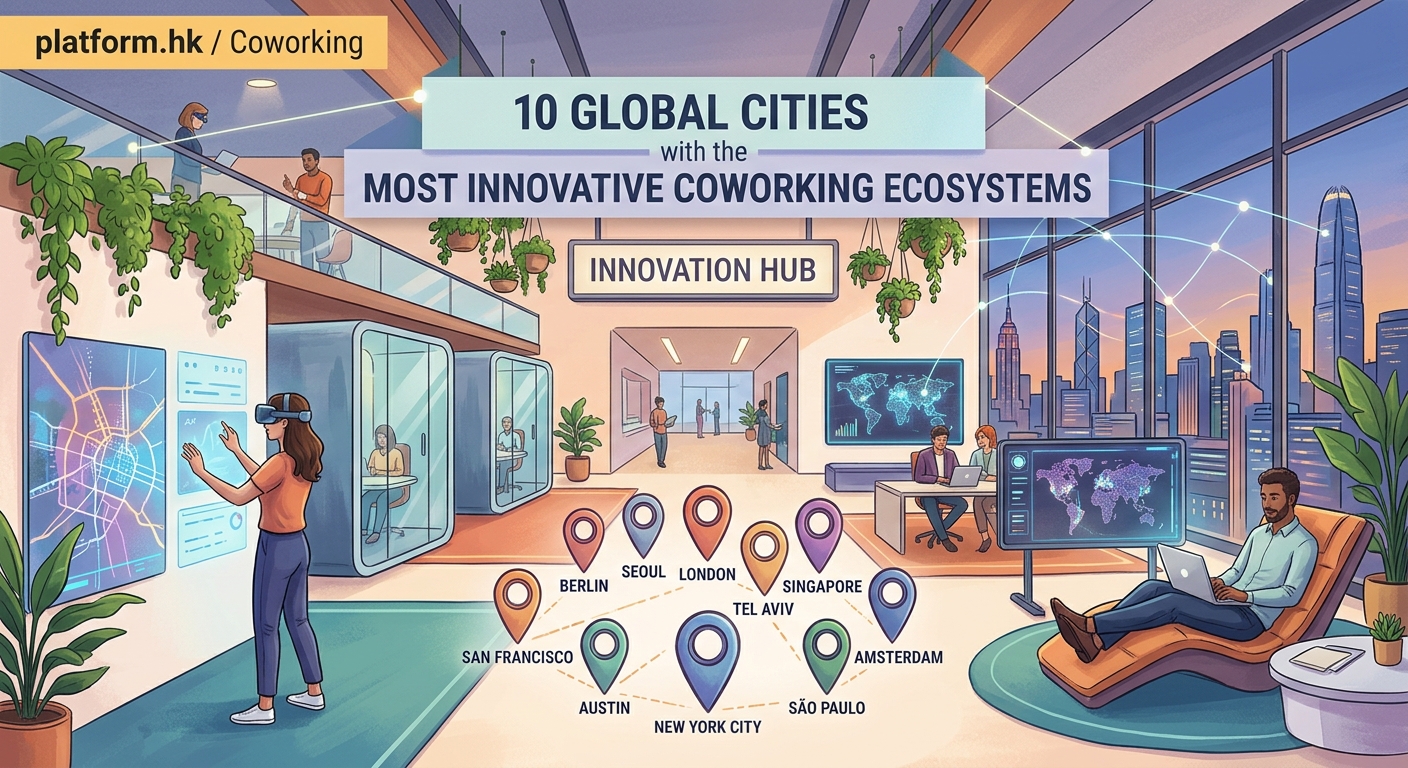
Different cities serve different needs. Your ideal location depends on your industry, budget, and work style.
Lisbon attracts European digital nomads
Portugal’s capital has become Europe’s remote work headquarters. Affordable rent, year-round sunshine, and excellent seafood draw thousands of location-independent professionals.
Coworking spaces cluster in neighborhoods like Cais do Sodré and Santos. Many offer ocean views, rooftop terraces, and bilingual communities. Monthly memberships start around €150 for hot desks.
The D7 visa allows remote workers to stay long term. You need proof of income around €3,280 monthly. Processing takes three to six months but grants residence for two years initially.
Portuguese bureaucracy moves slowly. Opening a bank account or getting a tax number requires patience. Many spaces help newcomers handle paperwork.
Bali builds Southeast Asian startup culture
Canggu and Ubud host thousands of entrepreneurs building online businesses. Coworking spaces like Dojo Bali and Outpost combine workspace with accommodation, creating live-work communities.
Indonesia offers a B211A visa for remote workers, valid for 60 days with extensions possible up to 210 days total. The application process requires sponsorship from an Indonesian entity, which many coworking spaces provide.
Living costs stay low. A private villa with a pool runs $600 monthly. Coworking memberships cost $100 to $200. Daily meals average $10 to $15.
Internet reliability varies by location. Fiber connections exist in main areas but power outages happen during rainy season. Most spaces have backup generators.
Austin fosters American innovation
Texas’s capital attracts startups with no state income tax, venture capital access, and a thriving tech scene. South Congress and East Austin neighborhoods host dozens of coworking spaces catering to different industries.
Capital Factory operates as both coworking space and startup accelerator. Members access mentorship programs, investor networks, and educational events. Monthly memberships start at $350.
Austin’s cost of living has climbed as tech workers flood in. Studio apartments now cost $1,400 to $1,800 monthly. However, Texas salaries often compensate for higher expenses.
The city lacks public transit. Most people drive, adding car payments, insurance, and parking costs. Some neighborhoods like downtown and East Austin support bike commuting.
Berlin champions European entrepreneurship
Germany’s startup capital offers affordable living by Western European standards, a massive talent pool, and strong government support for founders.
Factory Berlin, Betahaus, and St. Oberholz created the city’s coworking culture. Spaces host regular meetups, hackathons, and pitch events. Monthly rates range from €200 to €400.
The Freelance Visa (Freiberufler) allows self-employed professionals to live and work in Germany. You need a business plan, proof of clients or contracts, and health insurance. Approval takes two to four months.
German bureaucracy requires extensive documentation. Every form needs official translations and apostille stamps. Many coworking spaces offer integration support and connect newcomers with English-speaking accountants.
Medellín offers Latin American affordability
Colombia’s second city has transformed from its troubled past into a digital nomad hotspot. Eternal spring weather, $500 monthly apartments, and friendly locals attract remote workers.
Selina coworking locations spread across El Poblado and Laureles neighborhoods. Spaces blend accommodation with workspace, letting members switch between beach, mountain, and city locations across Latin America.
Colombia grants 90-day tourist stamps on arrival for most nationalities. Extensions add another 90 days. The new digital nomad visa launches in 2024, allowing stays up to two years.
Spanish fluency helps but isn’t required in expat-heavy areas. Many restaurants, shops, and services operate in English. Learning basic Spanish improves daily life and helps build local relationships.
How to evaluate coworking cities for your needs
Choosing where to work remotely requires matching city characteristics with your priorities. This comparison helps narrow options.
| City | Monthly Cost | Visa Difficulty | Internet Quality | Community Size | Best For |
|---|---|---|---|---|---|
| Lisbon | $1,800 | Medium | Excellent | Large | European base, sunshine |
| Bali | $1,200 | Easy | Good | Very Large | Low cost, lifestyle |
| Austin | $3,200 | N/A (US) | Excellent | Large | US startups, funding |
| Berlin | $2,100 | Hard | Excellent | Very Large | Tech talent, EU market |
| Medellín | $1,400 | Easy | Good | Medium | Budget, Spanish practice |
| Bangkok | $1,500 | Easy | Excellent | Large | Asia hub, food scene |
| Mexico City | $1,600 | Easy | Good | Large | Culture, Latin America |
| Dubai | $2,800 | Medium | Excellent | Medium | Middle East access, tax-free |
Budget determines sustainability. Calculate total monthly costs including workspace, housing, food, transport, insurance, and entertainment. Add 20% buffer for unexpected expenses.
Time zones affect collaboration. If your clients or team work in specific regions, choose cities with reasonable overlap. Lisbon works well for US East Coast and European clients. Bali suits Australian and Asian time zones.
Industry focus matters for networking. Tech startups thrive in Berlin and Austin where venture capital and developer talent concentrate. Creative professionals find communities in Bali and Mexico City. Finance and consulting professionals prefer Dubai or Singapore.
Common mistakes when choosing a coworking city
First-time remote workers often pick destinations based on Instagram photos rather than practical considerations.
Underestimating visa complexity causes problems. Tourist visas seem easy until you need to leave the country every 60 or 90 days. Visa runs interrupt work, cost money, and risk denial of reentry. Research long-term visa options before committing to a city.
Ignoring tax obligations creates future headaches. Many countries tax residents on worldwide income after six months. Others require tax registration for anyone earning money while present. Consult an international tax advisor before moving.
Overlooking healthcare access risks your wellbeing. Check whether your health insurance covers international care. Research local hospital quality and English-speaking doctors. Some countries require local health insurance for visa approval.
Skipping test visits leads to disappointment. A two-week vacation feels different from six months of daily life. Visit potential cities for at least a month before signing long-term leases or commitments.
Neglecting social needs affects mental health. Remote work can feel isolating without intentional community building. Choose cities with active coworking communities, regular meetups, and social events.
“I spent three months in five different coworking cities before finding my fit. What looked perfect online didn’t match my work style. Now I tell everyone to test locations with month-long stays before committing to annual leases.” — Sarah Chen, founder of a remote design agency
Building your location strategy
Smart remote workers develop multi-city strategies rather than searching for one perfect location.
- Start with a home base that offers visa stability and meets your core needs for at least six months
- Test secondary cities with one to three month visits to build international networks and compare options
- Return to your home base to handle visa renewals, client meetings, or personal obligations
- Adjust your rotation based on seasons, tax residency rules, and project demands
This approach provides flexibility without the chaos of constant movement. You build deeper community connections than pure nomads while maintaining location independence.
Many remote workers follow weather patterns. Summer in Europe, winter in Southeast Asia, spring in Latin America. Others optimize for conferences and industry events, visiting cities when networking opportunities peak.
Tax residency planning becomes important for long-term remote workers. Most countries consider you a tax resident after 183 days per year. Strategic movement helps maintain tax residency in favorable jurisdictions.
Essential factors beyond the workspace
The coworking space itself matters less than the surrounding ecosystem. Great spaces exist in cities that don’t support remote worker lifestyles.
Transportation infrastructure affects daily life. Cities with reliable metro systems, bike lanes, and walkable neighborhoods reduce stress and costs. Car-dependent cities add expenses and limit spontaneity.
Food scene variety prevents burnout. Eating the same cuisine daily gets old after months. Cities with diverse international restaurants, good grocery stores, and affordable meal options support long-term stays.
Cultural activities provide work-life balance. Museums, live music, outdoor recreation, and social events help you recharge. Cities that shut down by 9 PM feel limiting after a few months.
Banking and financial services matter for business operations. Can you open local bank accounts? Do payment processors work? Are international transfers easy and affordable? These practical details affect daily business operations.
Language barriers vary by city. Some locations have large English-speaking communities. Others require local language skills for everything from doctor visits to apartment hunting. Assess your willingness to learn new languages.
Making the move work long term
Successful remote workers treat location selection as an ongoing process rather than a one-time decision.
Build location-independent systems. Use cloud storage, international payment processors, and virtual phone numbers. Design your business to work from anywhere rather than depending on specific city infrastructure.
Maintain strong documentation. Keep digital copies of contracts, invoices, tax filings, and visa documents. Many countries require proof of income, business legitimacy, or tax compliance for visa renewals.
Invest in relationships, not just transactions. The best opportunities come from genuine friendships with other entrepreneurs, not transactional networking. Spend time in communities, contribute value, and build real connections.
Plan for emergencies. Keep emergency funds covering three months of expenses plus a flight home. Maintain health insurance with global coverage. Know where your nearest embassy or consulate operates.
Stay flexible with expectations. Cities change as they attract more remote workers. Bali’s Canggu transformed from quiet surf town to bustling digital hub in five years. Your perfect city today might feel overcrowded in two years.
Your workspace, your choice
The best cities for coworking spaces give you options rather than constraints. You’re not stuck in one location or limited to a single community. Test different cities, build networks across continents, and design a lifestyle that supports both your work and personal growth.
Start by visiting three cities that match your budget and industry for one month each. Join local coworking spaces, attend community events, and talk with other remote workers about their experiences. You’ll quickly learn which factors matter most for your specific situation and where you feel most productive and happy.