The Ultimate Guide to Coworking Space Etiquette and Community Rules

Walking into a coworking space for the first time feels a bit like joining a new gym. You’re not sure which equipment is fair game, how long you can occupy a spot, or whether that person at the next desk wants to chat or be left alone. Unlike traditional offices with clear hierarchies and handbooks, coworking spaces operate on a mix of posted rules and unwritten social codes. Get it right, and you’ll build connections, stay productive, and feel welcome. Get it wrong, and you might become “that person” everyone avoids.
Coworking space etiquette centers on respecting shared resources, managing noise levels, and balancing independence with community participation. Master phone call protocols, understand booking systems, keep common areas tidy, and read social cues to build professional relationships. These practices ensure productive work while maintaining the collaborative spirit that makes coworking spaces valuable for remote workers, freelancers, and digital nomads.
Understanding the Shared Space Mindset
Traditional offices assign you a desk, a chair, and clear ownership. Coworking spaces flip that model entirely.
Everything belongs to everyone, within reason. That conference room isn’t yours just because you used it yesterday. The comfortable couch in the lounge isn’t your permanent spot, even if you’ve claimed it three days running.
This shared ownership model requires constant awareness. You’re balancing your needs against dozens of other professionals who paid the same membership fee and deserve equal access to amenities.
The best coworking members think one step ahead. Before settling into a phone booth for an hour, they check if someone has it booked. Before spreading materials across an entire table, they assess whether the space is getting crowded. Before microwaving fish in the communal kitchen, they remember they share that space with people who can’t escape the smell.
This mindset shift separates seamless coworking experiences from frustrating ones.
Noise Management and Phone Call Protocol
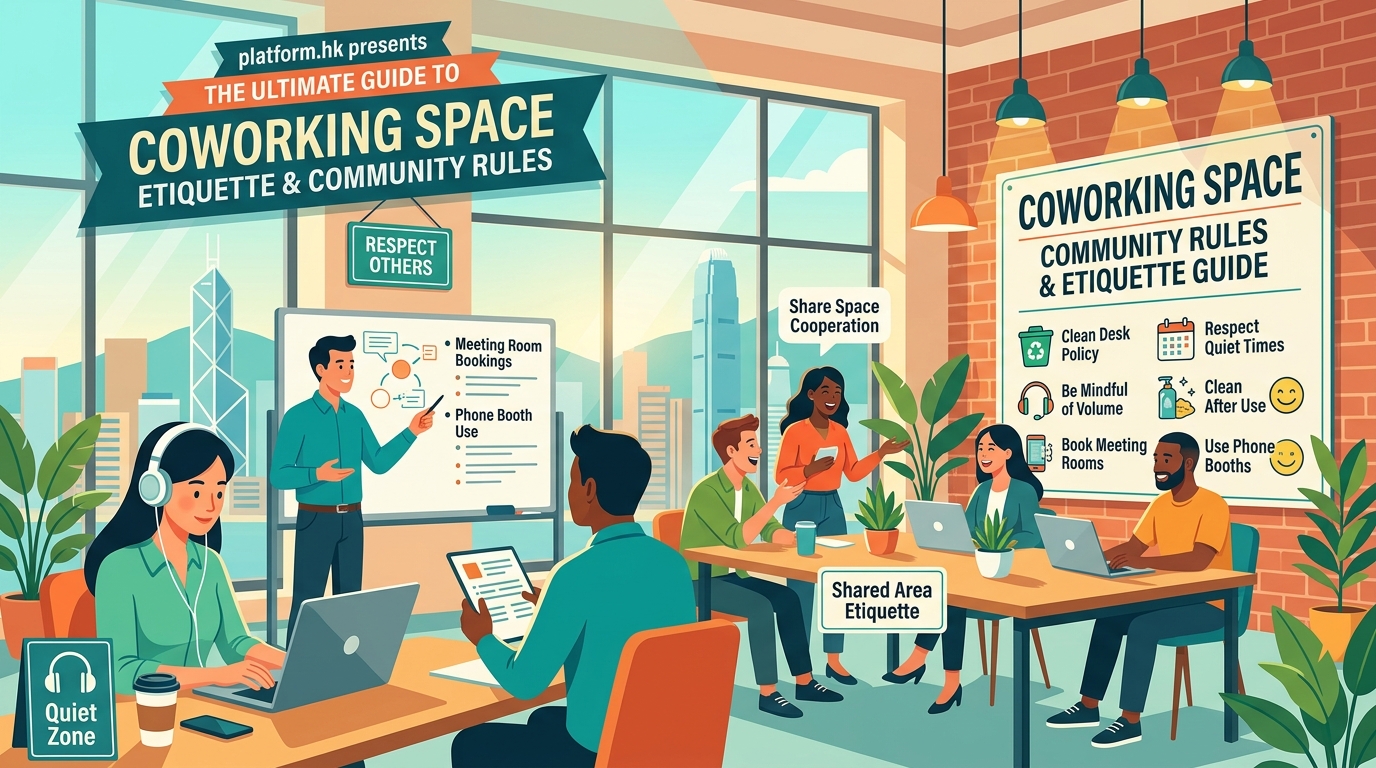
Sound travels differently in open spaces than in traditional offices with walls and doors.
Your “normal speaking voice” on a video call might be someone else’s major distraction. That podcast playing through your laptop speakers, even at low volume, creates ambient noise for everyone within earshot.
Here’s how to handle audio in shared spaces:
- Default to headphones for everything: music, videos, podcasts, and the audio side of calls.
- Move to a phone booth, meeting room, or designated call area before starting any conversation.
- Keep your voice at conversation level, not presentation volume, even during important calls.
- Warn nearby desk neighbors if you have an unavoidable call at your desk and keep it under five minutes.
- Silence notification sounds on all devices or switch them to vibrate only.
Some coworking spaces designate “silent zones” where even whispered conversations are discouraged. Others have “collaboration areas” where normal talking is expected. Learn these zones on your first day and respect them religiously.
“The number one complaint we receive isn’t about cleanliness or amenities. It’s about members who take long, loud calls at their desks when phone booths sit empty ten feet away. Spatial awareness matters more than most people realize.” – Community Manager, Hong Kong coworking space
When phone booths are all occupied and you need to take a call, step outside the space entirely. The street, a lobby, or a nearby park works better than disrupting the workspace.
Booking Systems and Time Limits
Most coworking spaces use digital booking systems for meeting rooms, phone booths, and sometimes even specific desks.
These systems only work when everyone follows the rules.
Booking Best Practices vs. Common Mistakes
| Best Practice | Common Mistake | Why It Matters |
|---|---|---|
| Book exactly the time you need | Booking 2 hours “just in case” for a 30-minute call | Blocks others from using the space |
| Cancel bookings you won’t use | No-showing on reservations | Wastes communal resources |
| End meetings on time | Running 15 minutes over without rebooking | Delays the next person’s scheduled time |
| Arrive within 5 minutes of booking start | Booking at 2pm but arriving at 2:30pm | Creates confusion about availability |
| Check the calendar before camping in a room | Assuming empty means available | Disrupts others’ confirmed bookings |
If you need to extend a meeting, check the booking system first. If someone else has the room next, pack up and move. If it’s free, make a new booking before continuing.
Some spaces implement “no show” penalties where missing three bookings without canceling results in temporary booking suspension. These policies exist because serial offenders ruin the system for everyone.
Kitchen and Common Area Courtesy
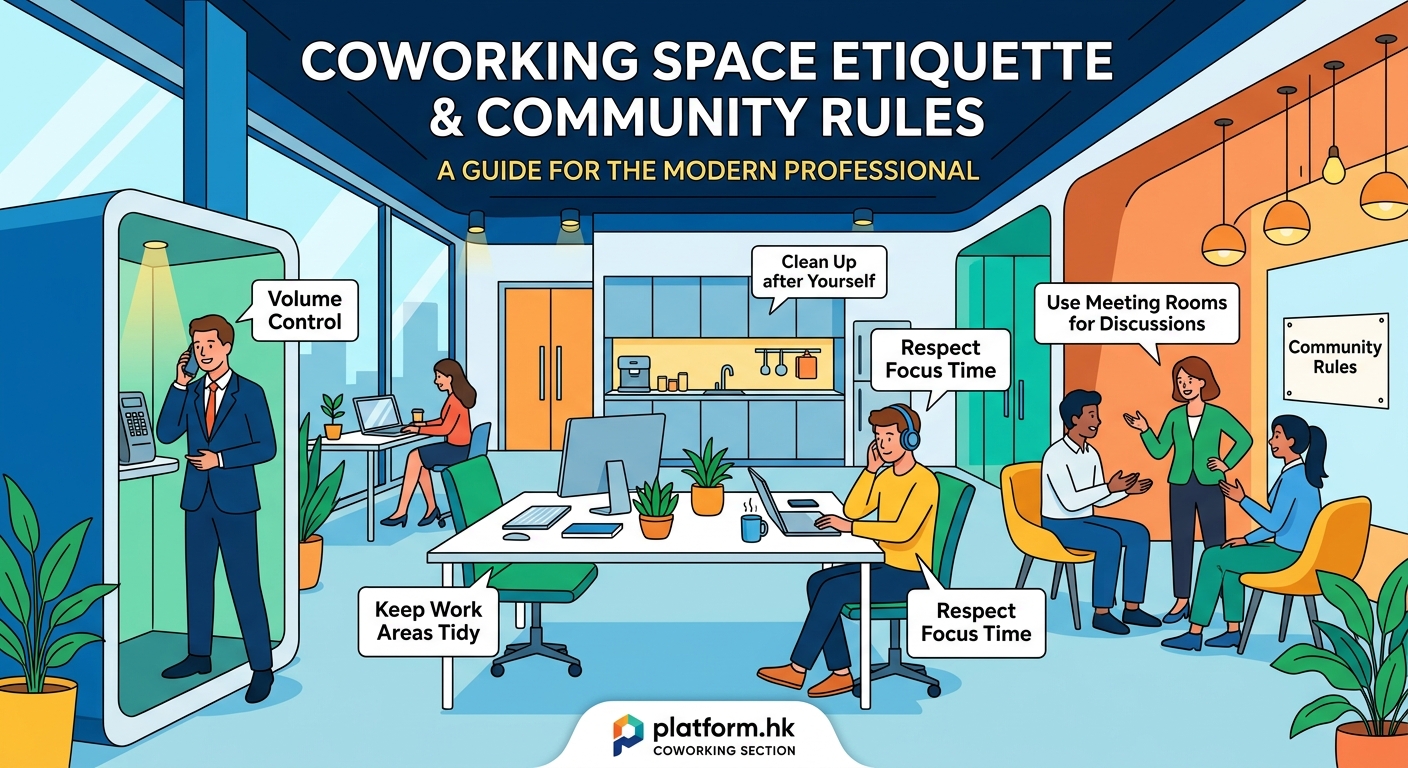
The communal kitchen reveals character faster than almost any other coworking space feature.
Dirty dishes piled in the sink, exploded food in the microwave, and coffee grounds scattered across the counter signal that some members treat shared spaces like their college apartment.
Basic kitchen etiquette isn’t complicated:
- Wash your dishes immediately after use or load them into the dishwasher
- Wipe down the microwave after heating anything that might splatter
- Clean up spills on counters and tables right away
- Label your food in the fridge with your name and date
- Throw away your own expired items every Friday
- Make a fresh pot of coffee if you take the last cup
- Don’t eat anyone else’s labeled food, ever
That last point seems obvious, but food theft remains a persistent problem in coworking spaces worldwide. If it’s not yours and not explicitly marked “free,” leave it alone.
Common areas like lounges and outdoor spaces need similar respect. Push in chairs, throw away your trash, and return magazines or books to their shelves. The cleaning staff handles deep cleaning, not picking up after individual members.
Personal Space and Desk Boundaries
Hot desking means your workspace changes daily or even hourly.
When you sit down at a clean desk, you’re inheriting a blank slate. When you leave, you should restore it to that same condition.
This means:
- Taking all personal items with you when you leave for the day
- Wiping down the desk if you spilled anything
- Pushing your chair back in
- Unplugging your chargers and cables
- Leaving the desk configuration as you found it
Some members try to “claim” desks by leaving items overnight. Most coworking spaces prohibit this explicitly. If the space offers dedicated desks or lockers as an upgrade, that’s the appropriate solution for permanent storage.
Respect the invisible bubble around other people’s workspaces. Don’t lean over someone’s shoulder to see their screen. Don’t rest your bag or coat on someone else’s chair. Don’t eat strong-smelling food right next to someone in a focused work session.
Physical boundaries matter even in open floor plans.
Social Interaction Balance
Coworking spaces exist partly for community and networking, but not everyone wants to socialize at every moment.
Reading social cues becomes essential. Headphones usually signal “I’m focused, don’t interrupt.” Someone working with their back to the room probably wants privacy. A person at a communal table facing outward might be open to conversation.
When you do start conversations, keep initial interactions brief. A simple “How’s your day going?” works better than launching into your entire business model. If someone gives short answers or returns to their screen, take the hint.
Designated social times like lunch hours, happy hours, or community events provide better networking opportunities than interrupting someone mid-task.
Some coworking spaces use Slack channels or member directories where people opt in to networking. These tools let you connect without physical interruption.
Meeting Room and Event Space Etiquette
Conference rooms serve multiple purposes: client meetings, team calls, workshops, and presentations.
Treat these spaces with extra care since they represent the coworking space’s professional face.
Before any meeting:
- Confirm your booking and arrive a few minutes early to set up
- Test the video conferencing equipment or presentation setup
- Adjust furniture arrangement only if needed, and restore it afterward
- Close the door fully if the meeting is confidential
- Clean the whiteboard completely after use and return markers to their holder
If you’re hosting clients or guests, brief them on basic space rules. You’re responsible for their behavior during their visit.
After meetings, do a sweep of the room. Collect any papers, water bottles, or personal items. Push chairs back under the table. Turn off the screen and any equipment you used.
Some spaces provide post-meeting feedback forms or cleaning checklists. These aren’t bureaucratic busywork but tools to maintain quality for everyone.
Guest and Visitor Policies
Most coworking spaces allow members to bring occasional guests, but policies vary widely.
Some spaces offer day passes that guests must purchase. Others allow a certain number of free guest visits per month. Some restrict guests entirely during peak hours.
Know your space’s specific policy before inviting anyone. Register guests through the proper system rather than sneaking them in. This matters for insurance, security, and capacity management.
When you do bring guests:
- Brief them on space rules before arrival
- Stay with them throughout their visit
- Ensure they follow the same etiquette standards you do
- Keep guest visits occasional, not regular
If someone needs regular access, they should become a member themselves rather than perpetually visiting as your guest.
Handling Conflicts and Issues
Even with perfect etiquette, conflicts occasionally arise in shared spaces.
Someone takes a call at their desk despite phone booths being available. Another member consistently leaves dishes in the sink. A third person has strong perfume that triggers allergies.
Address minor issues directly but diplomatically. “Hey, I’m having trouble concentrating with the call volume. Would you mind using a phone booth?” works better than silently fuming or complaining to management first.
For repeated problems or more sensitive issues, involve the community manager. That’s literally their job. They can address patterns without singling you out as the complainer.
Document serious violations like harassment, theft, or safety concerns. Coworking spaces maintain professional environments, and management needs clear information to address serious problems.
Adapting to Different Coworking Cultures
Not all coworking spaces operate identically.
A startup-focused space in a tech hub might embrace loud collaboration and spontaneous brainstorming. A professional services space might expect library-level quiet. A creative studio might encourage music and casual dress.
Spend your first few days observing before assuming. Notice how other members use the space. Ask the community manager about unwritten norms. Read any member handbooks or orientation materials thoroughly.
Some spaces skew social with frequent events and networking expectations. Others attract heads-down workers who prefer minimal interaction. Neither approach is wrong, but you’ll be happier when your work style matches the space’s culture.
Making Coworking Spaces Work for Everyone
Coworking space etiquette boils down to one principle: treat shared resources as if they belong to someone you respect.
That means cleaning up after yourself, managing your noise, respecting bookings, and reading social cues. It means thinking about how your actions affect the person at the next desk, in the next meeting, or using the space after you leave.
These aren’t arbitrary rules imposed by management. They’re practical guidelines that make shared workspaces functional for everyone who depends on them for their livelihood.
Start with these fundamentals, pay attention to your specific space’s culture, and adjust your behavior based on feedback. You’ll build a reputation as a considerate member, form genuine professional connections, and get more value from your membership than you thought possible.