Can Music Really Make You More Productive? What the Research Shows

You’ve probably caught yourself reaching for your headphones the moment a challenging project lands on your desk. Or maybe you’re the person who needs absolute silence to think straight. The debate about whether music helps or hinders work performance has been raging in offices, libraries, and coffee shops for decades.
Music can boost productivity for repetitive tasks and improve mood, but it often hinders complex cognitive work requiring deep focus. Your personality type, the task complexity, and music characteristics like tempo and lyrics all determine whether your playlist helps or hurts performance. The key is matching the right sound to the right work at the right time.
What the research actually shows about music and work performance
Scientists have spent years testing how background music affects our ability to get things done. The results are more nuanced than a simple yes or no.
A 2005 study published in Psychology of Music found that software developers completed tasks faster and produced better quality code when listening to music they enjoyed. Their mood improved significantly, which translated into better problem solving.
But here’s where it gets interesting. That same productivity boost doesn’t apply universally across all work types.
Research from the University of Wales showed that people trying to memorize information in order performed significantly worse with music playing. The background sound interfered with their working memory, creating mental competition for cognitive resources.
The type of work you’re doing matters enormously. Teresa Lesiuk, a music therapy researcher, found that time on task was shortest when music was removed from the environment. Workers took longer to complete projects without their preferred audio backdrop.
How personality shapes your response to background sound
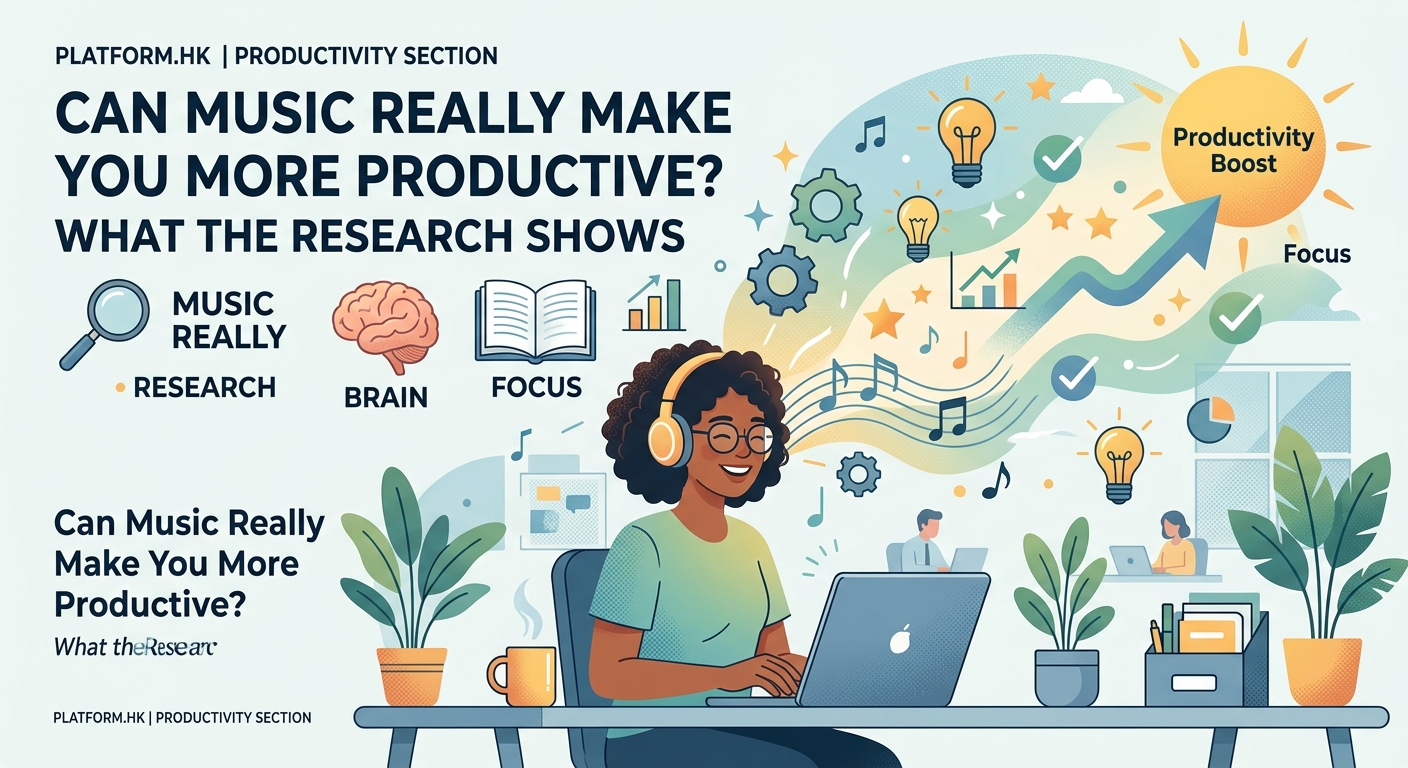
Your natural temperament plays a massive role in whether music helps or hurts your output.
Extroverts generally thrive with background stimulation. Their brains seek out additional input, and music provides just enough activation to keep them engaged without overwhelming their focus. They often report feeling more energized and productive with a soundtrack.
Introverts face the opposite challenge. Their nervous systems are more sensitive to external stimulation. What feels energizing to an extrovert can feel like cognitive overload to an introvert. Even moderate volume levels can drain mental resources that should go toward the actual work.
A 1997 study in Applied Cognitive Psychology tested this directly. Introverts performed worse on memory tasks with any background noise, including music. Extroverts showed no such decline and sometimes improved.
“The optimal level of arousal for performance varies by individual. What energizes one person creates distraction for another. Understanding your own threshold is essential for creating a productive work environment.” – Dr. Adrian Furnham, organizational psychologist
This personality effect extends beyond the introvert/extrovert spectrum. People high in neuroticism tend to find music more distracting during stressful tasks. Those with higher openness to experience often benefit more from varied musical choices.
The task complexity factor that changes everything
Simple, repetitive work responds differently to music than complex cognitive tasks.
When you’re doing data entry, filing, or other routine activities, music serves as a mental stimulant. It prevents boredom without competing for the cognitive resources you need. Factory workers have shown increased output with background music for nearly a century.
But switch to writing a technical report, analyzing financial data, or learning new software, and music often becomes a liability. These tasks demand your full working memory capacity. Adding an audio layer splits your attention.
A study from the Journal of the Acoustical Society of America found that reading comprehension dropped significantly when participants listened to music with lyrics. The language processing required for both activities created direct interference.
Here’s a practical breakdown:
| Task Type | Music Impact | Best Choice |
|---|---|---|
| Data entry | Positive | Upbeat instrumental |
| Email management | Neutral to positive | Personal preference |
| Creative brainstorming | Positive | Familiar, moderate tempo |
| Reading technical material | Negative | Silence or ambient sound |
| Learning new concepts | Negative | No music |
| Physical organization | Positive | Energetic with lyrics OK |
Why lyrics matter more than you think
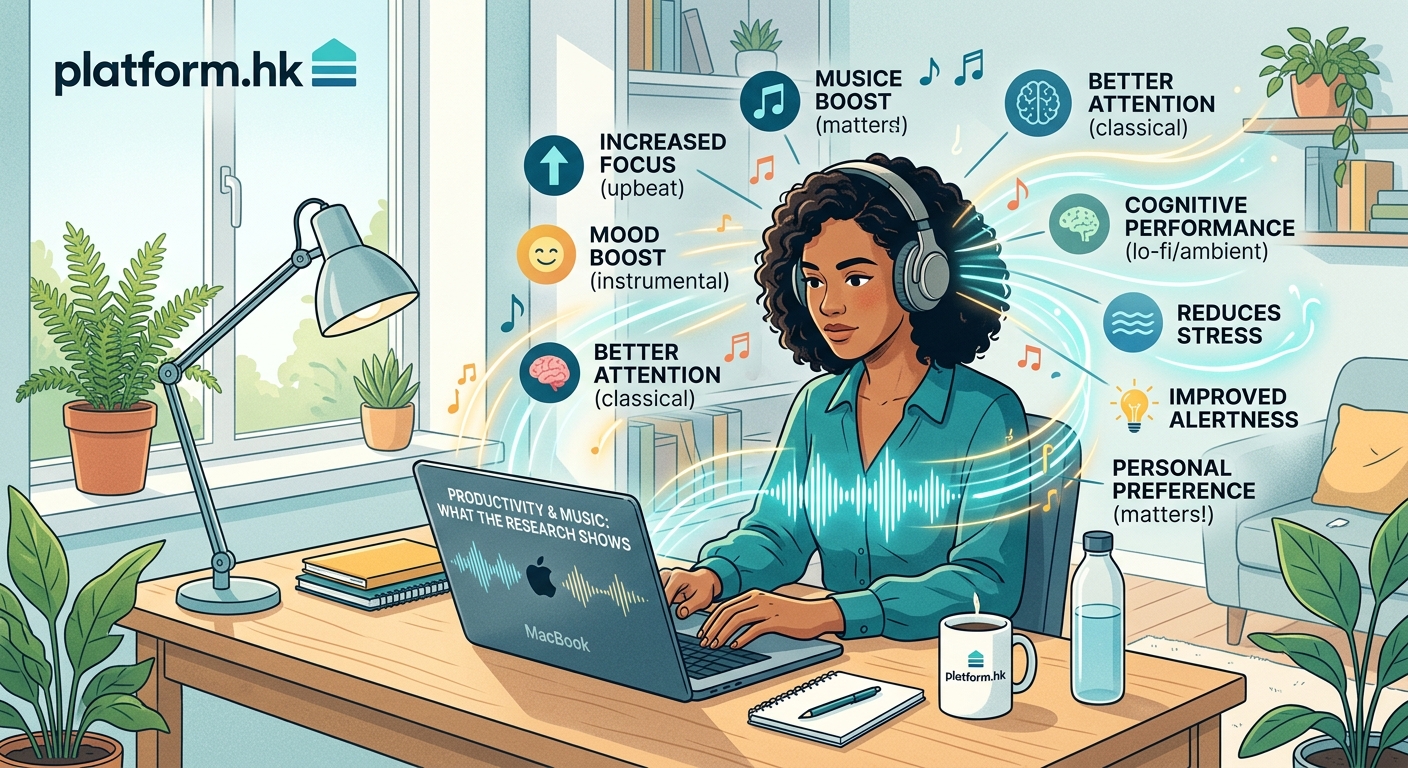
The presence of words in your music creates a unique challenge for your brain.
When you hear lyrics, your language processing centers activate automatically. You can’t turn this off, even if you’ve heard the song a thousand times. This creates competition with any task that involves reading, writing, or verbal reasoning.
Research from the University of Phoenix tested students studying with different audio conditions. Those who listened to instrumental music performed similarly to those in silence. Students with lyrical music scored significantly lower on comprehension tests.
The effect becomes stronger when the lyrics are in a language you understand. Foreign language songs cause less interference because your brain doesn’t automatically process the meaning.
But instrumental music isn’t always the answer either. Complex classical pieces with dramatic tempo changes can be just as distracting as lyrics. Your brain tracks the musical narrative, pulling focus from your work.
The tempo and volume equation
How fast and how loud your music plays directly affects your physiological state.
Fast tempo music (above 120 beats per minute) increases heart rate and arousal. This can boost energy for physical tasks or routine work. But it can also create anxiety during tasks that require calm, methodical thinking.
Slower music (60 to 80 beats per minute) tends to promote relaxation and sustained focus. Many people find this range ideal for reading or detailed work.
Volume creates its own set of effects. Moderate levels (around 70 decibels, similar to normal conversation) provide stimulation without overwhelm. Louder music forces your brain to work harder to filter it out, draining mental resources.
One fascinating finding: people consistently choose music louder than optimal for their performance. We tend to prefer volumes that feel good in the moment but actually hinder our output.
When music becomes your best productivity tool
Certain work situations benefit dramatically from the right audio backdrop.
Blocking out worse distractions: Open offices, noisy coffee shops, and homes with kids create unpredictable sound interruptions. These sudden noises pull your attention far more than steady background music. Using headphones with consistent audio creates a more controlled environment.
Mood regulation: Starting a task you’ve been avoiding? Music can shift your emotional state enough to overcome inertia. The mood boost from your favorite songs translates into increased motivation.
Creating routine and ritual: Playing the same playlist when you start work creates a psychological trigger. Your brain learns to associate those sounds with focus mode, making it easier to settle into productive work.
Physical tasks: Anything involving movement benefits from music. Warehouse workers, retail staff, and anyone doing manual labor consistently show improved output with background music.
Here’s a practical approach to testing what works for you:
- Track your output for one week with your normal music habits
- Spend the next week working in silence during cognitively demanding tasks
- Try instrumental music only during the third week
- Compare your completion times, error rates, and subjective focus levels
- Create a personalized protocol based on your results
The surprising benefits you might not expect
Beyond raw productivity, music affects other workplace outcomes.
Workers who listen to music report higher job satisfaction. The autonomy to control their audio environment makes them feel more ownership over their workspace. This psychological benefit can outweigh small performance decreases on certain tasks.
Music also speeds up time perception during boring tasks. That stack of expense reports feels less tedious with a soundtrack. You might not technically work faster, but the subjective experience improves dramatically.
Team dynamics can benefit too. Shared music choices in collaborative spaces create bonding opportunities. Just make sure everyone agrees, or the productivity benefits disappear under the weight of conflicting preferences.
Common mistakes that sabotage your musical productivity
Even people who benefit from music often undermine themselves with poor implementation.
- Spending too much time curating the perfect playlist instead of working
- Choosing new music that demands active listening rather than familiar background sound
- Using music with strong emotional associations that trigger memory spirals
- Playing music during the wrong tasks (complex analysis, learning, detailed reading)
- Setting volume too high, forcing your brain to work harder to filter it out
- Switching between songs constantly, creating interruption similar to notifications
The biggest mistake? Assuming that because music helps sometimes, it helps all the time. Flexibility based on task demands beats rigid adherence to any single approach.
Building your personal music protocol
The science gives us principles, but you need to customize the application.
Start by categorizing your regular work tasks into three buckets: routine/repetitive, moderately complex, and highly demanding. Be honest about which category each activity falls into.
For routine tasks, experiment freely. Try different genres, tempos, and volumes. Pay attention to what makes the time pass more pleasantly without sacrificing accuracy.
For moderately complex work, lean toward instrumental music you know well. Familiarity means your brain can successfully push it to the background. Avoid anything that makes you want to stop and listen.
For highly demanding cognitive work, default to silence or very minimal ambient sound. White noise or nature sounds provide audio masking without the cognitive load of music.
Keep a simple log for two weeks. Note what you were working on, what you listened to, and how it felt. Patterns will emerge faster than you expect.
The role of individual differences beyond personality
Age affects how we process background sound. Older adults generally find music more distracting than younger people, possibly due to changes in auditory processing and working memory capacity.
Musical training matters too. People with formal music education often handle complex musical backgrounds better because their brains have developed specialized processing pathways. They can more easily relegate music to background status.
Attention disorders like ADHD create unique considerations. Some people with ADHD find that music helps regulate their attention system, while others experience increased distractibility. Trial and error becomes even more important.
Cultural background influences music preference and response. The music you grew up with tends to be less cognitively demanding because your brain processes it more automatically.
Making the call for your situation
So does music make you more productive? The honest answer is: it depends.
For repetitive tasks, mood enhancement, and blocking worse distractions, music is often a net positive. For complex cognitive work requiring language processing or learning new information, silence typically wins.
Your personality, the specific task, and the characteristics of the music all factor into the equation. The people who benefit most are those who match their audio environment to their work demands rather than using a one-size-fits-all approach.
Start with awareness. Notice when you reach for your headphones and why. Track what you’re working on and how it goes. Build a flexible system that adapts to what’s in front of you.
The goal isn’t to prove music works or doesn’t work. It’s to optimize your environment for the actual work you need to do today.