How Hybrid Work Models Are Reshaping Commercial Real Estate Demand
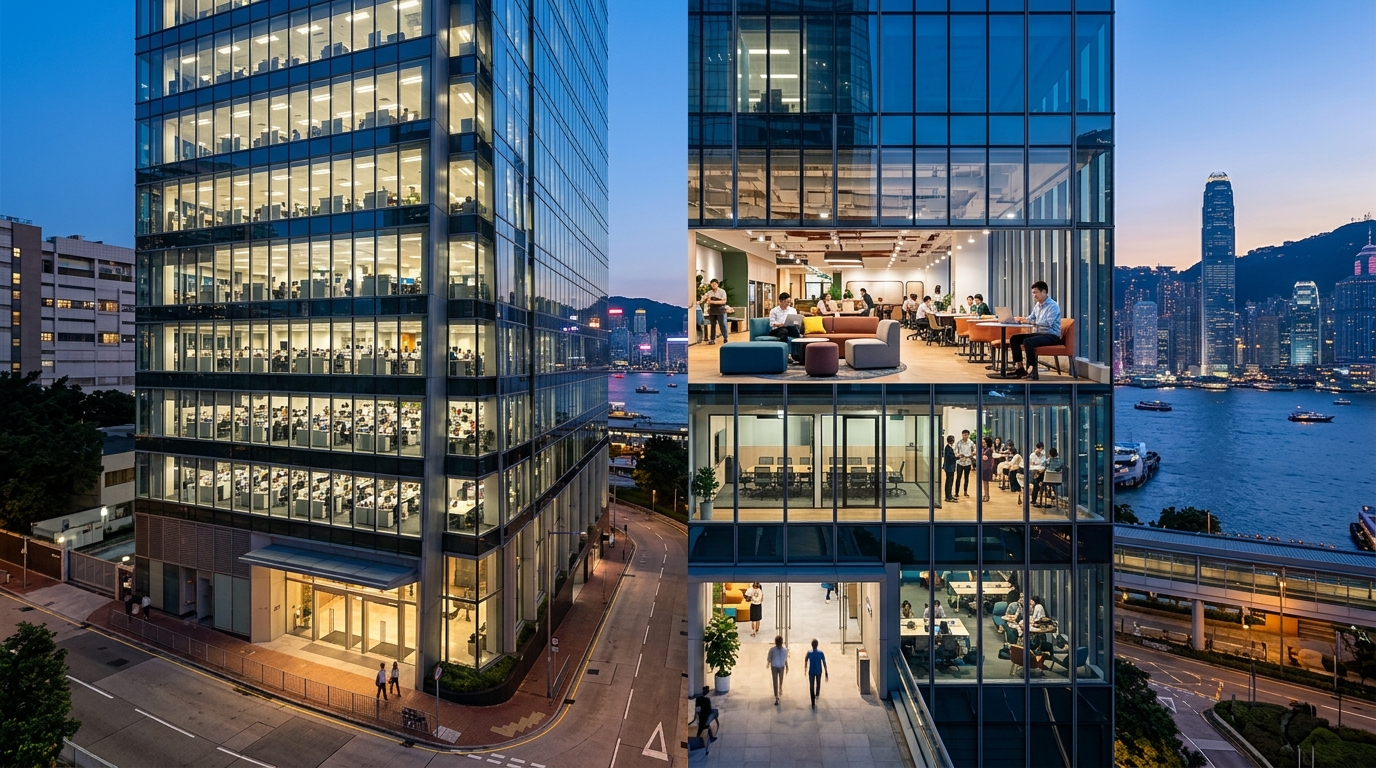
The office building that once hummed with 500 employees every weekday now sees 200 on Tuesdays and Thursdays. This isn’t an anomaly. It’s the new normal reshaping commercial real estate from Manhattan to Hong Kong. Property owners, investors, and corporate real estate managers are wrestling with a fundamental question: what happens when half your tenants only need half their space?
Hybrid work models are reducing office space demand by 20 to 40 percent across major markets, forcing landlords to rethink lease structures, amenities, and building designs. Success now depends on flexibility, technology integration, and creating spaces that justify the commute. Properties that can’t adapt face declining occupancy rates and valuations while flexible, amenity-rich buildings command premium rents.
The numbers tell a stark story
Office vacancy rates in major cities have climbed to levels not seen since the 2008 financial crisis. San Francisco hit 36 percent vacancy in early 2024. New York crossed 20 percent. These aren’t temporary blips.
Companies are making permanent decisions about their real estate footprints. A 2023 survey of Fortune 500 firms found that 78 percent planned to reduce their office space over the next three years. The average reduction? 30 percent.
But here’s what the headlines miss: this isn’t about empty buildings. It’s about different buildings serving different purposes.
Class A properties with modern amenities are seeing strong demand. Older Class B and C buildings are struggling to find tenants at any price. The flight to quality has accelerated faster than anyone predicted.
How hybrid schedules change space calculations
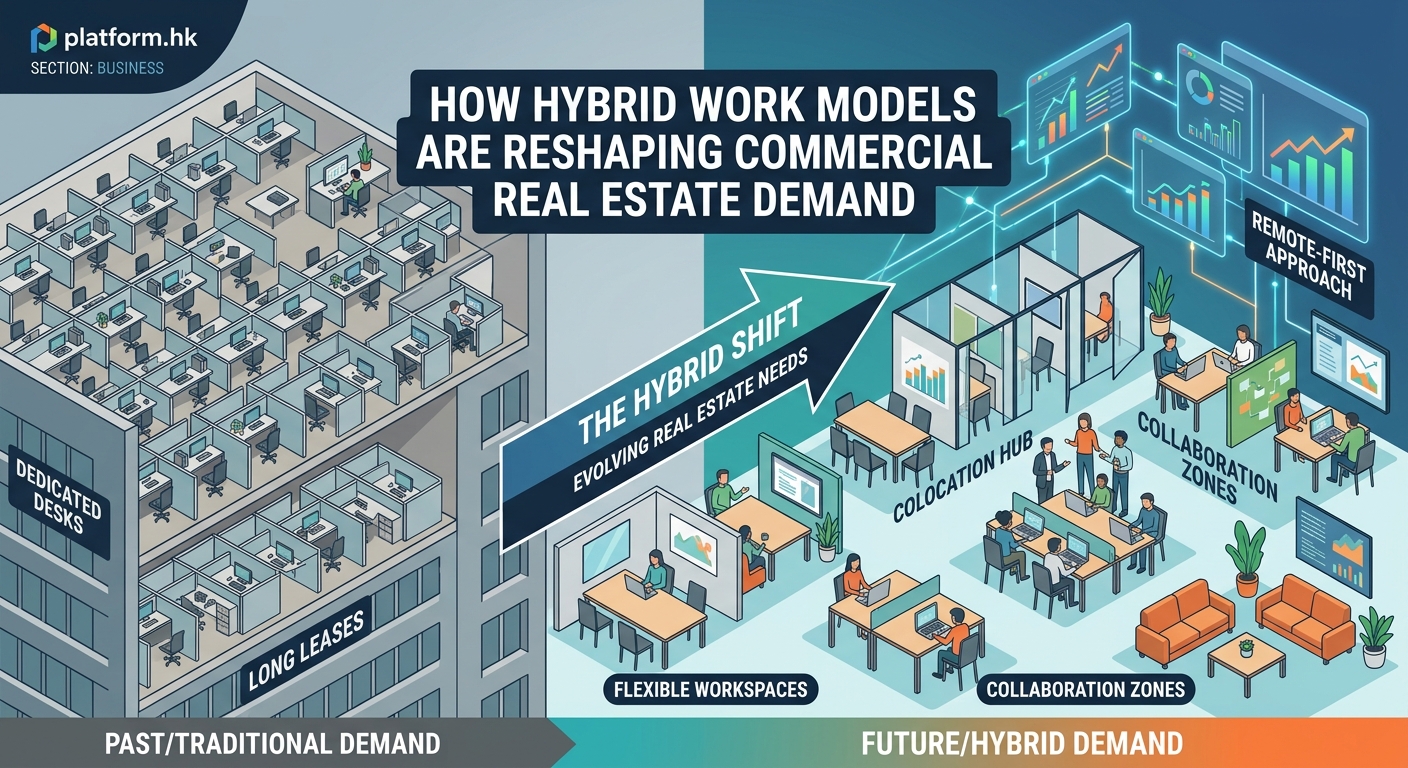
Traditional office planning used a simple formula: one desk per employee, plus meeting rooms and common areas. Companies leased based on headcount projections.
Hybrid work breaks that model completely.
When employees come in two or three days per week on rotating schedules, you don’t need a desk for everyone. Hot desking, hoteling systems, and shared workstations become viable. A company with 200 employees might only need 100 dedicated workstations if they coordinate schedules properly.
The math gets complicated fast:
| Hybrid Model | Days in Office | Space Reduction | Risk Factor |
|---|---|---|---|
| Fixed schedule | 2-3 days/week | 30-40% | Low |
| Flexible choice | 1-4 days/week | 20-30% | Medium |
| Team-based rotation | Varies | 25-35% | Medium |
| Fully flexible | As needed | 40-50% | High |
That risk factor matters. Companies that cut too much space find themselves scrambling when more employees show up than expected. Those that cut too little waste money on empty floors.
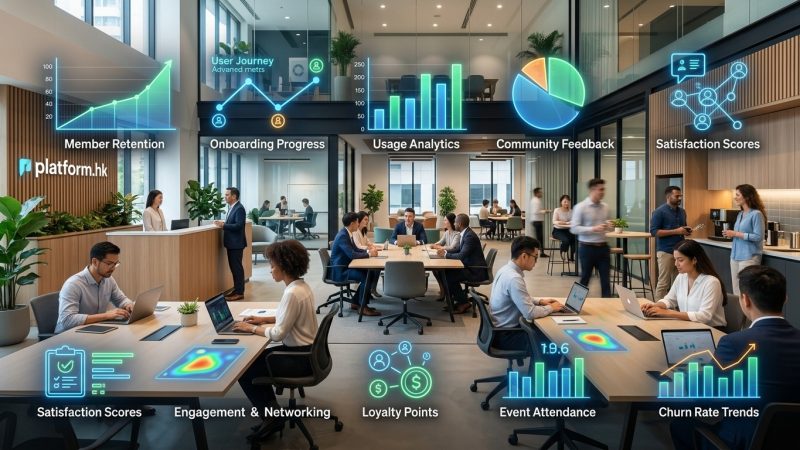
Corporate real estate managers are using new analytics tools to track badge swipes, desk bookings, and meeting room usage. The data reveals patterns that inform lease decisions.
Lease structures are getting creative
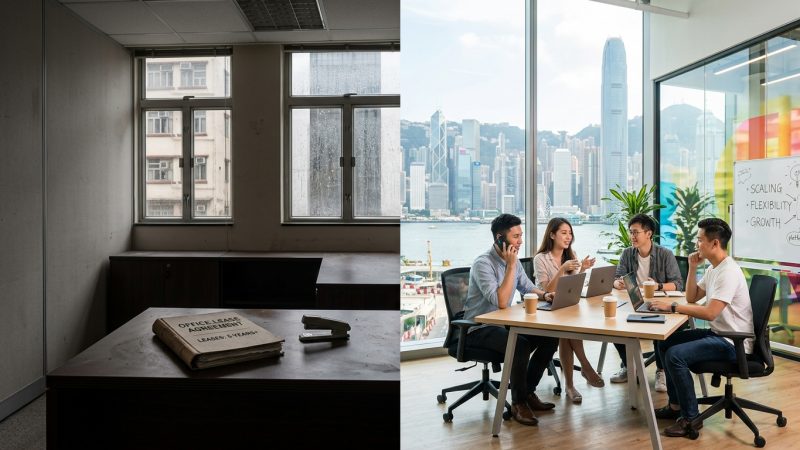
The standard ten-year office lease is becoming rare. Landlords and tenants both want flexibility now.
Here’s what’s replacing traditional agreements:
- Shorter base terms with multiple renewal options
- Contraction clauses that let tenants reduce square footage
- Coworking-style agreements with monthly adjustments
- Revenue-sharing models tied to actual usage
- Turnkey suites that require minimal tenant investment
A tech company in Austin recently signed a five-year lease with the option to reduce their footprint by 25 percent after year two. The landlord agreed because the alternative was a vacant floor.
This flexibility comes at a cost. Shorter leases and contraction rights typically mean higher per-square-foot rates. Tenants are willing to pay that premium for the optionality.
Landlords are also offering more generous tenant improvement allowances to attract companies. Build-outs that create collaborative spaces, wellness rooms, and tech-enabled meeting areas help justify the commute for hybrid workers.
The amenity arms race
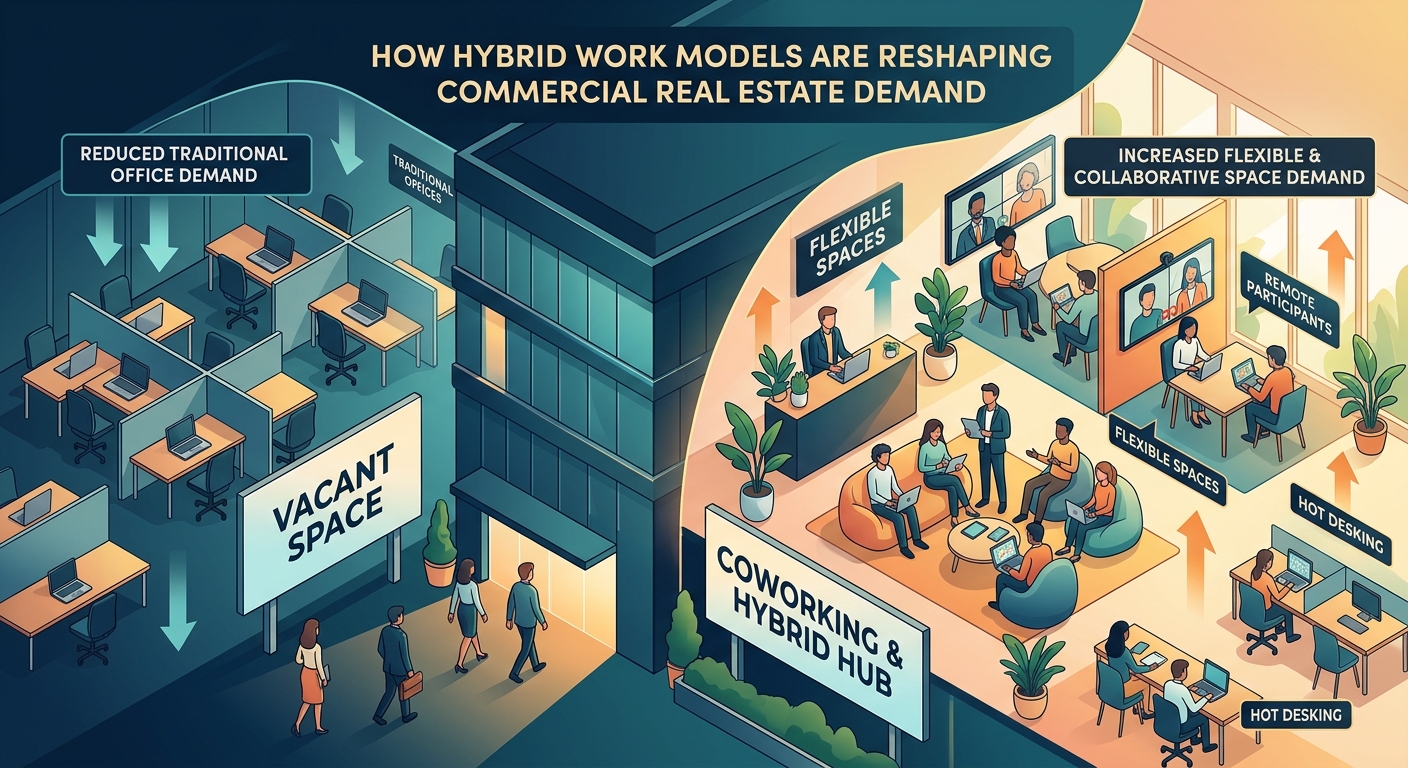
An office used to compete on location, square footage, and price. Now it competes on experience.
Buildings are adding amenities that make coming to the office worthwhile:
- Full-service cafes and restaurants that rival neighborhood spots
- Fitness centers with classes and personal training
- Outdoor terraces and green spaces for meetings or breaks
- Childcare facilities or subsidized backup care
- Concierge services handling dry cleaning, packages, and errands
- Podcast studios and content creation spaces
- Wellness rooms for meditation, nursing, or quiet time
These aren’t nice-to-haves anymore. They’re table stakes for Class A properties in competitive markets.
A building in Chicago added a 5,000-square-foot fitness center and saw lease renewals jump 40 percent compared to similar buildings in the neighborhood. Tenants specifically cited the gym as a factor in their decision to stay.
The cost of these amenities is substantial. Landlords are betting that higher occupancy rates and premium rents will justify the investment. Early data suggests they’re right.
Location preferences are shifting
The old real estate mantra was “location, location, location.” That still matters, but what counts as a good location has changed.
Central business districts are losing their monopoly. Employees who only commute two or three days per week will tolerate a longer trip if the destination is worth it. But they also value offices closer to where they actually live.
This is driving demand in three types of locations:
Suburban office parks near residential areas. Companies are opening satellite offices in suburbs where employees live. These smaller spaces serve as collaboration hubs for teams that don’t need to be downtown every day.
Transit-oriented developments. Buildings within walking distance of train stations are outperforming. Hybrid workers want easy commutes on the days they come in.
Mixed-use neighborhoods. Areas with restaurants, shops, and services are more attractive than isolated office towers. Employees want to run errands or meet friends after work without getting back in their car.
A financial services firm in New Jersey closed their Manhattan headquarters and opened three smaller offices in suburbs where their employees lived. Satisfaction scores went up and real estate costs went down.
Technology requirements have intensified
Hybrid work only functions with robust technology infrastructure. Buildings that can’t support it are falling behind.
Modern office spaces need:
- High-capacity internet with redundant connections
- Seamless video conferencing in every meeting room
- Desk booking systems integrated with building access
- Mobile apps for everything from parking to temperature control
- Advanced HVAC systems with air quality monitoring
- Touchless entry and elevator controls
- Energy management systems that adjust to actual occupancy
Landlords are investing millions in building technology. The payoff comes in higher rents and lower vacancy rates.
A landlord in Seattle spent $3 million upgrading the tech infrastructure in a 300,000-square-foot building. Within six months, they signed two new tenants at rates 15 percent above comparable buildings without those features.
The buildings that win in a hybrid world are the ones that make remote workers want to come back. That means creating an experience you can’t replicate at home. Technology, amenities, and thoughtful design aren’t optional anymore. They’re the price of admission.
Property values are diverging
The commercial real estate market isn’t declining uniformly. It’s splitting into winners and losers.
Trophy properties in prime locations are holding value or even appreciating. These buildings have the amenities, technology, and prestige that attract tenants willing to pay premium rents.
Older buildings in secondary locations are struggling. Many are trading at 30 to 50 percent below their 2019 valuations. Some owners are walking away from mortgages rather than investing in necessary upgrades.
This divergence creates opportunities for investors with capital and vision. Value-add plays that convert struggling office buildings into residential, life science, or mixed-use properties are gaining traction.
A Boston investor bought a Class B office building at a 40 percent discount and converted it to apartments. The project penciled out because residential demand in that neighborhood was strong while office demand had collapsed.
Adaptive reuse is accelerating
Converting office buildings to other uses isn’t new, but the pace has increased dramatically. Cities are streamlining permitting to encourage these projects.
The best candidates for conversion:
- Buildings with floor plates under 15,000 square feet
- Properties with good natural light and operable windows
- Locations in residential neighborhoods
- Structures with ceiling heights over nine feet
- Buildings near transit and amenities
Not every office building can be converted economically. Those with deep floor plates and limited windows are particularly challenging. But in many cases, conversion makes more financial sense than trying to lease empty office space.
A 1970s office tower in Philadelphia sat 60 percent vacant for three years. The owner converted it to 200 apartments and filled the building in eight months. The residential rents generated more income than the building had ever earned as an office.
What corporate tenants are prioritizing
Companies approaching lease renewals or relocations are asking different questions than they did five years ago.
The top priorities now:
- Flexibility to scale up or down. Nobody wants to be locked into space they might not need.
- Collaborative spaces over individual desks. If employees are home for focused work, the office should facilitate teamwork.
- Employee experience and retention. The office is a recruiting and retention tool now.
- Sustainability and ESG goals. Green buildings help companies meet environmental commitments.
- Cost efficiency. CFOs want to reduce real estate expenses while maintaining productivity.
These priorities often conflict. Flexibility costs more. Better amenities increase rent. Corporate real estate teams are making tough tradeoffs.
A professional services firm in Dallas chose a smaller, more expensive space in a premier building over a larger, cheaper space in an older property. Their reasoning: the better building would drive higher office attendance and help with recruiting.
Regional variations matter
The hybrid work impact on commercial real estate isn’t uniform across markets. Local factors create significant variation.
San Francisco and Seattle have seen the most dramatic office vacancy increases. Tech companies in these cities embraced remote work early and aggressively reduced their footprints.
Texas markets like Austin and Dallas have been more resilient. Companies relocating from coastal cities are absorbing some of the space that existing tenants are giving back.
New York is somewhere in the middle. Manhattan office vacancy is elevated but not catastrophic. Outer borough markets are actually seeing growth as companies open satellite locations.
International markets show even more variation. Asian cities where remote work is less culturally accepted have seen smaller impacts. European markets fall somewhere between the U.S. and Asia.
The investment thesis has changed
Real estate investors who made money for decades buying office buildings and collecting rent are rethinking their strategies.
The old playbook assumed steady rent growth and high occupancy rates. That’s no longer a safe assumption.
New investment approaches include:
- Focusing exclusively on Class A properties in prime locations
- Buying distressed assets for conversion or redevelopment
- Investing in life science and medical office properties less affected by hybrid work
- Backing flexible workspace operators who can handle volatility
- Targeting suburban office properties near residential growth
Institutional investors are being selective. A pension fund that once bought office buildings in any major market now only considers properties that meet strict criteria for amenities, technology, and location.
Insurance and financing complications
Lenders are scrutinizing office properties more carefully. Loan-to-value ratios have tightened. Interest rates have increased even beyond general market rises.
Banks are particularly cautious about:
- Buildings with near-term lease expirations
- Properties with high exposure to industries embracing remote work
- Older buildings requiring significant capital investment
- Markets with elevated vacancy rates
This credit tightening is forcing some property sales and creating distress opportunities. Owners who can’t refinance maturing loans are selling at discounts.
Insurance carriers are also adjusting. Properties with lower occupancy may face higher premiums or coverage limitations. Liability considerations change when buildings are only partially occupied.
What successful landlords are doing differently
The landlords thriving in this environment share common characteristics. They’re proactive, not reactive.
Successful strategies include:
- Investing in amenities before tenants demand them
- Offering flexible lease terms that reduce tenant risk
- Using data analytics to understand and predict tenant needs
- Creating community through events and programming
- Maintaining buildings impeccably regardless of occupancy
- Communicating transparently with tenants about building plans
A landlord in Miami hosts monthly networking events for tenants, bringing companies together and creating a sense of community. Tenant satisfaction scores are 20 points higher than the market average, and lease renewals reflect that.
The role of coworking and flexible space
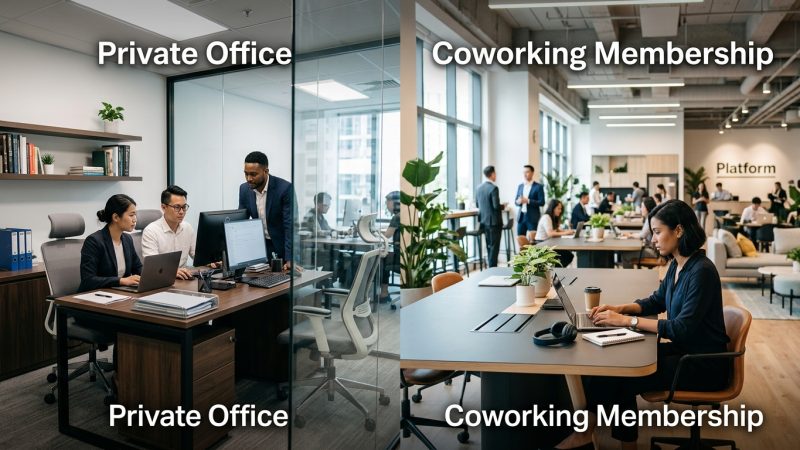
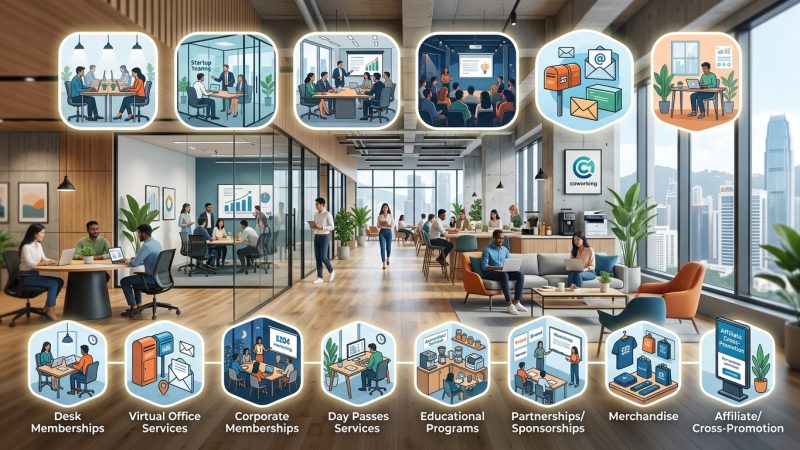
Coworking operators are both competitors and partners for traditional landlords. Many building owners are carving out floors for flexible workspace operators or launching their own flex products.
This makes sense for several reasons:
Companies want to try space before committing to long leases. Flex space lets them test locations and sizes.
Hybrid workers need occasional desk space without full-time leases. Coworking memberships fill that gap.
Landlords can fill vacant space and create activity in their buildings while waiting for traditional tenants.
A Chicago landlord converted two vacant floors to flexible workspace. The space filled quickly and created buzz that helped lease three full floors to traditional tenants who wanted to be in an active building.
Design trends for the hybrid era
Office design is evolving rapidly. The sea of cubicles is dead. The open plan office is dying.
What’s replacing them:
- Neighborhoods with varied work settings from quiet focus rooms to collaborative areas
- More meeting rooms and fewer individual desks
- Lounge-style spaces that feel residential, not corporate
- Outdoor work areas and terraces
- Soundproofed phone booths for video calls
- Technology-enabled rooms that support hybrid meetings
- Flexible furniture that can be reconfigured easily
A media company in Los Angeles redesigned their office with 40 percent fewer desks but three times as many meeting rooms. Office attendance increased because employees felt the space supported their actual work needs.
Sustainability meets hybrid work
Energy consumption in office buildings has decreased with lower occupancy. This creates both opportunities and challenges.
Buildings with advanced energy management systems can reduce costs by adjusting HVAC, lighting, and other systems to actual usage. Those savings can be substantial.
But buildings designed for full occupancy don’t always operate efficiently at 50 or 60 percent capacity. Systems may run inefficiently or create comfort problems in partially occupied spaces.
Green building certifications like LEED and WELL are adding criteria around flexibility and adaptability. Buildings that can efficiently serve varying occupancy levels will have an advantage.
Preparing for what comes next
Nobody knows exactly how hybrid work will evolve. Some companies are mandating more office days. Others are going fully remote. Most are somewhere in between, still experimenting.
This uncertainty makes long-term planning difficult. The best approach is building in optionality.
For landlords, that means:
- Creating spaces that can serve multiple uses
- Investing in infrastructure that supports various tenant types
- Maintaining financial flexibility to weather volatility
- Building relationships with tenants to understand their evolving needs
For corporate tenants, it means:
- Choosing lease terms that allow for adjustments
- Designing spaces that can be reconfigured as work patterns change
- Using data to inform space decisions rather than guessing
- Staying close to what employees actually want and need
Making hybrid work work for real estate
The transformation of commercial real estate isn’t finished. We’re still in the early innings of figuring out what office space looks like in a hybrid world.
What’s clear is that the old models don’t work anymore. Success requires flexibility, investment, and a willingness to experiment. Properties that can adapt will thrive. Those that can’t will struggle or disappear.
For real estate professionals, this moment is both challenging and full of opportunity. The winners will be those who understand that hybrid work isn’t a temporary disruption. It’s a permanent shift that requires new thinking about what office space is for and how it creates value.
The buildings that succeed will be the ones that give people a reason to leave their home office. That’s a higher bar than just providing a desk and a chair. But it’s also a more interesting challenge, and one that will define commercial real estate for the next decade.