What Happens When Your Favorite Workspace Closes? A Contingency Plan Guide
You’re halfway through a client deadline when you get the email. Your coworking space is closing in 30 days. Panic sets in. Where will you work? What about your meetings? Your mail? Your routine?
It happens more often than you’d think. Coworking spaces shut down, cafes renovate, libraries change policies, and suddenly your reliable workspace vanishes. Without a backup plan, you’re scrambling to find somewhere to plug in your laptop while your productivity tanks.
A workspace contingency plan protects your income and sanity when your primary location becomes unavailable. This guide covers how to identify backup spaces, create transition protocols, maintain business continuity, and build flexibility into your work routine. You’ll learn to map alternative locations, test them before emergencies strike, and switch seamlessly without losing momentum on projects or client relationships.
Why your workspace needs a backup plan
Most remote workers and freelancers treat their workspace like it’s permanent. They build routines around a single location, store supplies there, schedule all their calls from that spot, and never consider what happens if it disappears.
Then reality hits. The space closes. Rent doubles. Management changes policies. A renovation kicks you out for three months. Suddenly you’re working from your kitchen table with terrible WiFi, missing deadlines because you can’t focus.
The financial impact adds up fast. Missed deadlines mean lost clients. Poor work environments kill productivity. Scrambling for last minute solutions wastes billable hours. One freelance designer lost two clients during a workspace transition because she couldn’t maintain her usual turnaround times.
A contingency plan guide isn’t about paranoia. It’s about treating your workspace like the critical business infrastructure it actually is.
Building your backup location list
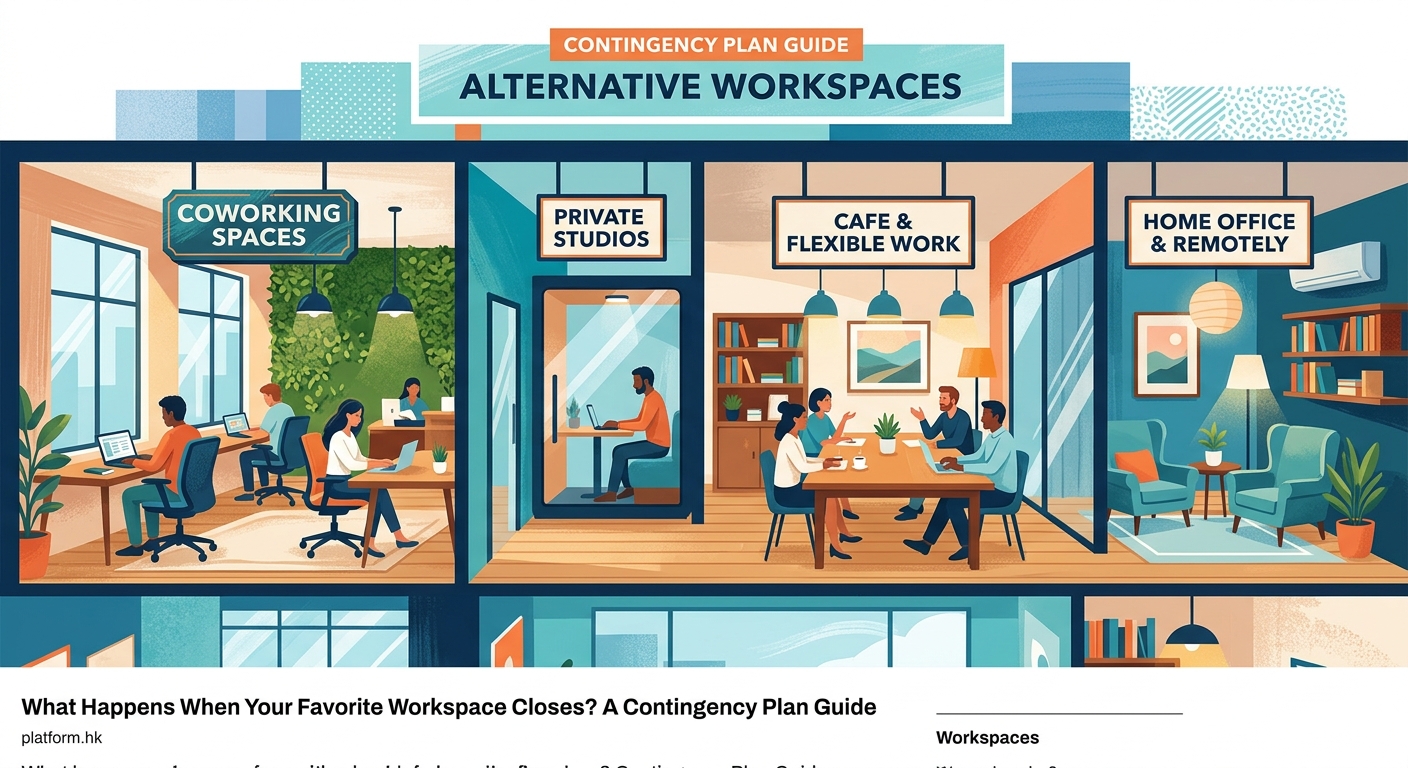
Start by identifying three types of alternative workspaces. You need immediate options, short term solutions, and long term replacements.
Immediate options are places you can work today with zero setup. These handle emergencies when your primary space becomes unavailable without warning.
- Coffee shops with reliable WiFi and power outlets
- Public libraries with work areas
- Hotel lobbies that welcome laptop workers
- Your home if it has a dedicated work corner
Short term solutions work for one to three months while you find something permanent. These require minimal commitment but offer better amenities than emergency spots.
- Day passes at other coworking spaces
- Month to month desk rentals
- Executive suites with flexible terms
- Shared office arrangements with other freelancers
Long term replacements become your new primary workspace if the original never reopens. These need the same features that made your first choice work.
Test each backup location before you need it. Spend half a day working there. Take a video call. Check the WiFi speed. Notice the noise levels at different times. Find out if they have printing, parking, or other services you rely on.
Create a spreadsheet tracking each location’s key details.
| Location Type | Name | WiFi Speed | Power Access | Noise Level | Cost | Distance | Hours |
|---|---|---|---|---|---|---|---|
| Coffee Shop | Blue Bottle | 45 Mbps | Limited | Moderate | $5/day | 0.3 mi | 6am-8pm |
| Library | Main Branch | 100 Mbps | Ample | Low | Free | 1.2 mi | 9am-9pm |
| Coworking | Spaces Co | 500 Mbps | Unlimited | Low | $25/day | 0.8 mi | 24/7 |
| Home Office | Spare Room | 200 Mbps | Unlimited | Very Low | $0 | 0 mi | Always |
Update this list quarterly. Spaces change. New options open. Your needs shift as your business grows.
Creating your transition protocol
A transition protocol is your step by step process for switching workspaces without dropping balls. Think of it like an evacuation plan, but for your productivity.
-
Document your current setup. Take photos of your desk layout, cable management, and equipment placement. List every item you keep at your workspace. Note which supplies belong to you versus the space. This inventory becomes your packing checklist.
-
Create a 48 hour action plan. Write down exactly what you’ll do in the first two days after learning your space is closing. Who gets notified? What gets packed first? Where do you work tomorrow? Having these decisions pre made eliminates panic.
-
Build a communication template. Draft emails for clients, collaborators, and contacts explaining a workspace change. Include your new address, updated meeting options, and reassurance about business continuity. When crisis hits, you just fill in the blanks and send.
-
Establish a mail forwarding system. Set up virtual mailbox services or PO boxes before you need them. Getting mail forwarding activated takes time. Starting the process during an emergency means missing important documents.
-
Backup your local files. If you store anything on site or on local drives, create automatic cloud backups. Losing access to your workspace shouldn’t mean losing access to your work.
-
Test your mobile setup. Confirm you can work effectively from a laptop and phone alone. Download offline versions of critical files. Verify your hotspot works. Practice running a client call from a backup location.
One consultant keeps a “go bag” with chargers, adapters, headphones, and a portable monitor. When his coworking space flooded, he grabbed the bag and was working from a library within an hour.
Managing the business continuity side
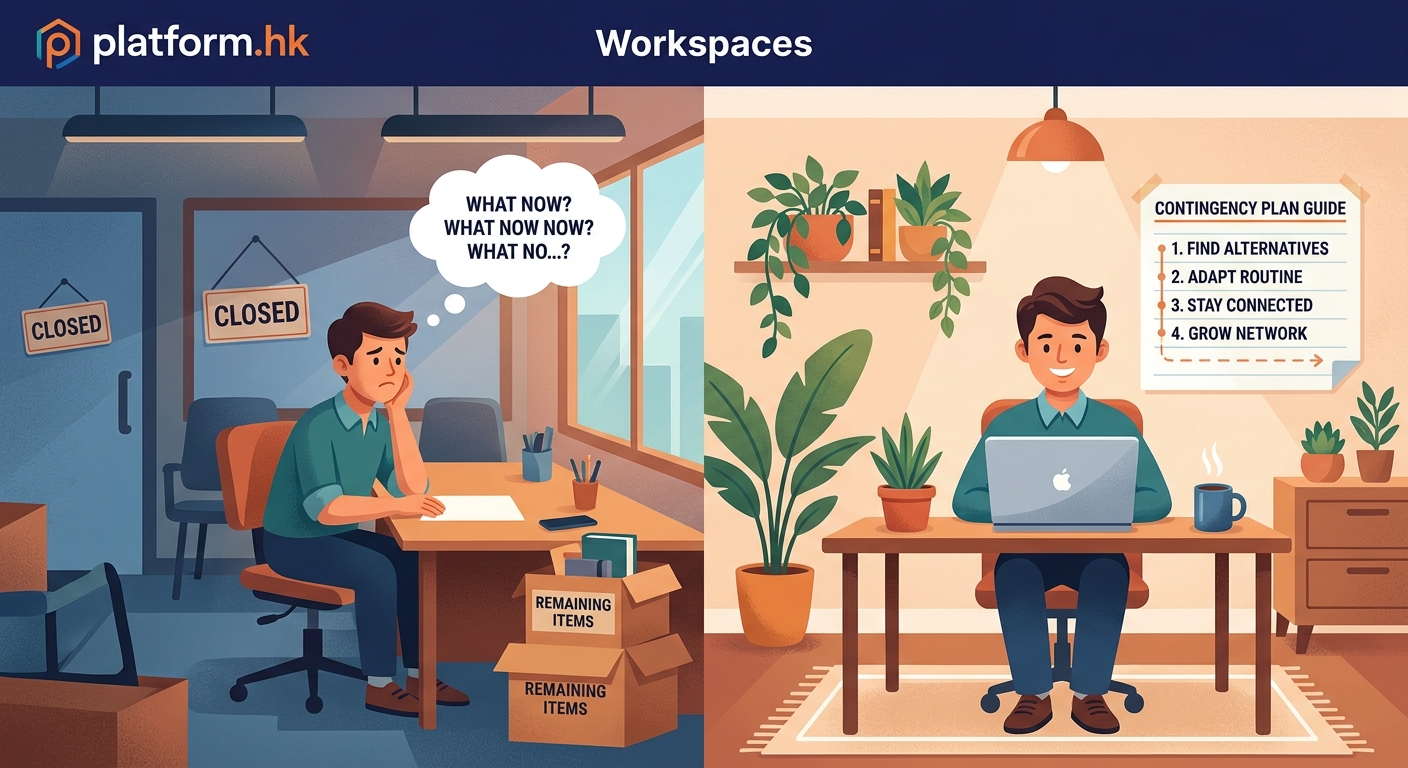
Your workspace isn’t just a desk. It’s part of your professional identity and client experience. Changing locations affects more than your daily routine.
Address changes ripple through your business. Update your Google Business Profile, website contact page, email signature, business cards, invoices, contracts, and any directories listing your address. Missing even one creates confusion that damages your professional image.
Meeting logistics need rethinking. If clients visited you at your old space, how will that work now? Can your backup location accommodate guests? Do you need to shift to video calls? Should you rent meeting rooms as needed?
Phone and internet reliability becomes critical during transitions. Consider getting a backup internet connection through your phone carrier. Test call quality from backup locations. Have a plan for days when WiFi fails.
Psychological continuity matters too. Your workspace routine triggers work mode in your brain. Changing locations disrupts that. Build new rituals that signal work time regardless of where you sit. Same playlist, same first task, same coffee order.
“I learned the hard way that workspace contingency planning isn’t optional. When my coworking space closed suddenly, I had clients asking if my business was still operating. Now I maintain relationships with three different spaces and can pivot in 24 hours.” – Marcus Chen, Brand Strategist
Avoiding common contingency planning mistakes
Many freelancers and remote workers make the same errors when planning for workspace disruptions.
Mistake one: Assuming you’ll have warning. Spaces close abruptly due to financial problems, building issues, or ownership changes. Your contingency plan guide should work with zero notice.
Mistake two: Only considering similar replacements. If your coworking space closes, your backup doesn’t have to be another coworking space. A combination of home office plus rented meeting rooms might work better and cost less.
Mistake three: Ignoring the financial buffer. Transitioning workspaces costs money. Moving supplies, paying deposits, buying day passes while you search. Keep a workspace emergency fund covering at least two months of alternative arrangements.
Mistake four: Forgetting about community. Many people choose coworking spaces for the social aspect. Your contingency plan should address how you’ll maintain professional connections and avoid isolation if you end up working from home.
Mistake five: Treating the plan as set and forget. Your business changes. Your needs evolve. Review your contingency plan guide every quarter. Verify your backup locations still exist and meet your current requirements.
Mistake six: Not communicating with your network. Other freelancers and remote workers face the same risks. Share backup location recommendations. Coordinate group memberships at alternative spaces. Build a mutual support system.
Building flexibility into your work style
The best contingency plan makes you less dependent on any single location. That means developing work habits that travel well.
Go paperless wherever possible. Physical files tie you to specific locations. Digital systems work anywhere. Scan important documents. Use cloud storage. Adopt tools that sync across devices.
Standardize your tech setup. Use the same software on your laptop, tablet, and phone. Configure identical shortcuts and settings. When you switch devices or locations, muscle memory still works.
Create location independent routines. Instead of “I always work from the corner desk at my coworking space,” build routines around portable cues. Specific music, a particular beverage, a startup checklist you can execute anywhere.
Maintain multiple workspace relationships. Don’t put all your eggs in one basket. Use your primary space four days a week and rotate through backups on the fifth. This keeps you familiar with alternatives and maintains those relationships.
Schedule regular workspace audits. Once a month, work from a different location. Notice what you miss from your primary space. Identify what works better. Adjust your backup plans based on real experience.
Consider hybrid arrangements from the start. Splitting time between a coworking space and home office means you’re never fully dependent on either. If one becomes unavailable, you already have an established alternative.
Your workspace insurance policy
Think of your contingency plan as insurance. You pay small premiums in time and attention now to avoid catastrophic disruption later.
The premium is low. A few hours to research backup locations. An afternoon testing alternatives. Quarterly reviews that take 30 minutes. Maintaining relationships with multiple spaces.
The payout is huge. When your workspace closes, you continue working smoothly. Clients never know anything changed. Your income doesn’t skip a beat. Your stress stays manageable.
Start building your plan today. Open that spreadsheet. Visit a potential backup location this week. Draft your transition protocol. Take photos of your current setup.
Because the best time to prepare for workspace disruption is before you’re staring at a closure notice with a deadline breathing down your neck.