From Coffee Shops to Coworking: Why 2026 Is the Year of the Third Place
You are sitting in a coffee shop that feels like a second living room. The barista knows your order. The Wi-Fi is solid. You have a corner table with a power outlet that actually works. For a few hours, this space is yours. But lately, something has shifted. That same coffee shop is louder. Tables are harder to find. The unspoken rule about buying one drink every two hours feels more like a ticking clock. You start wondering if there is a better option.
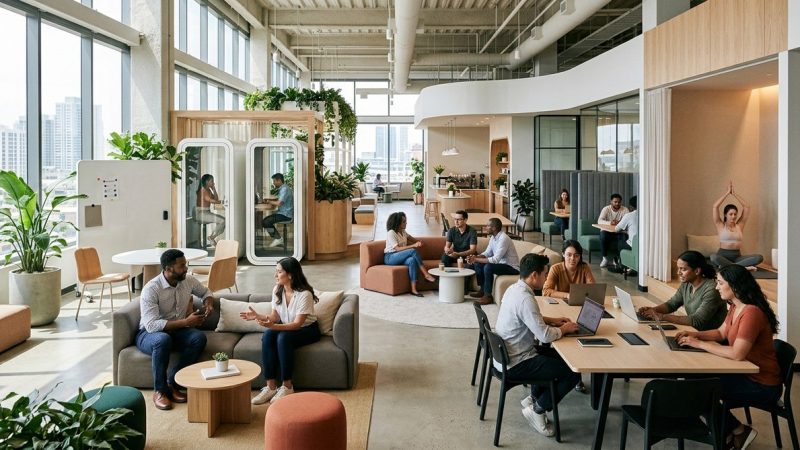
The third place is no longer just a coffee shop or a library. In 2026, the most successful third places are hybrid workspaces that blend the comfort of a cafe with the professional amenities of an office. Urban professionals and small business owners are choosing spaces that offer community, flexibility, and reliable infrastructure. This guide breaks down the trends driving this shift and how to find your ideal third place this year.
Why 2026 Is the Year the Third Place Evolved
The concept of a “third place” has been around for decades. Sociologist Ray Oldenburg coined the term to describe social spaces separate from home (first place) and work (second place). Think of local pubs, barbershops, or community centers. These were places where people gathered without pressure, where conversation flowed freely, and where you could simply exist.
But the way we work has changed. Remote work is no longer a temporary experiment. It is a permanent fixture for millions of Americans. According to a 2025 Gallup report, 35 percent of U.S. employees with remote-capable jobs now work fully remotely. Another 53 percent work in a hybrid model. That leaves a massive population searching for a space that is not their kitchen table and not a cubicle.
Coffee shops tried to fill the gap. They offered Wi-Fi, caffeine, and a change of scenery. But they were never designed for eight-hour workdays. Power outlets are scarce. Seating is uncomfortable after hour three. The background noise that felt energizing at noon becomes draining by 3 p.m. And the expectation to keep buying food or drinks adds up fast.
In 2026, the third place is being redefined. It is no longer just a social escape. It is a functional workspace that also feeds your need for community. This year marks the point where coworking spaces, hybrid cafes, and membership clubs have matured into something that truly serves the modern worker.
What a Third Place Looks Like in 2026
The ideal third place today is not a one size fits all solution. Different people need different things. But the most popular third places in 2026 share a few common features.
- Reliable high speed internet. This is non negotiable. A third place that cannot handle video calls or large file uploads will not survive.
- Comfortable seating for long stays. Ergonomic chairs, proper desk height, and enough space to spread out your laptop and notebook.
- Access to power outlets. Plenty of them. Not hidden behind a plant or under a table.
- Food and drink options that do not require constant repurchasing. Many spaces now offer a flat daily rate that includes unlimited drip coffee or tea.
- A community manager or host. Someone who greets you, introduces you to other members, and keeps the vibe friendly.
- Quiet zones and collaboration zones. The ability to choose your environment based on the task at hand.
- Flexible membership options. Day passes, punch cards, and monthly plans that do not lock you into a contract.
These features are not revolutionary on their own. What is new is how they are being combined and marketed. The best third places in 2026 feel intentional. They are designed for the way people actually work.
A Process for Finding Your Third Place
If you are ready to move beyond coffee shops, here is a simple process to find a workspace that fits your life.
-
Define your non negotiables. Before you start touring spaces, make a list of what you absolutely need. Do you need a private phone booth for client calls? Is parking essential? Do you need access to a printer? Write it down. This list will save you time and frustration.
-
Search for spaces in your radius. Use a platform like Platform to find coworking spaces, hybrid cafes, and membership clubs near you. Filter by amenities, price, and hours. Look for spaces that offer a day pass so you can test them without commitment.
-
Visit during your actual work hours. Do not visit a space at 10 a.m. on a Tuesday if you usually work from 2 p.m. to 8 p.m. The vibe changes depending on the time of day. Visit when you would actually be there.
-
Try the Wi-Fi and the coffee. Open a video call. Upload a large file. See how the connection holds up. Then order a drink. If the coffee is bad, that is a red flag. A third place should excel at the basics.
-
Talk to the community manager. Ask about the culture. Is it mostly freelancers? Startups? Remote teams? Do they host networking events? A good community manager will be honest about the vibe.
-
Commit to a short term membership. Start with a month to month plan or a pack of day passes. Give yourself permission to change your mind. The right third place should feel like a relief, not a chore.
For a more detailed breakdown of what to look for, read our coworking space checklist that separates mediocre from exceptional.
The Rise of Micro Coworking and Boutique Spaces
One of the biggest third place 2026 trends is the move toward smaller, more curated spaces. Large coworking chains still exist, but they are no longer the only option. Micro coworking spaces are popping up in neighborhoods that were previously underserved. These spaces typically hold 10 to 30 members. They are quieter. They feel more like a private club than a business center.
Boutique spaces often focus on a specific niche. You might find a coworking space that caters to writers, with soundproofed nooks and a library quiet policy. Another might be designed for creative professionals, with natural light, plants, and a gallery wall. This specialization helps people find their tribe faster.
For small business owners, these smaller spaces offer a major advantage. You are more likely to meet someone who can become a collaborator, a mentor, or even a client. The density of connections is higher because the space is smaller. If you are a startup founder looking for your first workspace, check out our guide on what successful startups look for when choosing their first workspace.
Coffee Shops Are Not Dead. They Are Adapting.
Let us be clear. Coffee shops are not going away. They are evolving. Many independent coffee shops have started offering coworking friendly amenities. You can find shops with dedicated “work zones” that have more outlets and fewer distractions. Some offer a “work pass” that gives you unlimited drip coffee for four hours for a flat fee. Others have partnered with local coworking spaces to offer discounted day passes to their regulars.
The key difference in 2026 is that coffee shops are being honest about their limits. They are no longer pretending to be full time offices. They are positioning themselves as a third place for short bursts of work or for social meetings. This honesty is refreshing. It helps you choose the right space for the right task.
If you still love working from coffee shops but want to avoid the guilt of occupying a table for hours, consider using a day pass vs monthly membership model. Use a day pass at a coworking space for deep work days and save coffee shops for lighter tasks or meetings.
How to Make the Most of Your Third Place
Finding the right space is only half the battle. You also need to use it well. Here are some practical tips.
- Set a schedule. Treat your third place like an office. Go at the same time on the same days each week. This builds routine and helps you get into a flow state faster.
- Introduce yourself to regulars. You do not have to be best friends with everyone. But knowing a few faces makes the space feel like yours. A simple nod or hello goes a long way.
- Respect the space. Clean up after yourself. Keep phone calls brief in quiet zones. Follow the house rules. A good third place relies on mutual respect.
- Use the amenities. Many coworking spaces offer free workshops, networking hours, or yoga classes. Attend them. They are part of the value of your membership.
- Know when to leave. If you are stuck on a task and getting nothing done, it is okay to pack up and try a different environment. The third place is a tool, not a prison.
For more strategies on building a productive routine, read our guide on how to build a productive routine that works in any coworking space.
Common Mistakes When Choosing a Third Place
Even with good intentions, it is easy to make a wrong choice. Here is a table of common mistakes and how to avoid them.
| Mistake | Why It Hurts | What to Do Instead |
|---|---|---|
| Choosing based on price alone | Cheap spaces often lack reliable Wi-Fi, comfortable seating, or a friendly community. | Visit during peak hours. See if the space feels good when it is busy. |
| Ignoring the commute | A 45 minute drive each way eats into your work time and drains your energy. | Set a 20 minute radius. Stick to it. |
| Forgetting about noise levels | Some spaces are loud by design. Others are library quiet. If you need silence for deep work, a social space will frustrate you. | Ask about quiet zones. Test the space with a real work task. |
| Skipping the trial period | Signing a long term contract without testing the space is risky. | Use a day pass or a week pass first. Most quality spaces offer one. |
| Overlooking the community | A space with no events or no community manager can feel lonely. | Check the space’s event calendar. See if they host anything you would actually attend. |
If you are comparing coworking options, our cost benefit analysis can help you decide if a membership is worth it for your situation.
The Hidden Benefits of a Great Third Place
Beyond productivity, a third place offers benefits that are harder to measure but just as important. Isolation is a real problem for remote workers. The loneliness of working from home can creep up on you. A third place provides a low stakes social environment. You can be around people without the pressure of a formal meeting. This simple proximity to others can improve your mood and your motivation.
For small business owners, a third place can be a source of referrals and partnerships. You never know who is sitting at the next table. A casual conversation over coffee can lead to a collaboration that changes your business. This is why many entrepreneurs choose to work from coworking spaces that double as premium event venues. The overlap between workspace and networking space is powerful.
Another hidden benefit is the mental shift that happens when you leave your home. Your brain associates your home with relaxation, chores, and family. When you work from home, it can be hard to switch into work mode. A third place creates a physical boundary. When you walk through that door, you are at work. When you leave, you are done. This separation is crucial for mental health.
What the Data Says About Third Place Usage in 2026
The numbers back up what many remote workers already feel. A 2026 survey by the Global Coworking Association found that 72 percent of coworking members reported higher productivity compared to working from home. The same survey found that 64 percent of members felt less lonely since joining a coworking space.
Coffee shops still account for a large share of remote work locations, but their usage is shifting. More people are using coffee shops for short, social work sessions rather than full day work marathons. The average stay at a coffee shop for work purposes has dropped from 3.5 hours in 2022 to 2.1 hours in 2026. Meanwhile, the average stay at a coworking space has increased from 4.2 hours to 5.8 hours.
These trends suggest that people are becoming more intentional about where they work. They are matching the space to the task. A coffee shop is for catching up on emails and having a casual meeting. A coworking space is for deep work, client calls, and focused projects.
“The best third place is the one that disappears. You stop noticing the space because you are so absorbed in your work. That is the sign of a well designed environment.” – Sarah K. Chen, workspace designer and author of “The New Office”
How Hybrid Work Models Are Fueling the Third Place Boom
The rise of hybrid work has created a new category of worker: the person who goes into a central office one or two days a week and works remotely the rest of the time. For these workers, a third place fills the gap on their remote days. They need a space that is professional enough for video calls but flexible enough to match their schedule.
Many coworking spaces have adapted specifically for this audience. They offer hybrid work models that include a set number of day passes per month, access to multiple locations, and bookable meeting rooms. This flexibility is a key reason why hybrid workers are choosing coworking over coffee shops.
For startups, the third place trend is even more pronounced. Early stage startups often cannot justify a traditional office lease. A coworking space gives them a professional address, meeting rooms for client pitches, and a community of other founders. This is why many startups are ditching the traditional office for coworking spaces entirely.
A Look Ahead: Where Third Places Are Headed
The third place trend is not slowing down. Here are a few predictions for the near future.
- More neighborhood specific spaces. Instead of one giant coworking tower in a downtown business district, expect to see small coworking spaces embedded in residential neighborhoods. Walkability will be a major selling point.
- Integration with wellness. Yoga studios, gyms, and meditation rooms are becoming common additions to coworking spaces. The line between workspace and wellness center is blurring.
- Membership networks. A single membership that gives you access to multiple locations across a city or even across the country. This is already happening with networks like WeWork and Industrious, but smaller independent spaces are starting to form their own alliances.
- Event driven spaces. Some third places are built around a calendar of events. You do not just go there to work. You go there for the Tuesday night lecture, the Wednesday morning run club, or the Friday happy hour. The work becomes secondary to the community.
If you are a space owner or an entrepreneur considering opening a coworking space, our guide on how to build a profitable coworking space in 2026 covers the key strategies for success.
Finding Your Third Place Is Worth the Effort
The search for the perfect third place can feel like a chore. It requires time, experimentation, and a willingness to be a little uncomfortable at first. But the payoff is real. A good third place can transform your workday. It can make you more productive, less lonely, and more connected to your community.
Start small. Pick one day this week to try a new space. Bring your laptop. Stay for two hours. See how it feels. If it does not work, try another one next week. The goal is not to find the perfect space on the first try. The goal is to find a space that is good enough that you want to come back.
And when you find it, treat it well. Become a regular. Learn the names of the staff. Support the space by buying a membership or a drink. A great third place only works if the people who use it care about it.
The year of the third place is here. It is time to find yours.