The Remote Worker’s Guide to Setting Boundaries With Family and Friends

Working from home sounds like freedom until your partner walks in during your third video call of the morning, your kids treat your office like a playroom, and your friends assume you’re available for coffee at 2 PM on a Tuesday. The flexibility that makes remote work attractive can become its biggest challenge when the people closest to you don’t understand that you’re actually working.
Setting boundaries when working from home requires clear communication, consistent routines, and physical separation between work and personal life. Establish specific work hours, create visual signals for your availability, and have direct conversations with family and friends about your schedule. Strong boundaries protect both your productivity and your relationships by setting realistic expectations from the start.
Why family and friends don’t respect your work time
Most boundary violations aren’t malicious. They happen because remote work is invisible. When you worked in an office, your absence communicated unavailability. Now you’re physically present but mentally occupied, creating confusion for everyone around you.
Your family sees you at home and assumes accessibility. Your friends notice you’re not commuting and think you have extra free time. Neither group realizes that your workload hasn’t changed, just your location.
The problem deepens when you occasionally blur the lines yourself. You fold one load of laundry between meetings. You chat with your spouse during lunch. You take a personal call at 3 PM. Each exception teaches people that your boundaries are negotiable.
The three types of boundaries you need
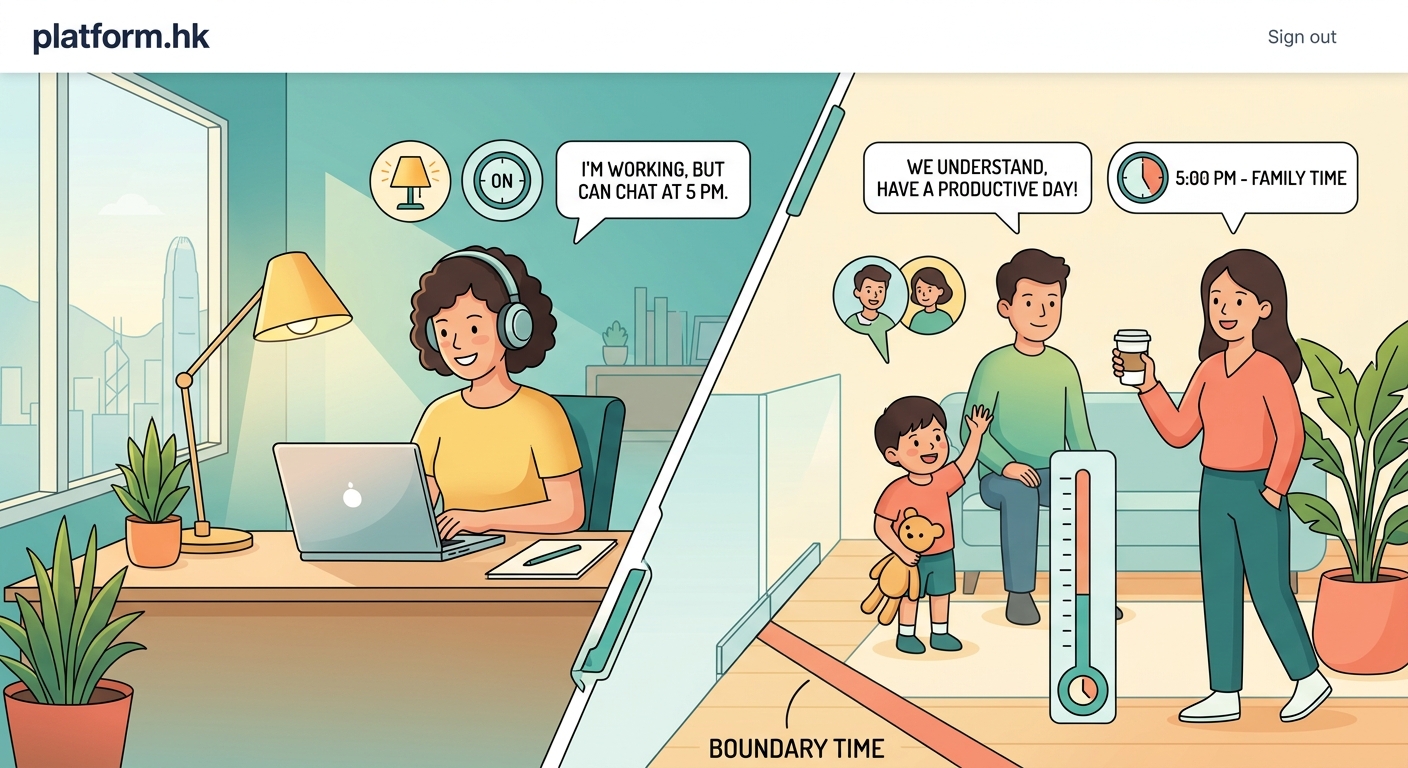
Remote workers need boundaries in multiple dimensions. Physical boundaries define your workspace. Temporal boundaries protect your time. Communication boundaries manage how and when people can reach you.
Physical boundaries mean having a dedicated workspace that signals you’re in work mode. This doesn’t require a home office, just a consistent location that others recognize as your work zone.
Temporal boundaries establish when you’re working and when you’re available. These matter most because time violations create the majority of conflicts.
Communication boundaries determine which interruptions are acceptable and which can wait. Not every question needs an immediate answer, but you need rules to decide which is which.
Creating a workspace that communicates boundaries
Your physical environment should make your work status obvious at a glance. Choose a space with a door if possible. Doors create psychological barriers that open floor plans can’t match.
If you lack a separate room, use furniture to define your work area. Position your desk facing away from high traffic areas. Use a bookshelf or room divider to create visual separation.
Add visual signals that indicate your availability. A red sign on your door means do not disturb. Headphones signal focus time, even if you’re not listening to anything. A closed laptop means you’re off duty.
“The best boundary tool is visibility. Make your work status so obvious that people feel awkward interrupting you, not because you’re being rude, but because the signal is unmistakable.”
Keep your workspace professional looking. A messy pile of papers on the kitchen table doesn’t communicate serious work. A clean desk with a monitor and proper lighting does.
Setting work hours that stick
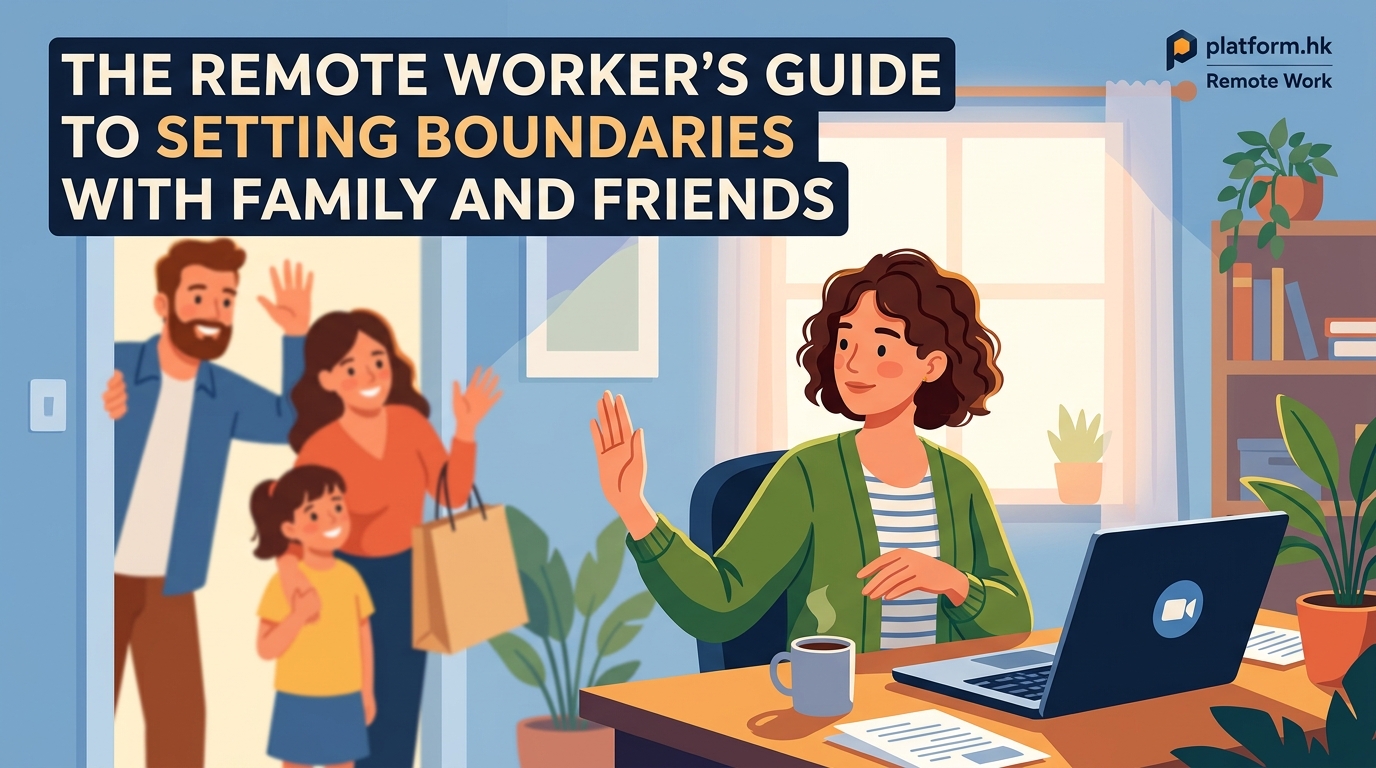
Choose specific start and end times, then treat them like you’re commuting to an office. Get dressed. Make coffee. Sit down at your desk at the same time each day.
Your schedule needs to be:
- Specific enough that others can plan around it
- Consistent enough that it becomes routine
- Realistic enough that you can maintain it
- Flexible enough for genuine emergencies
Share your schedule visibly. Put a calendar on the refrigerator. Send a weekly schedule to your household. Set your status in messaging apps to reflect your availability.
The ritual matters as much as the timing. Create a morning routine that signals work is starting. Change your clothes. Move to your workspace. Close the door. These actions train your brain and signal others.
End your workday with equal ceremony. Shut down your computer. Leave your workspace. Change clothes again if that helps. Clear transitions prevent work from bleeding into personal time.
Having the boundary conversation
You need to talk directly with the people who interrupt you most. Avoid vague requests like “please respect my work time.” Be specific about what you need and why.
Try this framework:
- Explain your work requirements: “I have meetings from 9 to 11 each morning where I need to be on camera without interruptions.”
- Describe the impact of interruptions: “When someone walks in during a call, it looks unprofessional and makes it hard for me to focus.”
- State your specific boundary: “During work hours, please knock and wait for me to open the door unless it’s an emergency.”
- Define what counts as an emergency: “An emergency means someone is hurt or the house is on fire, not that we’re out of milk.”
Have this conversation during non work hours when everyone is calm. Don’t wait until you’re frustrated from another interruption.
Handling pushback from family
Some family members will resist your boundaries. They might feel rejected or think you’re being inflexible. This is normal and doesn’t mean your boundaries are unreasonable.
Common objections and responses:
| Objection | Response |
|---|---|
| “But you’re right here” | “I’m physically here but mentally at work, just like before” |
| “Can’t you just take a minute?” | “Small interruptions break my focus for 20+ minutes” |
| “You never have time anymore” | “Let’s schedule specific times to connect after work” |
| “This feels cold and distant” | “Boundaries protect our relationship by preventing resentment” |
Stay firm but kind. Acknowledge their feelings without abandoning your needs. “I understand this is an adjustment. I miss being more available too. These boundaries help me finish work on time so I can be fully present later.”
Managing friends who think you’re free
Friends often assume remote workers have endless flexibility. They suggest lunch on weekdays, ask for favors during business hours, or call for long chats at 2 PM.
Address this directly: “I love that you thought of me, but I’m working regular hours now. Can we meet after 6 PM or on weekends instead?”
You don’t need to justify your schedule. “I’m working” is a complete sentence. You wouldn’t leave an office job for a non emergency social call, and remote work deserves the same respect.
Offer alternatives that work for you. “I can’t do lunch Tuesday, but I’m free Saturday morning” shows you want to connect without sacrificing work time.
Stop responding to non urgent messages during work hours. Train people that you’re not available by being consistently unavailable. They’ll adjust their expectations.
Dealing with unexpected interruptions
Even with perfect boundaries, interruptions happen. Your kid gets sick. The plumber arrives. Your partner has an urgent question.
Create an interruption protocol:
- Assess urgency: Is this truly time sensitive?
- Communicate impact: “I’m in a meeting for 30 more minutes.”
- Offer specific alternatives: “Can this wait until noon, or do we need to handle it now?”
- Follow through: Actually address the issue at the promised time.
For children, establish clear rules about when they can interrupt. Young kids need visual systems like a red/green sign on your door. Older kids can learn to text you first.
Set up a communication channel for household issues. A shared note app or text thread lets family members flag problems without barging into your workspace.
Technology boundaries that prevent burnout
Work notifications on your personal phone destroy boundaries. Every ping pulls you back into work mode, even during family dinner.
Use separate devices for work and personal life if possible. If you can’t afford two phones, use different profiles or apps that separate work communications.
Set notification schedules. Most phones and apps let you silence work notifications outside specific hours. Use this feature aggressively.
Remove work email from your phone entirely. If your job requires emergency access, define what constitutes an emergency and set up alerts only for those situations.
Log out of work accounts at the end of your day. The friction of logging back in creates a barrier that prevents casual work checking during personal time.
Creating emergency protocols
Boundaries need flexibility for genuine emergencies. Define what qualifies ahead of time so you’re not making judgment calls in crisis moments.
Work emergencies might include:
- System outages affecting customers
- Urgent client requests from key accounts
- Time sensitive approvals only you can provide
Family emergencies include:
- Medical situations requiring immediate attention
- School emergencies involving your children
- Home disasters like floods or fires
Everything else can wait. A question about dinner plans isn’t urgent. A work email marked “high priority” probably isn’t either.
Communicate your emergency protocols to both your employer and your family. Everyone should know when it’s appropriate to break your boundaries.
Training others through consistency
Boundaries only work if you enforce them consistently. Every exception teaches people that your rules are flexible.
When someone violates a boundary, address it immediately and calmly. “I asked you not to interrupt during meetings. What did you need that couldn’t wait 20 minutes?”
Praise respect for your boundaries. “Thanks for waiting until my lunch break to ask about that. I really appreciate you respecting my work time.”
Be patient during the adjustment period. People need time to unlearn old patterns. Expect violations for the first few weeks, but don’t accept them as permanent.
Model the behavior you want. Respect others’ boundaries, even if they don’t have formal work schedules. Don’t interrupt your partner during their focused activities. Wait for appropriate times to discuss household issues.
Maintaining boundaries long term
Boundaries erode slowly if you don’t maintain them. Life changes, work demands shift, and old habits creep back.
Review your boundaries quarterly. Are they still working? Do they need adjustment? Has your schedule changed in ways that require new rules?
Watch for boundary drift. Notice when you start checking email after hours or when family interruptions increase. Small violations compound into major problems.
Renegotiate when needed. If your work hours need to shift, have another explicit conversation. Don’t just start working different hours and expect everyone to notice.
Remember that boundaries protect relationships, not damage them. Clear expectations prevent resentment. Dedicated work time means better presence during personal time.
Making your home office work for everyone
Your boundary system should improve life for everyone in your household, not just you. When you’re truly present during personal time, your relationships strengthen.
Involve your family in creating boundaries. Ask what they need from you and when. Maybe your partner needs 15 minutes of your attention when they get home. Maybe your kids need help with homework at 4 PM.
Build these needs into your schedule. Block calendar time for family priorities. Treat these commitments as seriously as work meetings.
Create shared rituals that mark transitions. Family dinner at 6 PM. A walk after you log off. Weekend activities that never involve work.
Your boundaries model healthy work habits for your children. They learn that work has limits, that personal time matters, and that saying no is acceptable.
The goal isn’t perfect separation between work and life. It’s intentional integration where both get the attention they deserve. You choose when to work and when to be present, rather than constantly splitting your attention between competing demands.
Strong boundaries make remote work sustainable. They prevent the burnout that comes from never fully being in either mode. They protect your productivity, your relationships, and your sanity.
Start with one boundary today. Pick the violation that bothers you most and address it directly. Build from there. Each boundary you establish makes the next one easier.