Why Your Startup Should Ditch the Traditional Office for Coworking Spaces

You’re bootstrapping a startup. Every dollar counts. Every decision shapes your runway. And right now, you’re staring at a choice that could make or break your burn rate: where should your team actually work?
The coworking space vs traditional office for startups debate isn’t just about desks and square footage. It’s about flexibility, culture, cash flow, and whether you can pivot without getting trapped in a lease that outlasts your business model.
[Coworking spaces](https://en.wikipedia.org/wiki/Coworking) offer startups lower upfront costs, flexible terms, and built-in networking opportunities. Traditional offices provide privacy, branding control, and long-term stability. Most early-stage startups benefit from coworking’s flexibility and reduced financial risk, while scaling companies with predictable headcount may prefer traditional leases. Your choice depends on team size, growth trajectory, and capital constraints.
What actually separates coworking from traditional offices
A traditional office means signing a multi-year lease, furnishing the space, paying for utilities, managing maintenance, and committing to fixed square footage regardless of whether your team grows or shrinks.
Coworking spaces flip that model. You pay monthly for access to shared work areas, private offices, or dedicated desks. The operator handles everything from WiFi to coffee. You scale up or down with minimal friction.
But the differences run deeper than contract terms.
Traditional offices give you four walls that belong to your brand. You control the layout, the vibe, the security protocols. Nobody from a competing startup sits three desks away.
Coworking spaces trade that control for community. You share amenities with freelancers, agencies, and other startups. You might overhear a pitch that sparks an idea or meet a potential hire at the coffee station.
Breaking down the real costs
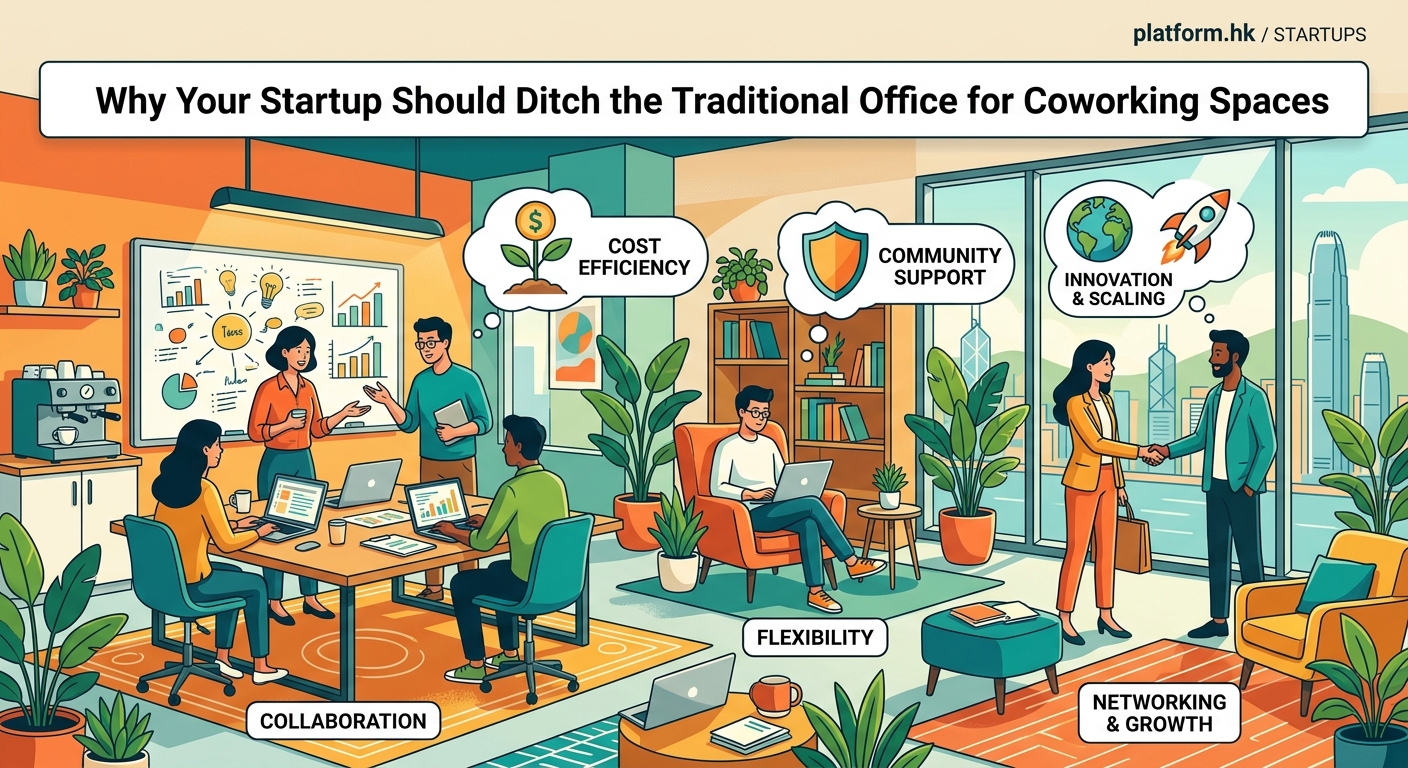
Let’s talk numbers. Traditional office leases in major cities often require:
- First month’s rent
- Last month’s rent
- Security deposit (one to three months)
- Broker fees (sometimes 10 to 15 percent of annual rent)
Before anyone sits down, you’re out tens of thousands of dollars. Then come furniture, internet installation, cleaning services, and utility bills.
Coworking spaces bundle most of those costs into a single monthly fee. You typically pay a deposit equal to one month’s membership. Move-in happens the same day you sign.
Here’s a comparison for a five-person startup in a mid-tier U.S. city:
| Expense Category | Traditional Office (Annual) | Coworking Space (Annual) |
|---|---|---|
| Rent | $36,000 | $30,000 |
| Furniture | $8,000 | $0 |
| Utilities | $3,600 | $0 |
| Internet | $1,200 | $0 |
| Cleaning | $2,400 | $0 |
| Upfront Costs | $15,000 | $2,500 |
| Total Year One | $66,200 | $32,500 |
That $33,700 difference could fund another engineer, a marketing campaign, or six extra months of runway.
Flexibility when your headcount is unpredictable
Startups don’t grow in straight lines. You might hire three people in January, lose a co-founder in March, and close a seed round that demands ten new hires by July.
Traditional leases lock you into fixed space. Too small, and you’re scrambling for sublease options or breaking the lease early (hello, penalty fees). Too large, and you’re burning cash on empty desks.
Coworking agreements usually run month-to-month or require just three to six months’ notice. Need two more desks next week? Done. Downsizing after a pivot? Return the extra seats.
This flexibility matters most during three phases:
- Pre-product-market fit: Your team size fluctuates as you test hypotheses and iterate.
- Post-funding spikes: You hire fast after closing a round, then adjust as roles clarify.
- Seasonal or project-based scaling: You bring on contractors for a launch, then scale back.
“We went from four people to twelve in two months after our Series A. Our coworking membership let us add desks without renegotiating a lease or waiting for furniture deliveries. Six months later, we realized we’d over-hired and dropped back to eight seats. That flexibility saved us from a year-long commitment we couldn’t afford.” — Founder of a B2B SaaS startup
Networking and serendipity as business advantages
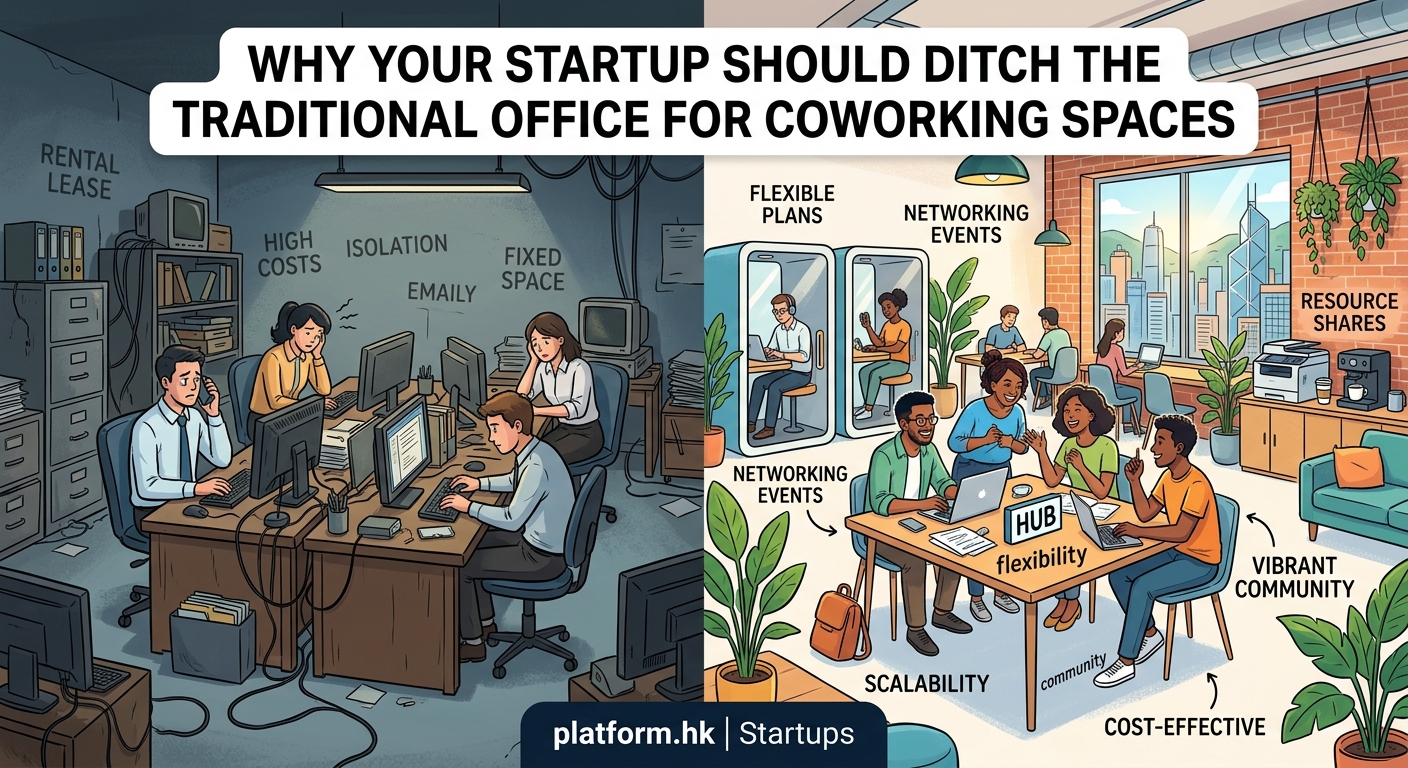
Traditional offices isolate your team. You see the same faces every day. Collaboration happens within your four walls.
Coworking spaces put you next to designers, developers, marketers, and founders solving adjacent problems. Lunch conversations turn into partnerships. A casual question at the printer leads to your next beta tester.
Some coworking operators host events: pitch nights, skill shares, happy hours. These aren’t mandatory, but they create opportunities that don’t exist in a private suite.
Real examples from startup founders:
- A fintech team met their first enterprise client at a coworking happy hour.
- A health tech founder found a contract CFO through a coworking Slack channel.
- Two startups in the same space merged after realizing their products were complementary.
You can’t engineer serendipity, but you can put yourself in environments where it’s more likely.
Privacy, security, and focus trade-offs
Coworking spaces aren’t perfect. Shared environments come with noise, distractions, and limited control over who’s nearby.
Phone calls happen in common areas. Confidential conversations require booking a private room. If your startup handles sensitive data or proprietary tech, open floor plans might not cut it.
Traditional offices let you:
- Control physical access with keycards and locked doors
- Design layouts that minimize distractions
- Install specialized equipment without landlord approval
- Hold all-hands meetings without booking a conference room
Some coworking spaces offer private suites that blend the best of both models. You get a locked office for your team, plus access to shared amenities and community events.
Branding and culture when you’re building identity
Your office tells a story. A traditional space lets you paint walls in brand colors, hang your logo, and design a layout that reflects your values.
Coworking spaces limit customization. You’re in a shared environment with generic decor. Your brand identity lives in how your team works, not where they sit.
For some startups, that’s fine. You’re remote-first anyway, and the office is just a place to meet occasionally.
For others, especially those hiring aggressively or courting enterprise clients, a branded office signals stability and professionalism.
Ask yourself:
- Do clients or investors visit your office?
- Does your team’s physical environment affect recruiting?
- Is your brand visual and experiential, or is it product-focused?
If your answer to the first two questions is “rarely” and your product speaks for itself, coworking makes sense. If you’re pitching Fortune 500 clients who expect a polished office tour, traditional space might be worth the investment.
Common mistakes startups make when choosing
Here’s a table of pitfalls and how to avoid them:
| Mistake | Why It Hurts | How to Avoid It |
|---|---|---|
| Signing a five-year lease too early | Locks you into space before product-market fit | Start with coworking or short-term subleases |
| Choosing the cheapest coworking option | Poor WiFi, limited hours, no community | Tour spaces, test the internet, talk to members |
| Ignoring commute times for your team | High turnover, late arrivals, low morale | Pick locations near public transit or central to your team |
| Over-investing in office aesthetics | Burns capital that should go to product or marketing | Prioritize function over form until you’re post-Series A |
| Not reading the coworking contract | Hidden fees, strict cancellation terms, surprise price hikes | Review terms for notice periods, rate locks, and included services |
When traditional offices actually make sense
Coworking isn’t always the answer. Traditional leases work better for startups that:
- Have stable, predictable headcount (20+ employees with low turnover)
- Need specialized setups (lab space, soundproofed rooms, heavy equipment)
- Operate in industries where privacy is non-negotiable (healthcare, legal, defense)
- Have raised enough capital to absorb upfront costs without risking runway
If you’re a hardware startup building prototypes, you need space for tools and inventory. If you’re a telehealth platform handling patient data, compliance might require private infrastructure.
And if you’ve reached the stage where your team is 30+ people and growing steadily, the per-seat cost of coworking often exceeds a traditional lease. At that scale, you’re paying for flexibility you no longer need.
How to test coworking before committing
Most coworking operators offer day passes or week-long trials. Use them.
Here’s a three-step evaluation process:
- Spend a full workday there: Arrive at 9 a.m., stay until 6 p.m. Test the WiFi during peak hours. Notice noise levels. See if the coffee runs out by noon.
- Bring your team for a working session: Book a conference room. Run a meeting. Ask your team how they feel about the space.
- Talk to current members: Ask about hidden costs, how responsive the staff is, and whether the community actually delivers on networking promises.
If the space feels right and your team is productive, start with a three-month commitment. Reassess before renewing.
Hybrid models and creative solutions
You don’t have to choose one or the other forever. Some startups use coworking as a home base and rent traditional offices later. Others maintain a small coworking membership for client meetings while keeping the team remote.
Creative options include:
- Hot desking for remote teams: Pay for a few floating desks instead of dedicated seats.
- Subleasing from another startup: Rent unused space from a company that over-leased.
- Coworking for founders, remote for the team: Keep overhead low while giving leadership a place to meet.
The key is matching your workspace to your current stage, not the stage you hope to reach in two years.
What to prioritize based on your startup stage
Your needs shift as you grow. Here’s a framework:
Pre-seed (0 to 5 people): Coworking or coffee shops. Minimize fixed costs. Stay flexible.
Seed (5 to 15 people): Coworking with private office options. You need focus and some privacy, but not a long-term lease.
Series A (15 to 50 people): Evaluate traditional offices if headcount is stable. If you’re still iterating on team structure, stick with coworking.
Series B+ (50+ people): Traditional lease makes financial sense. Negotiate favorable terms and design for culture.
Making the call that fits your reality
This isn’t about which option is objectively better. It’s about which one aligns with your cash position, growth trajectory, and team dynamics right now.
If you’re pre-revenue and bootstrapping, coworking keeps your burn low and your options open. If you’re scaling fast with venture backing and need to project stability, a traditional office might be the move.
The best choice is the one that doesn’t box you in. Startups die from running out of money, not from choosing the wrong desk. Pick the workspace that preserves your runway, supports your team’s productivity, and adapts as you grow. Everything else is just furniture.