12 Revenue Streams Every Coworking Space Owner Should Consider
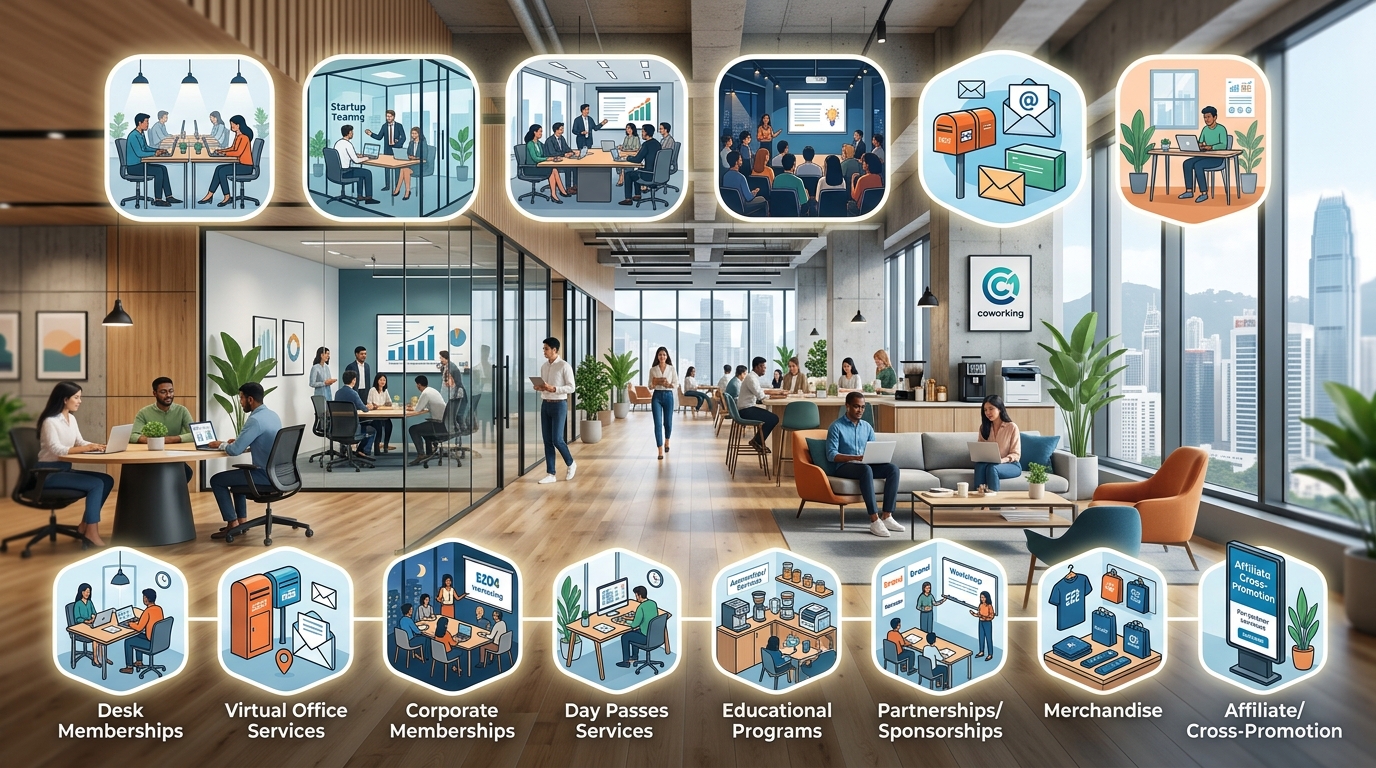
Running a coworking space on membership fees alone is like leaving money on the table. The most successful operators know that diversifying income sources is what separates thriving spaces from those barely breaking even. Your space has more earning potential than you think, and tapping into multiple revenue channels can transform your bottom line.
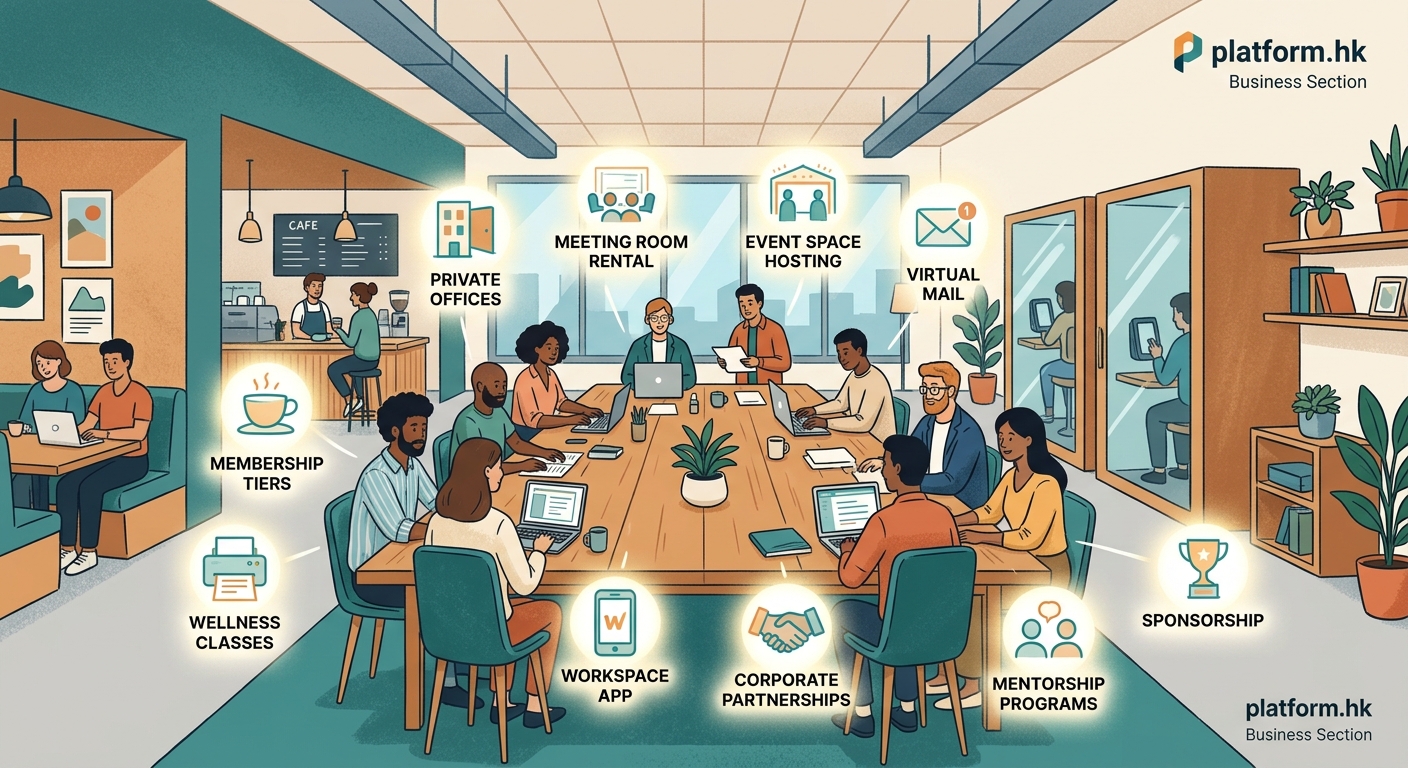
Successful coworking spaces generate income from 5 to 12 different sources beyond basic memberships. The smartest operators combine recurring revenue from tiered memberships with event hosting, meeting room rentals, virtual services, corporate partnerships, and value-added offerings like printing, mail handling, and food services. Diversification protects against market fluctuations and maximizes space utilization throughout the day.
Why membership fees aren’t enough anymore
The traditional model of charging monthly desk fees worked great in 2015. But today’s market demands more flexibility, and your overhead costs keep climbing.
Relying solely on membership income creates three major problems. First, you’re vulnerable to seasonal fluctuations when members take vacations or startups shut down. Second, you’re not monetizing your space during off-peak hours. Third, you’re missing opportunities to serve people who need your space occasionally but won’t commit to full memberships.
Smart operators now think of their space as a platform for multiple services, not just desks and wifi.
Core revenue streams every operator should have
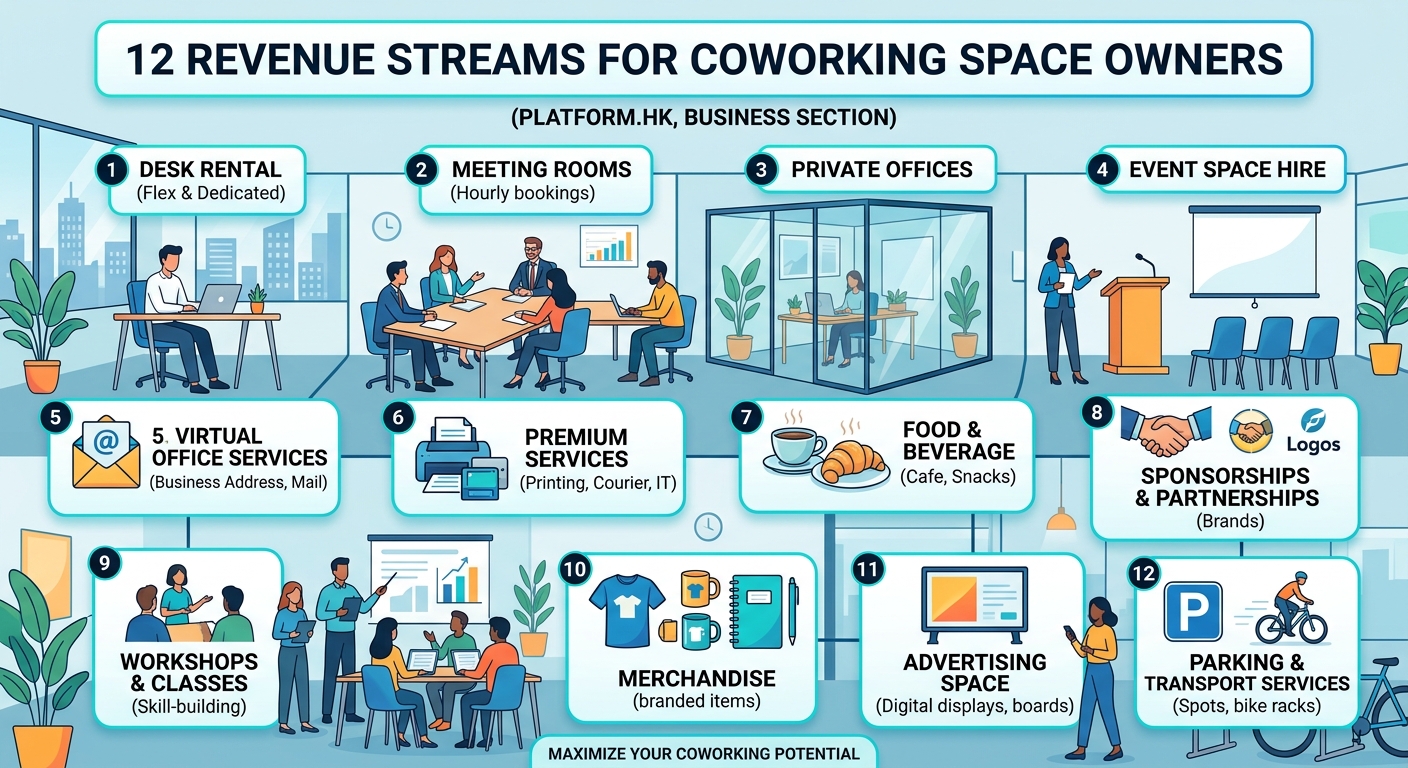
Let’s break down the income sources that form the foundation of a profitable coworking business.
Tiered membership plans
Your membership structure should cater to different work styles and budgets:
- Hot desk memberships for people who want flexibility
- Dedicated desk plans for those needing consistent space
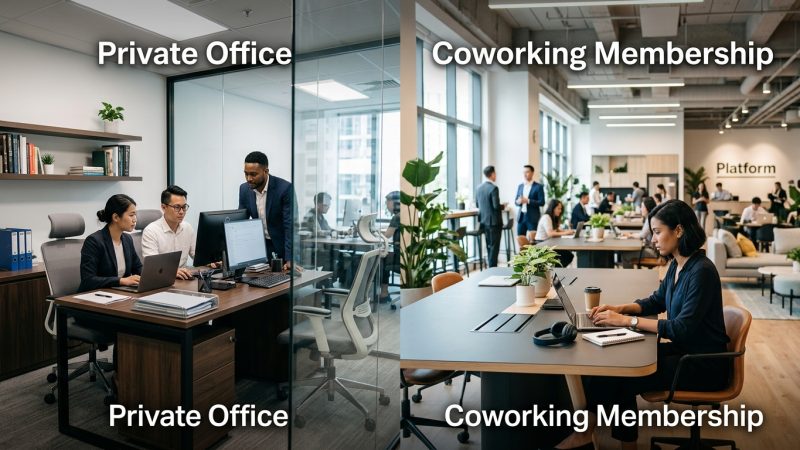
- Private office rentals for teams and established businesses
- Part-time memberships for hybrid workers
- Day passes for occasional users
The key is pricing each tier to reflect the value and exclusivity it provides. A dedicated desk should cost 40% to 60% more than a hot desk because members get guaranteed space and storage.
Meeting room and event space rentals
Your conference rooms sit empty most of the day. Turn that idle time into revenue by renting them hourly to non-members.
Local businesses need professional meeting spaces for client presentations, team workshops, and interviews. They’ll pay premium rates for well-equipped rooms with good wifi, whiteboards, and video conferencing setup.
Price your rooms based on capacity and amenities. A four-person room might rent for $25 per hour, while a 20-person boardroom could command $75 to $100 per hour.
Virtual office services
Not everyone needs physical space, but many professionals want a prestigious business address and mail handling.
Virtual office packages typically include:
- Business address for registration and marketing materials
- Mail receiving and forwarding services
- Phone answering under your company name
- Access to meeting rooms for a set number of hours monthly
These memberships cost you almost nothing to provide but can generate $50 to $150 monthly per virtual member.
Event hosting as a profit center
Events do double duty by generating direct revenue and attracting potential members.
Host paid workshops, networking nights, lunch-and-learns, and skill-building sessions. Charge attendees $15 to $50 per ticket depending on the event type and included perks.
Partner with local experts who want to build their audience. They provide the content and promotion, you provide the venue, and you split ticket sales 50/50 or charge a flat venue fee.
“We started hosting two events per week and saw our monthly revenue increase by $2,000 while also converting 15% of attendees into members within three months.” – Sarah Chen, coworking operator in Austin
Events also create opportunities to sell food and beverages, which brings us to the next revenue stream.
Food, beverage, and amenity services
Your members need coffee, snacks, and lunch. You can either let them leave your space to buy these things, or you can capture that spending.
Three approaches work well:
- Partner with a local cafe or catering company to run an on-site coffee bar, taking a percentage of sales
- Stock vending machines and a coffee station with premium options, marking up products 30% to 50%
- Offer catered lunch programs where members pre-order meals and you coordinate delivery, adding a convenience fee
Beyond food, consider offering printing services, office supplies, and locker rentals. These small additions add up quickly when you have 50+ members.
Corporate partnerships and team packages
Companies increasingly want flexible office solutions for remote teams, satellite offices, or temporary project spaces.
Create corporate packages that offer:
- Bulk desk purchases at discounted rates
- Dedicated team zones or private offices
- Custom onboarding for company employees
- Invoicing and usage reporting for HR departments
Corporate clients provide stable, long-term revenue and typically pay on time. They’re worth offering 10% to 20% discounts compared to individual memberships because they reduce your customer acquisition costs and vacancy risk.
Value-added professional services
Your space attracts entrepreneurs, freelancers, and small business owners who need more than just desks. They need help running their businesses.
Consider offering or facilitating:
- Bookkeeping and accounting services
- Legal consultations with partnered attorneys
- Marketing and design support
- Business coaching and mentorship programs
- IT support and tech troubleshooting
You don’t need to provide these services yourself. Partner with qualified professionals who pay you a referral fee or revenue share for access to your member base.
Digital and virtual coworking options
The pandemic proved that community doesn’t require physical presence. Virtual coworking memberships serve remote workers who want accountability and connection without commuting.
Offer online-only memberships that include:
- Access to virtual coworking sessions via video chat
- Online community forums and networking
- Digital resource libraries and recorded workshops
- Limited in-person day passes per month
Price these at 30% to 50% of your basic physical membership. They cost almost nothing to deliver and expand your addressable market beyond your local area.
Revenue stream comparison table
| Revenue Source | Setup Difficulty | Profit Margin | Scalability | Time Investment |
|---|---|---|---|---|
| Tiered memberships | Medium | 40-60% | High | Medium |
| Meeting room rentals | Low | 60-80% | Medium | Low |
| Virtual offices | Low | 80-90% | High | Low |
| Events and workshops | Medium | 30-50% | Medium | High |
| Food and beverages | Medium | 25-40% | Medium | Medium |
| Corporate packages | High | 35-55% | High | High |
| Professional services | Medium | 15-30% | Medium | Low |
| Virtual memberships | High | 70-85% | Very High | Medium |
Common mistakes that kill profitability
Operators often sabotage their own revenue potential by making these errors:
Underpricing to attract members. Competing on price attracts price-sensitive customers who leave for a $10 cheaper option. Compete on value instead.
Ignoring utilization rates. If your meeting rooms sit empty 70% of the time, you’re not marketing them effectively or pricing them competitively.
Offering too many free perks. Free coffee, free printing, free everything sounds generous but destroys margins. Charge appropriately for premium services.
Not tracking revenue by source. You can’t optimize what you don’t measure. Know exactly how much each income stream contributes monthly.
Failing to upsell existing members. Your current members are your easiest sales. Regularly introduce them to additional services they might need.
Building your revenue diversification plan
Ready to expand beyond basic memberships? Follow this process:
-
Audit your current revenue mix. Calculate what percentage comes from each source. If memberships represent more than 70%, you’re over-reliant on one channel.
-
Identify underutilized assets. Walk through your space and note empty meeting rooms, unused wall space for sponsor ads, idle equipment, and dead time slots.
-
Survey your members. Ask what additional services they’d pay for. Their answers will surprise you and reveal opportunities you hadn’t considered.
-
Test one new stream at a time. Don’t launch everything simultaneously. Pick the easiest option with the best margin and validate it before moving to the next.
-
Set revenue targets for each stream. Decide how much you want each source to contribute monthly, then work backward to determine the pricing and volume needed.
-
Review and adjust quarterly. Some revenue streams will exceed expectations while others disappoint. Double down on what works and cut what doesn’t.
Pricing strategies that maximize revenue
How you price matters as much as what you offer.
Use anchoring by listing your premium options first. When someone sees a $500 private office before a $200 dedicated desk, the desk feels like a bargain.
Bundle services to increase average transaction value. Offer a “professional package” that includes a dedicated desk, virtual office address, and 10 meeting room hours monthly for less than buying each separately.
Implement dynamic pricing for meeting rooms. Charge more for peak hours (9am to 5pm weekdays) and offer discounts for evenings and weekends when demand is lower.
Create annual payment options with a discount. Members who pay upfront provide cash flow and are less likely to churn. Offering two months free on annual plans still leaves you ahead.
Partnerships that generate passive income
Your member base is valuable to local businesses. Monetize those relationships ethically.
Partner with service providers who pay monthly fees for preferred vendor status:
- Insurance brokers targeting small businesses
- Banks offering business accounts
- Software companies with entrepreneur-focused products
- Fitness studios offering corporate wellness programs
Negotiate deals where your members get discounts and you receive either a flat monthly fee or a percentage of sales generated through your community.
Sponsor opportunities also work well. Local businesses will pay to have their logo displayed, sponsor your events, or advertise in your newsletter. Charge based on the size of your member base and engagement levels.
Measuring success across revenue streams
Track these metrics monthly to understand your financial health:
- Revenue per available desk (total monthly revenue divided by total desks)
- Revenue per member (helps identify high-value vs. low-value customers)
- Utilization rate by space type (percentage of time each area generates income)
- Customer acquisition cost by channel
- Lifetime value of members by membership type
Your goal is increasing total revenue while maintaining or improving profit margins. Adding a revenue stream that requires significant labor might boost top-line numbers but hurt your bottom line.
Seasonal opportunities you shouldn’t miss
Certain times of year create unique revenue opportunities.
Tax season brings demand for private meeting spaces where people can meet with accountants. Promote day passes and meeting room rentals to local tax preparers.
Summer often sees decreased membership but increased demand for event space as companies host team building activities and training sessions.
January attracts new entrepreneurs with fresh business ideas and motivation. Launch promotional campaigns for new memberships and host workshops on business planning.
Fourth quarter is corporate budget spending season. Reach out to companies about using remaining budget on coworking memberships or event space for holiday parties.
Technology that enables revenue growth
The right tools make managing multiple income streams manageable.
Invest in coworking management software that handles:
- Membership billing and automated renewals
- Meeting room booking and payment processing
- Day pass sales and access control
- Event registration and ticketing
- Reporting across all revenue sources
Manual processes don’t scale. When you’re juggling eight different revenue streams, automation becomes essential for profitability.
Turning your space into a revenue machine
Your coworking space is more than a real estate play. It’s a platform for serving your community in multiple ways while building a sustainable business.
The operators who thrive don’t just rent desks. They solve problems for their members and monetize those solutions appropriately. Start with the revenue streams that match your space’s strengths and your members’ needs, then expand methodically. Track everything, test continuously, and remember that diversification isn’t just about making more money. It’s about building a resilient business that can weather market changes and continue serving your community for years to come.