Networking in Coworking Spaces: How Startups Turn Desk Neighbors Into Business Partners

Most coworking spaces promise community. Few deliver actual business partnerships.
The difference comes down to how you network. Sitting next to talented people doesn’t automatically create opportunities. You need a strategy that turns proximity into partnerships, casual conversations into collaborations, and shared coffee breaks into shared projects.
Networking in coworking spaces works best when you treat it like building a neighborhood, not collecting contacts. Success comes from showing up consistently, contributing value before asking for favors, participating in community events, and turning shared workspace proximity into genuine professional relationships. The founders who build partnerships focus on helping others first, then watching opportunities emerge naturally from those connections.
Why proximity alone doesn’t create partnerships
Sharing a workspace puts you in the same room as potential collaborators. But physical closeness means nothing without intentional connection.
Many founders make the mistake of treating coworking spaces like libraries. They arrive, plug in headphones, work silently, and leave. They might nod at familiar faces but never learn names or industries.
This approach wastes the main advantage of coworking. You’re paying for community access, not just desk space.
The startups that succeed at networking in coworking spaces understand one principle: relationships form through repeated, meaningful interactions. Not one-time pitches or forced small talk.
Think about how friendships develop. You see someone regularly, share small moments, help each other occasionally, and gradually build trust. Professional relationships work the same way.
The foundation of coworking relationships
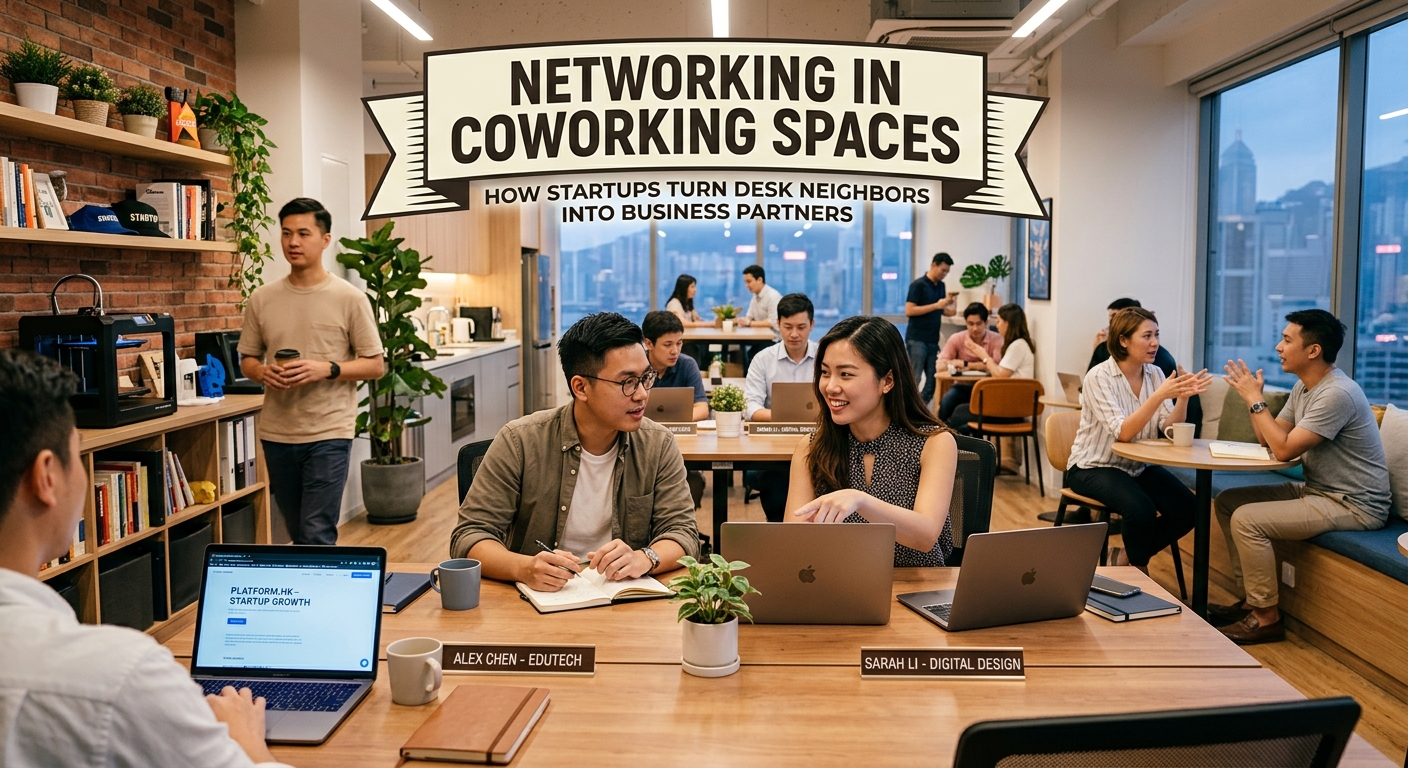
Before you can turn desk neighbors into business partners, you need to become a recognized community member.
Start with these three steps:
-
Choose your regular spot and schedule. Consistency matters more than hours logged. Working Tuesday and Thursday mornings in the same area lets people recognize you. Random appearances make you forgettable.
-
Learn the community rhythm. Every coworking space has patterns. Some buzz during morning coffee. Others come alive at lunch or late afternoon. Match your schedule to peak social hours at least twice weekly.
-
Participate in one community activity monthly. Most spaces host events, workshops, or happy hours. Attend at least one per month. Skip the ones that feel forced. Find activities that genuinely interest you.
These basics establish your presence. People start recognizing your face, remembering your name, and associating you with your industry or project.
Starting conversations that actually matter
The coffee machine conversation is a coworking cliché for good reason. It works.
But only if you approach it correctly.
Bad networking sounds like an elevator pitch. Good networking sounds like genuine curiosity about another person’s work.
Try these conversation starters that feel natural:
- “I’ve seen you around a few times. What brings you to this space?”
- “That call sounded intense. Hope your project is going well.”
- “I’m working on something similar. Mind if I ask how you approached that problem?”
Notice what these have in common. They acknowledge the person, show you’ve paid attention, and invite them to share without demanding anything.
“The best business partnerships I’ve formed started with someone asking what I was struggling with, then offering a genuine suggestion without expecting anything back. That’s how trust starts.” – Founder of a design agency built entirely through coworking connections
Listen more than you talk. Ask follow-up questions. Remember details about their projects so you can reference them later.
This approach feels slower than traditional networking. It is slower. But it builds stronger foundations.
Strategic positioning within your space
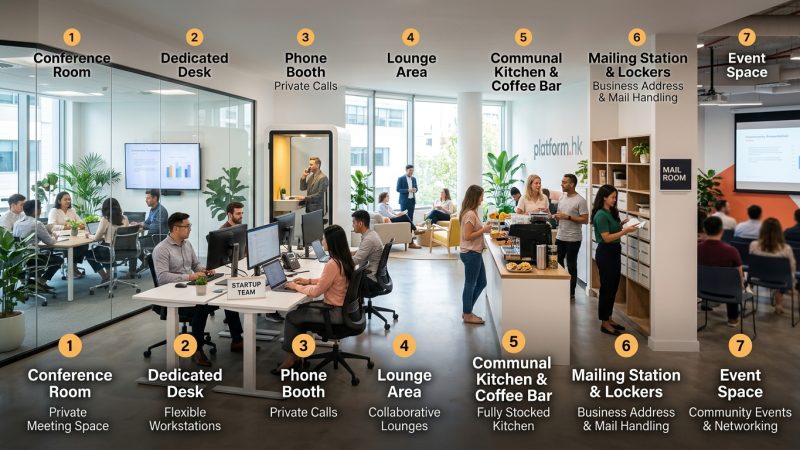
Not all coworking areas offer equal networking opportunities.
The quiet focus room attracts heads-down work. The phone booth area sees people rushing between calls. The lounge near the kitchen creates natural gathering points.
Position yourself strategically based on your networking goals:
- Kitchen or coffee area: High traffic, casual conversations, brief interactions
- Communal tables: Longer conversations, collaborative energy, easier to join discussions
- Dedicated desks in open areas: Regular neighbors, deeper relationships over time
- Event spaces before/after programs: Targeted networking with specific interests
Rotate through different areas to meet diverse people. But maintain one primary spot where you’re consistently found.
Turning casual connections into collaborations
You’ve established presence. You’ve had good conversations. Now comes the critical transition from acquaintance to actual working relationship.
This happens through small collaborations before big partnerships.
Look for low-stakes ways to work together:
- Share a skill in exchange for feedback on your project
- Invite someone to co-host a lunch-and-learn on a shared interest
- Collaborate on a blog post or case study
- Refer clients to each other for complementary services
- Test each other’s products and provide honest feedback
These micro-collaborations reveal work styles, reliability, and compatibility. They answer questions that conversations can’t: Does this person deliver on time? Do they communicate clearly? Do our approaches align?
Many founders skip this step and jump straight to major partnerships. Then they’re surprised when things fall apart.
Community events as networking accelerators
Most coworking spaces organize events. Workshops, speaker series, happy hours, skill shares, pitch nights.
Attendance varies wildly. Some events draw crowds. Others feel awkwardly empty.
Here’s how to choose events that actually build relationships:
| Event Type | Networking Value | Best For |
|---|---|---|
| Workshops with hands-on activities | High | Learning while connecting, natural conversation topics |
| Panel discussions | Medium | Industry-specific networking, meeting people in your field |
| Happy hours | Medium to Low | Casual connections, but often superficial unless you have a strategy |
| Lunch and learns | High | Smaller groups, shared meals create intimacy |
| Member showcase nights | Very High | Understanding what others do, finding collaboration opportunities |
Don’t just attend. Participate actively. Ask questions during workshops. Introduce speakers you know to attendees who’d benefit from meeting them. Volunteer to help organize.
Event organizers remember helpful community members. They make introductions, include you in special opportunities, and advocate for your business.
The art of the follow-up
You had a great conversation. You found common ground. You mentioned staying in touch.
Then nothing happens.
Most networking fails at the follow-up stage. People wait too long, forget details, or send generic “let’s grab coffee sometime” messages that never convert to actual meetings.
Effective follow-up happens within 24 hours and includes specific next steps:
- Reference something specific from your conversation
- Suggest a concrete way to continue the relationship
- Make it easy to say yes with clear options
Example: “Really enjoyed talking about your customer research challenges yesterday. I just read an article that addresses exactly what you mentioned. Sending it over. Also, I’m hosting a small group discussion on user interviews next Thursday at 2pm in the lounge if you want to join.”
This approach shows you listened, provides immediate value, and offers a specific opportunity to reconnect.
Building your reputation as a connector
The most successful networkers in coworking spaces aren’t the people with the biggest businesses. They’re the people who connect others.
When you introduce two members who end up collaborating, both remember you positively. When you share opportunities that don’t fit your business but match someone else’s needs, you build goodwill.
This connector role creates compounding returns:
- People come to you with opportunities first
- Your recommendations carry weight
- Community managers include you in special initiatives
- You become a central node in the space’s social network
Start small. Make one introduction per week. Share one opportunity per week that benefits someone else.
Track these connections loosely. Not in a transactional way, but to notice patterns. You’ll start seeing which introductions create value and which types of connections work best.
Common networking mistakes that damage relationships
Even experienced founders make these errors in coworking environments:
- Treating every conversation like a sales opportunity. People spot this immediately and avoid you.
- Only networking when you need something. Disappearing for months then asking for favors burns bridges fast.
- Talking more than listening. Nobody wants to hear a 20-minute monologue about your startup.
- Ignoring people outside your industry. Some of the best partnerships come from unexpected connections.
- Forgetting names and details. Shows you don’t actually care about the relationship.
The pattern here? All these mistakes prioritize taking over giving.
Reverse that ratio. Give first, give often, give without expecting immediate returns.
Measuring networking success differently
Traditional networking metrics don’t work well in coworking spaces.
Number of business cards collected means nothing. LinkedIn connections don’t predict partnerships.
Better metrics for networking in coworking spaces:
- Number of genuine conversations per week
- Introductions made to other members
- Collaborative projects started
- Referrals given and received
- Community events attended and contributed to
These indicators predict long-term relationship building better than vanity metrics.
Track them informally. Notice patterns. Adjust your approach based on what creates meaningful connections for you.
When coworking relationships become real partnerships
You’ll know networking is working when opportunities start finding you instead of you chasing them.
Someone mentions your name when a client asks for recommendations. A desk neighbor invites you to pitch a joint project. Community managers connect you with visiting investors or potential partners.
These moments don’t happen by accident. They result from months of consistent presence, genuine helpfulness, and strategic relationship building.
The timeline varies. Some founders form partnerships within weeks. Others take six months or longer.
Don’t rush it. Forced partnerships fail. Natural ones, built on proven collaboration and mutual respect, last.
Your workspace is your business ecosystem
Coworking spaces concentrate talent, energy, and opportunity in one physical location. But concentration alone doesn’t create value.
You create value by showing up consistently, contributing generously, and treating your workspace like a neighborhood you’re invested in improving.
The desk neighbor working on a completely different project might become your co-founder. The person you helped with a quick design question might refer your biggest client. The community manager you chatted with during setup might connect you with an investor.
These connections happen when you approach networking in coworking spaces as relationship building, not transaction hunting.
Start this week. Learn three new names. Have two genuine conversations. Make one helpful introduction. Then repeat next week, and the week after, until it becomes natural.
The partnerships will follow.