How to Build a Productive Morning Routine as a Remote Worker

Working from home blurs every line you used to take for granted. Your bedroom becomes your office. Your kitchen table turns into a conference room. And that alarm clock? It stops feeling urgent when your commute is ten steps to a laptop.
The result is mornings that drift. You roll out of bed five minutes before your first meeting, skip breakfast, and spend the rest of the day playing catch-up with your energy and focus.
A solid morning routine for remote workers isn’t about perfection or Instagram-worthy rituals. It’s about creating structure that protects your productivity and helps you separate home life from work life, even when they happen in the same space.
Remote workers need intentional morning routines to replace the structure that offices naturally provide. A strong routine includes consistent wake times, physical movement, workspace preparation, and clear boundaries between personal time and work time. Small, repeatable habits compound into better focus, higher energy, and clearer mental separation between home and professional life throughout the day.
Why mornings matter more when you work remotely
Office workers get automatic structure. The commute signals transition. Coworkers create accountability. Physical separation between home and office reinforces boundaries.
Remote workers build all of that from scratch.
Your morning sets the tone for everything that follows. Start scattered, and you’ll chase focus all day. Start with intention, and you’ll carry that momentum through meetings, deep work, and deadlines.
The goal isn’t to become a productivity robot. It’s to create enough structure that you can do your best work without burning out.
The foundation: wake up at the same time every day
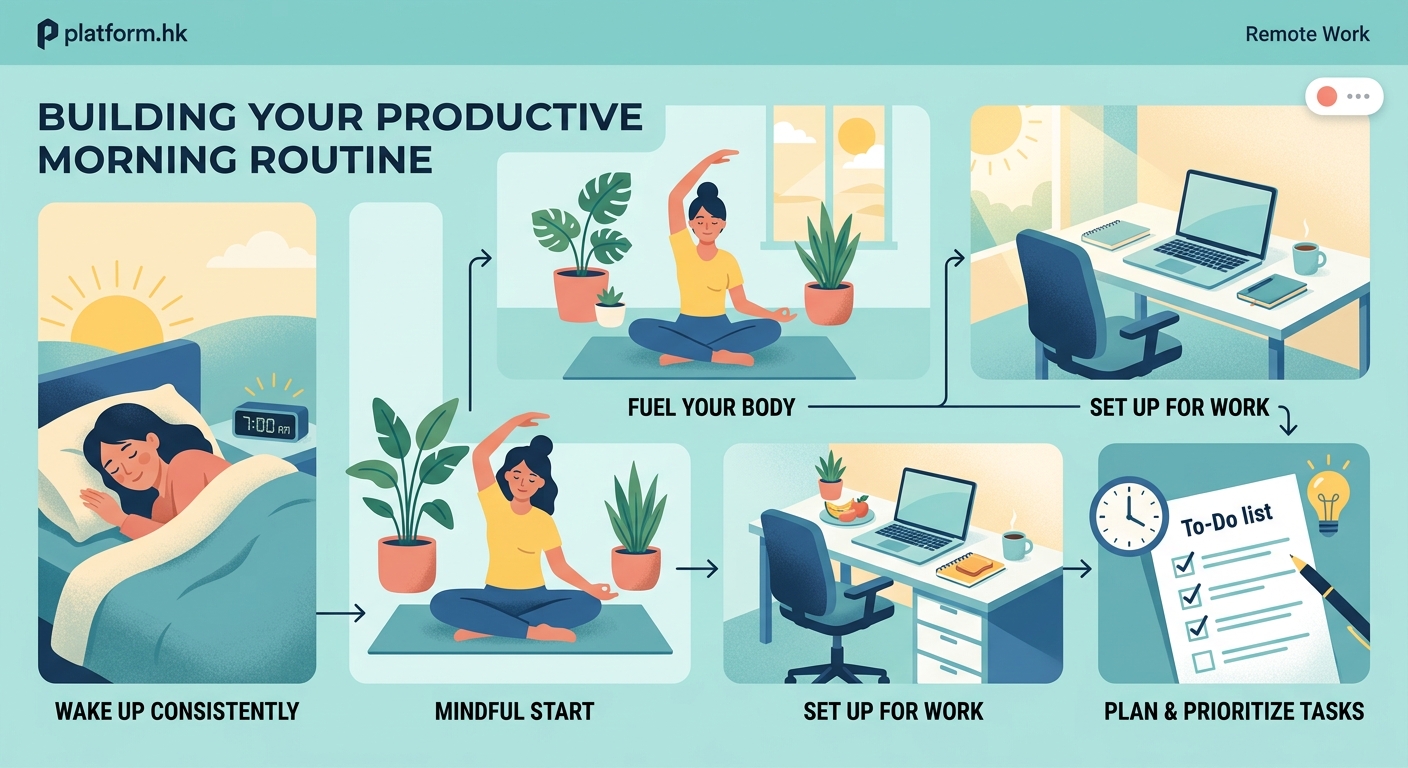
Consistency beats motivation every single time.
Pick a wake time and stick to it, even on weekends. Your body craves rhythm. When you wake at different times, you’re constantly fighting your circadian system instead of working with it.
Choose a time that gives you buffer before work starts. If your first meeting is at 9:00 AM, waking up at 8:55 AM leaves no room for anything except panic.
Aim for at least 90 minutes between waking and working. This window lets you ease into the day, take care of your body, and prepare your mind for focused work.
Use an alarm that wakes you gently. Jarring sounds spike cortisol and start your day in fight-or-flight mode. Look for alarms that use gradual light or soft sounds that build over time.
Place your phone or alarm across the room. This forces you to physically get up, which makes it much harder to hit snooze and drift back to sleep.
Move your body before you open your laptop
Physical movement wakes up your brain faster than coffee ever will.
You don’t need a full workout. Even 10 minutes of movement shifts your energy and clears mental fog.
Try one of these:
- A short walk around your neighborhood
- Light stretching or yoga
- Bodyweight exercises like squats, push-ups, or planks
- Dancing to a favorite song
- Playing with your dog or kids
The type of movement matters less than the habit itself. Pick something you’ll actually do, not something that sounds impressive but requires too much willpower.
Movement also creates a psychological break between sleep and work. It signals to your brain that a new phase of the day has started.
If you struggle with motivation, lay out your workout clothes the night before. Reducing friction makes follow-through easier.
Hydrate and fuel properly
Your body has been fasting for eight hours. It needs water and nutrients before it needs caffeine.
Drink a full glass of water as soon as you wake up. Dehydration kills focus and drains energy faster than most people realize.
Eat breakfast that balances protein, healthy fats, and complex carbs. This combination stabilizes blood sugar and sustains energy through your morning work block.
Skip sugary cereals and pastries. They spike your blood sugar, then crash it an hour later, leaving you foggy and craving more sugar.
Good options include:
- Eggs with avocado and whole grain toast
- Greek yogurt with nuts and berries
- Oatmeal with nut butter and fruit
- Smoothies with protein powder, greens, and healthy fats
If you drink coffee, have it after you’ve eaten something. Caffeine on an empty stomach can spike anxiety and mess with your digestion.
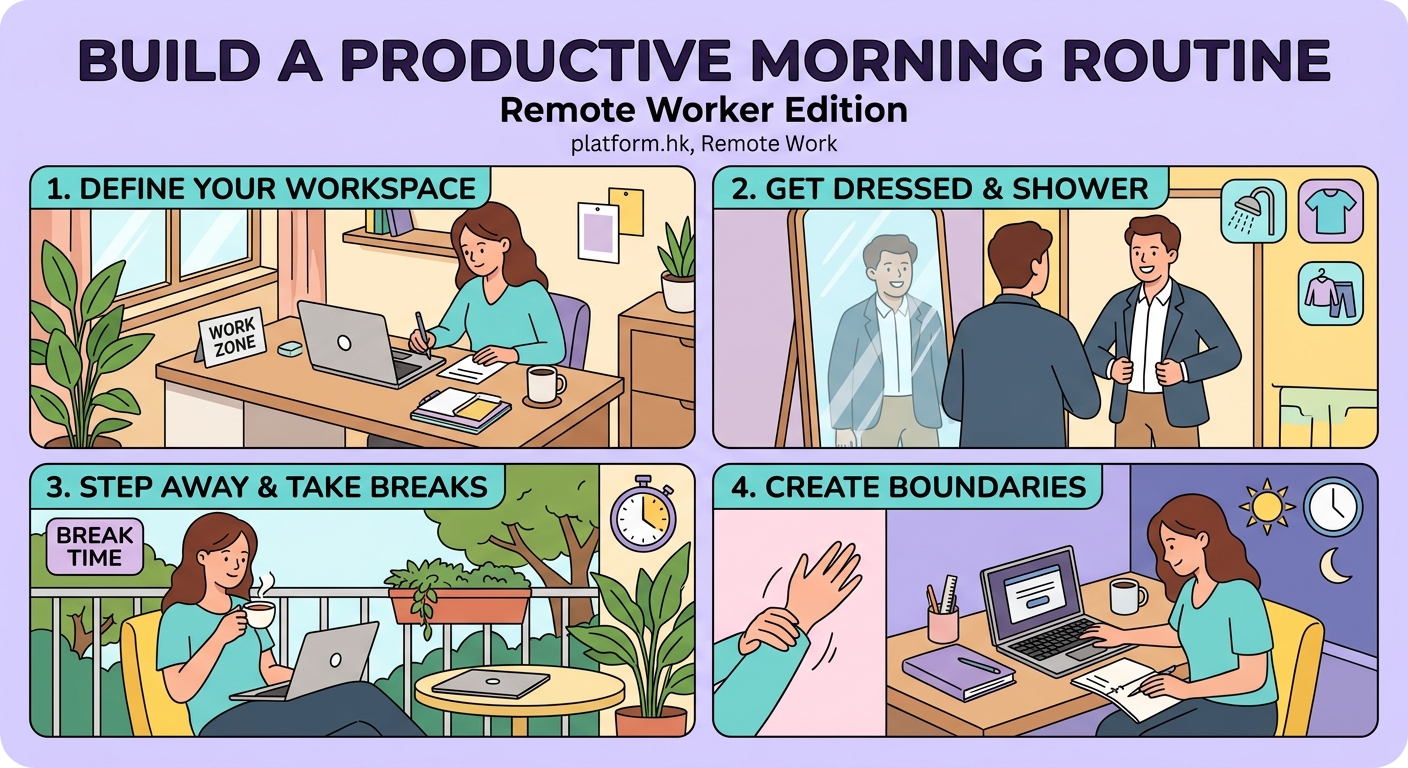
Prepare your workspace like you’re going to an office
Remote work doesn’t mean working from your couch in pajamas.
Get dressed. You don’t need business formal, but changing out of sleepwear signals to your brain that work mode has started.
Set up your workspace the night before. Clear clutter, charge devices, and organize any materials you’ll need. Walking into a ready workspace eliminates decision fatigue first thing in the morning.
Open your curtains or turn on bright lights. Light exposure helps regulate your circadian rhythm and boosts alertness.
If you share your space with family or roommates, communicate your work hours clearly. Set expectations about interruptions and noise levels.
Consider using a small ritual to mark the start of work. Light a candle, play a specific playlist, or make a fresh cup of tea. These small actions create a mental boundary between personal time and professional time.
Plan your day before the chaos starts
Spend 10 to 15 minutes reviewing your calendar and prioritizing tasks.
Identify your top three priorities for the day. These are the tasks that, if completed, would make the day feel successful regardless of what else happens.
Block time for focused work before you schedule meetings. Protect your peak energy hours for tasks that require deep thinking.
Check for potential conflicts or gaps in your schedule. Adjust as needed.
Write down your plan. Use a notebook, digital task manager, or simple text file. The act of writing clarifies your thinking and increases commitment.
Avoid checking email or Slack during this planning time. Reactive tasks will hijack your attention and derail your priorities before you even start.
“The way you start your morning shapes your entire day. Remote workers who plan before they react stay in control of their time instead of letting their inbox control them.”
Build in transition time between personal and professional
One of the biggest challenges of remote work is the lack of physical separation between home and office.
Create an artificial commute. Take a 10-minute walk before you start work. This mimics the psychological transition that office workers get automatically.
Use music or podcasts to shift your mindset. Create a playlist that you only listen to during your morning routine. Your brain will start associating those sounds with the transition into work mode.
Set clear start and end times for your workday. Without commute time or office hours, remote workers tend to blur boundaries and end up working longer hours with less focus.
Communicate these boundaries to your household. Let family or roommates know when you’re available and when you need uninterrupted focus.
Common mistakes that sabotage remote morning routines
| Mistake | Why it hurts | Better approach |
|---|---|---|
| Checking email first thing | Puts you in reactive mode before you’ve set your own priorities | Plan your day before opening email |
| Skipping breakfast | Crashes energy mid-morning, kills focus | Eat a balanced meal with protein and healthy fats |
| Working from bed | Blurs sleep and work, ruins sleep quality over time | Create a dedicated workspace, even if it’s just a corner |
| No consistent wake time | Fights your circadian rhythm, makes mornings harder | Wake at the same time every day, including weekends |
| Scrolling social media | Drains mental energy, triggers comparison and anxiety | Keep phone away from bed, delay social media until after work starts |
Adjust your routine as seasons and life change
Your routine shouldn’t be rigid. It should flex with your life.
Winter mornings might need more light therapy or indoor movement. Summer might allow for outdoor walks or earlier wake times.
If you have kids, your routine will look different during school breaks. Build flexibility into your system so you can adapt without abandoning the habit entirely.
Track what works. Keep simple notes about how different morning activities affect your energy and focus. Use that data to refine your approach.
Don’t aim for perfection. Aim for consistency. A routine that you follow 80% of the time beats a perfect routine that you abandon after two weeks.
Start small and build gradually
Trying to overhaul your entire morning at once usually backfires.
Pick one habit to start with. Master it for two weeks before adding another.
Good starter habits:
- Wake at the same time every day
- Drink water immediately upon waking
- Move your body for 10 minutes
- Plan your top three priorities before checking email
Once one habit feels automatic, layer in the next. This approach builds sustainable change instead of temporary motivation.
Your morning routine shapes your entire remote work experience
Remote work offers incredible freedom. But freedom without structure becomes chaos.
A morning routine for remote workers creates the scaffolding that makes everything else easier. It protects your energy, sharpens your focus, and builds boundaries that keep work from consuming your entire life.
Start tomorrow. Pick one small change. Build from there. Your future self will thank you for the structure you create today.