Remote-First Startup Culture: Building a Team Without a Headquarters

Running a startup without a headquarters sounds liberating until you realize culture doesn’t build itself. You can’t rely on hallway conversations or Friday pizza lunches to keep everyone aligned. Remote work demands intentional systems, not accidental bonding.
Building remote-first startup culture requires deliberate communication systems, documented processes, and trust-based leadership. Success comes from prioritizing async work, creating clear expectations, hiring for autonomy, and investing in connection rituals that work across time zones. Culture becomes how work gets done, not where it happens.
Why Remote-First Is Different From Remote-Friendly
Remote-friendly companies have an office. They let some people work from home occasionally. Remote-first companies design everything for distributed work from day one.
The difference matters because remote-friendly setups create two-tier cultures. Office workers get face time with leadership. Remote workers miss context and feel like second-class citizens. Information flows through hallway chats that never get documented.
Remote-first means no headquarters. No central office. Every single person works distributed, including founders. This forces you to build systems that work for everyone, not just the people who happen to sit near the CEO.
Your documentation becomes your office. Your communication tools become your hallways. Your async processes become your default, not your backup plan.
The Foundation: Documentation Over Conversation
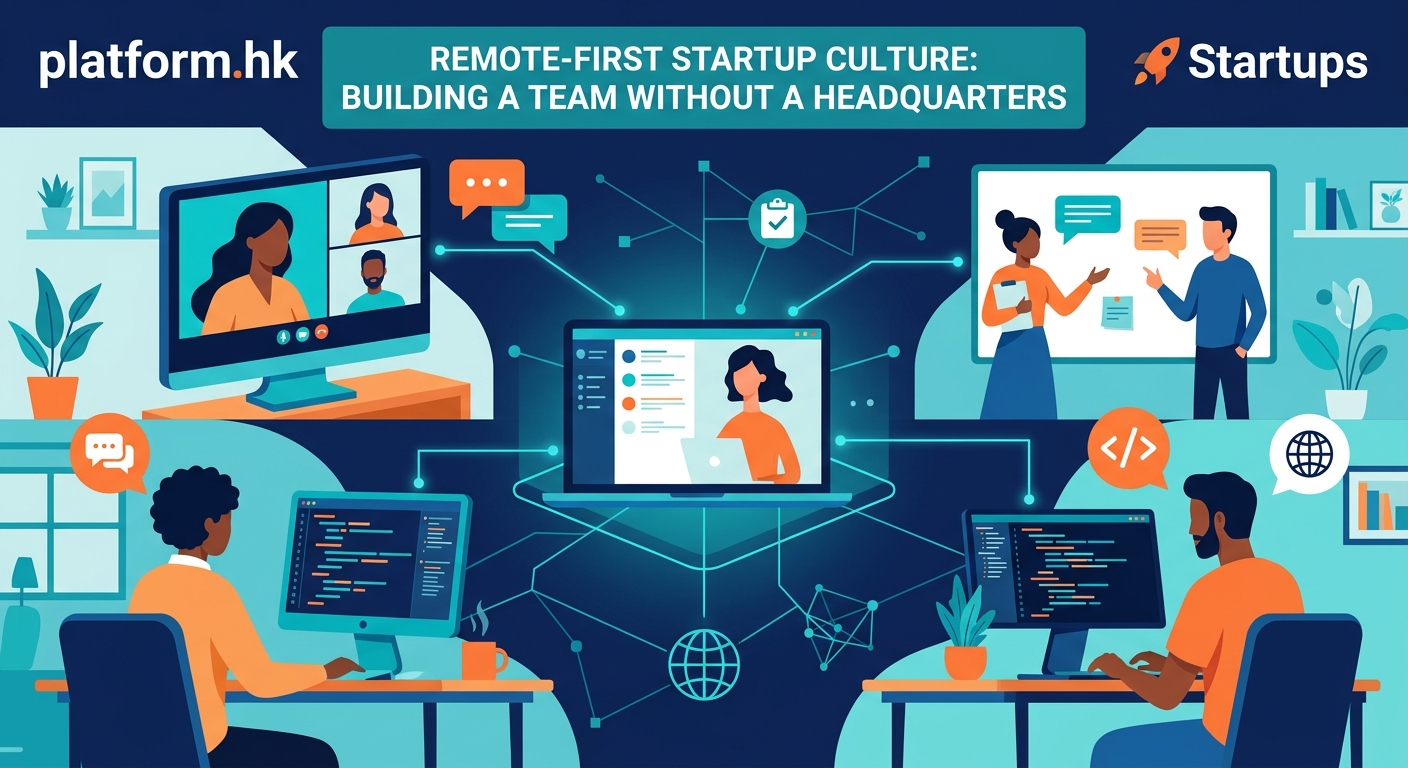
Most startups run on tribal knowledge. Someone knows how the customer onboarding works because they built it. Another person remembers the pricing strategy because they were in that meeting.
This breaks completely when you go remote.
You need to write everything down. Not because remote workers are forgetful, but because time zones make synchronous knowledge transfer impossible. Your engineer in Berlin can’t wait for your designer in San Francisco to wake up and explain the design system.
Start with these core documents:
- Company mission and values (not corporate fluff, actual decision-making principles)
- How decisions get made (who owns what, how to escalate, approval processes)
- Communication norms (response time expectations, which tool for what purpose)
- Product roadmap and strategy (why you’re building what you’re building)
- Customer insights and feedback loops (how information flows from customers to product)
Every project needs a written brief. Every decision needs a paper trail. Every process needs a playbook.
This feels slow at first. Writing takes longer than talking. But it pays back exponentially because you write once and reference forever.
“Documentation is not overhead in a remote company. It’s the infrastructure that lets you scale without chaos. If it’s not written down, it doesn’t exist.”
Async Communication as Your Competitive Advantage
Synchronous work kills productivity in distributed teams. Meetings across time zones mean someone always works at midnight. Real-time chat creates constant interruptions and FOMO.
Async work means people contribute on their own schedule. You write a proposal in the morning. Your teammate in another time zone reviews it during their afternoon. Someone else adds feedback the next day. The work happens continuously without anyone staying up late.
Here’s how to make async work:
- Default to written updates instead of status meetings
- Use video recordings for presentations so people can watch at 1.5x speed
- Set clear deadlines but flexible working hours
- Create discussion threads where people can contribute over 24-48 hours
- Ban “are you there?” messages (just ask the actual question)
The magic happens when you stop expecting immediate responses. Email becomes effective again. Slack becomes less stressful. People get long blocks of focused time.
Your European developer can ship features while your American designer sleeps. Your Asian customer success manager can handle tickets while your product team is offline. Work happens around the clock without anyone burning out.
Hiring for Remote: Different Skills Matter
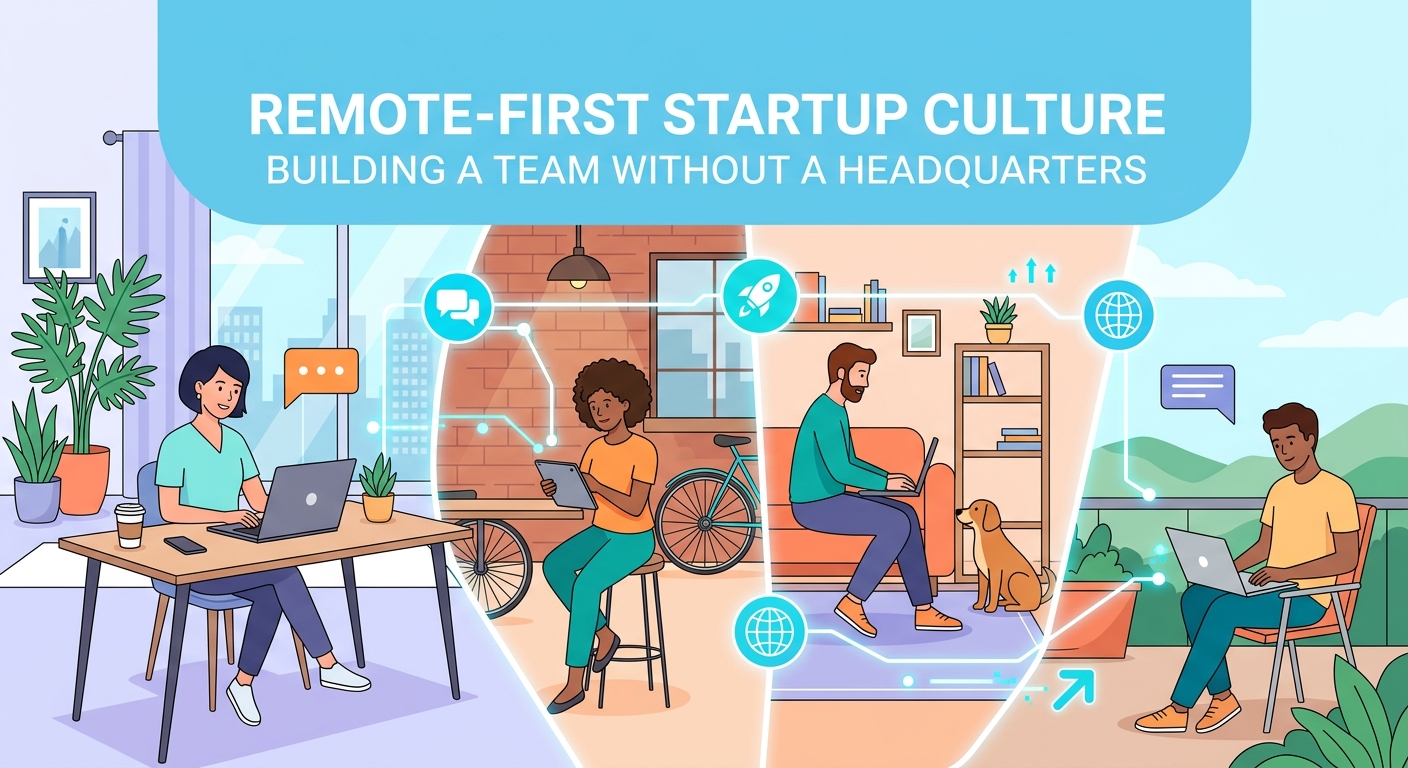
You can’t hire the same way for remote teams. The skills that make someone successful in an office don’t always translate.
Office workers can tap someone on the shoulder when stuck. They can read body language in meetings. They can overhear context from nearby conversations.
Remote workers need different capabilities:
- Written communication skills (can they explain complex ideas in text?)
- Self-direction (can they unblock themselves or do they need constant guidance?)
- Comfort with ambiguity (can they make progress without perfect information?)
- Proactive communication (do they share updates without being asked?)
- Time management across async work (can they juggle multiple threads without real-time coordination?)
Your interview process should test these directly. Give candidates a written case study instead of just talking through problems. See how they communicate in email or Slack. Ask about times they worked independently on ambiguous projects.
Red flags include people who need constant validation, can’t articulate their thinking in writing, or expect immediate answers to every question.
Green flags include candidates who ask clarifying questions upfront, document their thinking process, and show examples of self-directed work.
Creating Connection Without Proximity
Culture isn’t ping pong tables and free snacks. But it’s also not just Slack channels and Zoom calls.
Remote culture needs intentional connection rituals that create belonging across distance.
| Ritual Type | Example | Purpose |
|---|---|---|
| Daily async standup | Written updates in shared doc | Visibility without meetings |
| Weekly team sync | 30-minute video call | Face time and spontaneous chat |
| Monthly all-hands | Company-wide video meeting | Alignment and announcements |
| Quarterly offsites | In-person gathering | Deep bonding and strategy |
| Random coffee chats | Automated pairing tool | Cross-team relationships |
| Celebration channel | Wins and milestones shared publicly | Recognition and morale |
The daily standup shouldn’t be a meeting. People write what they did yesterday, what they’re doing today, and what’s blocking them. Takes five minutes. Everyone stays aligned.
The weekly sync is the only required meeting. Keep it short. Use it for things that actually need discussion, not status updates.
The quarterly offsite matters more than you think. Remote teams need occasional face time to build trust and tackle big strategic questions. Budget for flying everyone together 2-4 times per year.
Random coffee chats combat the silo effect. Use a tool that pairs people randomly for 15-minute video calls. Engineers meet designers. Sales talks to product. Relationships form across functional boundaries.
Trust-Based Leadership Instead of Surveillance
Some founders panic about remote work because they can’t see people working. This reveals a management problem, not a remote work problem.
If you need to watch someone to know they’re productive, you hired wrong or set unclear expectations.
Remote-first culture runs on trust and outcomes:
- Measure results, not hours logged
- Focus on what shipped, not when someone was online
- Give people autonomy over their schedule
- Avoid surveillance tools that track keystrokes or screenshots
- Judge performance on impact, not activity
This requires clear goal-setting. Everyone needs to know what success looks like for their role. OKRs work well. So do weekly priorities. The format matters less than the clarity.
When someone misses a deadline, the conversation is about obstacles and support, not about whether they were working hard enough. Maybe they got stuck and didn’t ask for help. Maybe the timeline was unrealistic. Maybe they need different tools or training.
Micromanagement kills remote culture faster than anything else. People leave when they feel constantly monitored or second-guessed.
Onboarding: Your Culture’s First Impression
New hires form their opinion of your culture in the first week. Remote onboarding needs extra care because you can’t rely on osmosis.
Create a structured 30-day onboarding plan:
- Week one: Company context, tools setup, meet the team
- Week two: First small project, shadow customer calls, read core documentation
- Week three: Own a real task end-to-end, start contributing to team rituals
- Week four: Regular velocity, feedback check-in, solidify working relationships
Assign a buddy who isn’t their manager. Someone who can answer dumb questions and explain unwritten norms. Schedule daily check-ins for the first week, then taper to weekly.
Create a written onboarding guide that covers:
- How we communicate (which tool for what, response time norms)
- How we make decisions (approval processes, escalation paths)
- How we work (meeting culture, documentation standards, project workflows)
- Who does what (team structure, key contacts, domain ownership)
- Where to find things (drive folders, wikis, key documents)
Record video walkthroughs of your product, tools, and processes. New hires can watch on their own time and replay as needed.
The goal is making someone productive and connected within 30 days, not just throwing them into the deep end.
Common Mistakes That Kill Remote Culture
Even well-intentioned founders make predictable mistakes:
Mistake one: Trying to replicate office culture online. You can’t. Stop trying to recreate water cooler chat in Slack. Build new rituals designed for remote.
Mistake two: Defaulting to meetings for everything. Meetings should be rare and purposeful. Most communication should be async.
Mistake three: Letting time zones create in-groups and out-groups. Rotate meeting times so no one is always inconvenienced. Record everything for people who can’t attend live.
Mistake four: Ignoring written communication skills in hiring. Someone brilliant in person might be terrible at async collaboration.
Mistake five: Skimping on tools and equipment. Remote workers need good laptops, monitors, headphones, and software. These are your office rent now.
Mistake six: Forgetting to celebrate wins. Without in-person high-fives, recognition needs to be explicit and public.
Mistake seven: Treating remote work as a cost-saving measure instead of a talent strategy. The point isn’t cheaper rent. It’s access to global talent.
Making Decisions When Everyone’s Distributed
Decision-making gets messy in remote teams if you don’t have clear processes.
Some decisions need consensus. Most don’t.
Use a framework like RAPID (Recommend, Agree, Perform, Input, Decide) or DACI (Driver, Approver, Contributors, Informed) to clarify who owns what.
For major decisions:
- Someone writes a proposal with context, options, and recommendation
- Stakeholders add questions and input async (24-48 hour window)
- Decision-maker incorporates feedback and makes final call
- Decision gets documented with reasoning
- Everyone moves forward, even if they disagreed
This prevents endless debate and meeting loops. It also creates a paper trail so future team members understand why you chose what you chose.
Small decisions should be made by whoever owns that domain, with minimal coordination. Empower people to act and course-correct later rather than asking permission for everything.
Performance Management Across Time Zones
You can’t do performance reviews the way traditional companies do them. Annual reviews feel arbitrary when you rarely see someone face-to-face.
Shift to continuous feedback:
- Weekly one-on-ones (30 minutes, mix of work discussion and coaching)
- Monthly written feedback (what’s going well, what to improve)
- Quarterly goal reviews (did we hit OKRs, what’s next)
- Annual compensation discussions (separate from performance feedback)
One-on-ones should be sacred. Never cancel them. Use them to build relationship, not just discuss tasks.
Written feedback matters more remotely because tone gets lost in text. Be specific. “Great work on the launch” means nothing. “Your project plan for the launch included clear timelines and proactive communication with stakeholders, which made execution smooth” gives useful information.
Address problems early. Don’t let issues fester because you’re avoiding an awkward video call. Remote work requires more explicit feedback, not less.
Building Belonging for Different Personalities
Remote work suits introverts who hate open offices. It challenges extroverts who get energy from people.
Your culture needs to work for both.
Create multiple connection options:
- Async social channels (pet photos, book recommendations, hobbies)
- Optional virtual coffee breaks (no agenda, just hang out)
- In-person offsites (deeper bonding for those who want it)
- Local meetups (if you have multiple people in the same city)
- Interest-based groups (running club, cooking channel, gaming nights)
Make everything optional. Not everyone wants to socialize with coworkers. That’s fine.
But create enough opportunities that people who do want connection can find it.
Introverts might prefer async channels where they can participate on their terms. Extroverts might need more video calls and in-person events. Both are valid.
Your Culture Evolves With Your Team Size
What works at 5 people breaks at 15. What works at 15 breaks at 50.
Early stage (under 10 people): Everyone knows everything. Communication is informal. Processes are minimal. This doesn’t scale.
Growth stage (10-50 people): You need documentation, clear ownership, and communication norms. Silos start forming. You need cross-team rituals.
Scale stage (50+ people): You need formal processes, specialized roles, and deliberate culture preservation. Onboarding becomes critical. Middle management emerges.
Your culture work changes at each stage. Early on, founders model culture through their actions. Later, you need systems that preserve culture as you hire people who weren’t there at the beginning.
The values stay consistent. The practices evolve.
Making Remote Work for Your Startup
Building remote-first startup culture isn’t about copying what GitLab or Buffer do. It’s about designing systems that work for your team, your product, and your constraints.
Start with the basics: clear communication norms, strong documentation, trust-based management, and intentional connection rituals. Hire people who thrive in autonomous environments. Invest in tools and processes that support async work.
Your culture is how work actually gets done, not what you write on your careers page. It’s the accumulated decisions, habits, and norms that emerge when people collaborate toward a shared goal.
Remote-first doesn’t mean easier. It means different. You trade office rent for better tools. You trade hallway conversations for written documentation. You trade local talent pools for global access.
The startups winning with remote culture treat it as a feature, not a compromise. They build systems that let people do their best work regardless of location. They create belonging through intentional design, not accidental proximity.
Your team will never share an office. That’s not a limitation. It’s an opportunity to build something better.