Can You Really Build a Professional Network in a Shared Workspace?

Walking into a coworking space for the first time can feel like showing up to a party where everyone already knows each other. You grab your coffee, find a desk, and wonder if you’ll spend the next six months working in complete silence while surrounded by potential collaborators, clients, and friends.
Networking in coworking spaces works best when you combine regular attendance with intentional participation in community events, strategic use of shared areas, and genuine curiosity about other members’ work. Success comes from consistent small interactions rather than forced networking. Most meaningful professional relationships develop over weeks of casual conversations, collaborative projects, and showing up predictably in communal zones where natural connections form organically.
Why coworking spaces create natural networking opportunities
Traditional offices keep you locked in with the same team every day. Coffee shops offer anonymity but zero community. Coworking spaces sit perfectly in between.
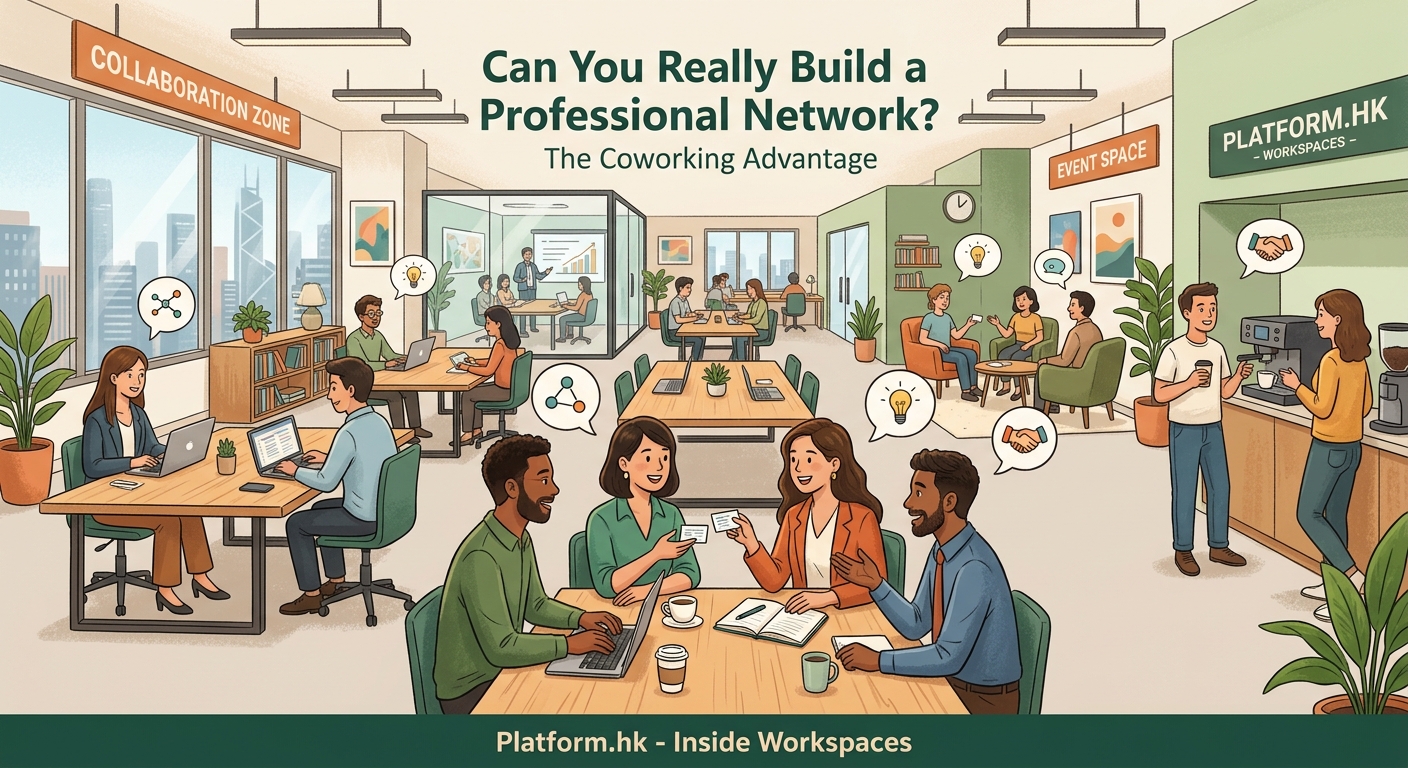
The structure itself encourages interaction. Shared kitchens. Common tables. Member lounges. These aren’t design accidents. They’re intentional spaces where conversations happen naturally.
You’ll meet graphic designers between client calls, developers debugging over lunch, and consultants who just closed a deal. Everyone’s working on something different, which makes the environment rich with potential connections.
The best part? Nobody’s there by accident. Every person chose to work in a community setting instead of staying home. That choice signals openness to connection.
Five strategies that turn coworking into real relationships
1. Show up at the same times consistently
Your schedule becomes your networking strategy. Pick specific days and times, then stick to them religiously.
When you work Tuesdays and Thursdays from 9 AM to 3 PM, you’ll start recognizing the same faces. Recognition builds familiarity. Familiarity opens doors to conversation.
Sarah, a freelance copywriter, noticed another member always arrived at 8:30 AM with the same green smoothie. After three weeks of nodding hellos, they started chatting about morning routines. Six months later, that smoothie drinker became her biggest referral source.
Consistency matters more than duration. Three hours twice a week beats eight random hours scattered across the month.
2. Work from communal tables instead of private corners
Private desks feel safe. Communal tables feel vulnerable. That vulnerability is exactly what creates connections.
Sitting at a shared table signals availability. You’re open to brief exchanges, questions about the wifi password, or comments about someone’s laptop stickers.
These micro interactions accumulate. Today’s “Is this seat taken?” becomes next week’s “What are you working on?” which becomes next month’s “I know someone who needs exactly that service.”
Position yourself near the coffee station or printer. High traffic areas generate more natural touchpoints.
3. Attend member events with a specific goal
Most coworking spaces host happy hours, lunch and learns, or skill shares. These events concentrate networking opportunities into digestible timeframes.
Don’t attend every event. Choose strategically based on topics or attendees that align with your goals.
Before each event, set one concrete objective:
- Meet three people in adjacent industries
- Find one potential collaboration partner
- Learn about a skill you’ve been curious about
- Offer help to someone struggling with your area of expertise
Having a specific goal prevents awkward wandering and gives you a reason to start conversations.
4. Use the member directory before introducing yourself
Many coworking spaces maintain online directories with member profiles, skills, and current projects. Study these before your first day.
Identify five members whose work interests you. When you spot them in person, you already have conversation starters ready.
“I saw in the directory that you do podcast editing. I’ve been thinking about starting one” works infinitely better than “So, what do you do?”
This preparation shows genuine interest rather than generic networking behavior.
5. Share your expertise without expecting immediate returns
The fastest way to build your reputation is helping others solve problems.
Answer questions in the member Slack channel. Offer to review someone’s website copy. Share a template that saves time. Recommend a tool that solved a problem you just overcame.
These small acts of generosity compound. People remember who helped them, and they reciprocate when opportunities arise.
Marcus, a web developer, spent 20 minutes helping a struggling entrepreneur fix her email setup. Three months later, she introduced him to a client who needed a complete site rebuild. That project paid for his coworking membership for a year.
Common networking mistakes that push people away
| Mistake | Why it fails | Better approach |
|---|---|---|
| Pitching your services immediately | Feels transactional and desperate | Build rapport first, offer value freely |
| Only talking to people in your exact field | Limits opportunities and perspectives | Seek diverse connections across industries |
| Wearing headphones constantly | Signals unavailability completely | Use headphones strategically, remove them during breaks |
| Skipping community events entirely | Misses concentrated networking opportunities | Attend at least one event monthly |
| Collecting business cards without follow up | Wastes initial connections made | Send a specific follow up within 48 hours |
| Interrupting focused workers | Creates negative first impressions | Read body language, respect concentration time |
How to start conversations that don’t feel forced

You don’t need clever opening lines. You need genuine curiosity and good timing.
Look for natural moments:
- Someone’s taking a break and refilling their water
- A person just closed their laptop and stretched
- You’re both waiting for the microwave
- They’re setting up at a table near you
Start with observations, not questions. “That’s a lot of monitors” beats “What do you do?” because it references something specific and visible.
Let them decide how much to share. Some people want five minute breaks between tasks. Others crave conversation after hours of solo work.
Pay attention to response length. Short answers mean they want to get back to work. Detailed responses signal openness to continuing the chat.
“The best networking happens when you stop trying to network and start being genuinely interested in the humans around you. Ask about their projects because you actually want to know, not because you’re hunting for opportunities.” – Community manager at a 200 member coworking space
Building deeper connections beyond surface level chats
Surface conversations are fine for weeks one through four. Month two requires intentional deepening.
Suggest specific collaborations:
- “I’m testing a new service. Would you be willing to give feedback?”
- “I’m struggling with this design decision. Can I show you two options?”
- “Want to grab lunch next Tuesday and talk about that client challenge you mentioned?”
Moving from workspace proximity to intentional meetups signals that you value the relationship beyond convenience.
Create accountability partnerships. Find someone with complementary goals and check in weekly. This structure builds consistency and mutual investment.
Join or start a coworking space mastermind group. Four to six members who meet biweekly to discuss challenges and wins creates deeper bonds than casual hallway chats.
Practical ways to maintain relationships after they start
Starting connections is easier than maintaining them. Most coworking friendships fade because nobody nurtures them intentionally.
Weekly maintenance actions:
- Send one article or resource to someone who’d find it valuable
- Make one introduction between two members who should know each other
- Celebrate one win you noticed someone share publicly
Monthly maintenance actions:
- Invite someone to coffee or lunch outside the coworking space
- Offer specific help on a project they mentioned struggling with
- Write a recommendation or testimonial for someone’s work
These actions take minimal time but create maximum relationship momentum.
Track your coworking connections in a simple spreadsheet. Note names, what they do, last conversation topic, and follow up reminders. This prevents the embarrassing “I forgot what you told me last week” moments.
What to do when networking feels exhausting
Not everyone energizes through constant interaction. Introverts can absolutely succeed at networking in coworking spaces, but the approach looks different.
Schedule social energy strategically. If you know Mondays drain you, make those your heads down work days. Save Wednesdays for community engagement.
Set conversation quotas that feel manageable. Three meaningful interactions per day might be your sweet spot, while an extrovert thrives on twelve.
Use written communication when verbal feels overwhelming. Contribute thoughtfully in Slack channels. Send detailed emails. Write helpful comments on shared documents.
Quality beats quantity every time. Five deep professional friendships matter more than fifty surface level acquaintances.
Take breaks in private spaces when you need to recharge. Most coworking spaces offer phone booths or quiet rooms specifically for this purpose.
Measuring whether your networking efforts actually work
You can’t manage what you don’t measure. Track these indicators monthly:
- Number of meaningful conversations (more than two minutes)
- Referrals received from coworking connections
- Collaborations started with other members
- Problems solved through community knowledge
- Events attended versus events that led to valuable connections
Not every metric needs to trend upward constantly. Some months you’ll focus on depth. Others prioritize breadth.
The real measure shows up six to twelve months in. Are you getting introduced to opportunities before they’re publicly posted? Do members think of you when they hear about relevant projects? Can you text three people for help with different professional challenges?
Those signals indicate that networking in coworking spaces is actually working.
Turning coworking connections into lasting professional assets
The members you meet today become your professional ecosystem tomorrow.
They refer clients when they’re overbooked. They introduce you to their networks. They collaborate on projects too big for one person. They provide honest feedback that improves your work.
But these benefits only materialize when you invest consistently over time.
Treat your coworking community like a garden. Show up regularly. Plant seeds through helpful interactions. Water relationships with genuine interest. Pull weeds by addressing conflicts directly. Harvest opportunities when they naturally ripen.
Some connections bloom immediately. Others take seasons to develop. A few never grow beyond polite hellos, and that’s perfectly fine.
The goal isn’t networking with everyone. It’s building authentic professional relationships with the right people who share your values, complement your skills, and appreciate what you bring to the community.
Start tomorrow. Sit at a communal table. Remove your headphones during lunch. Ask one person about their current project. See where that single conversation leads.
Your next client, collaborator, or close professional friend might be sitting three desks away right now.