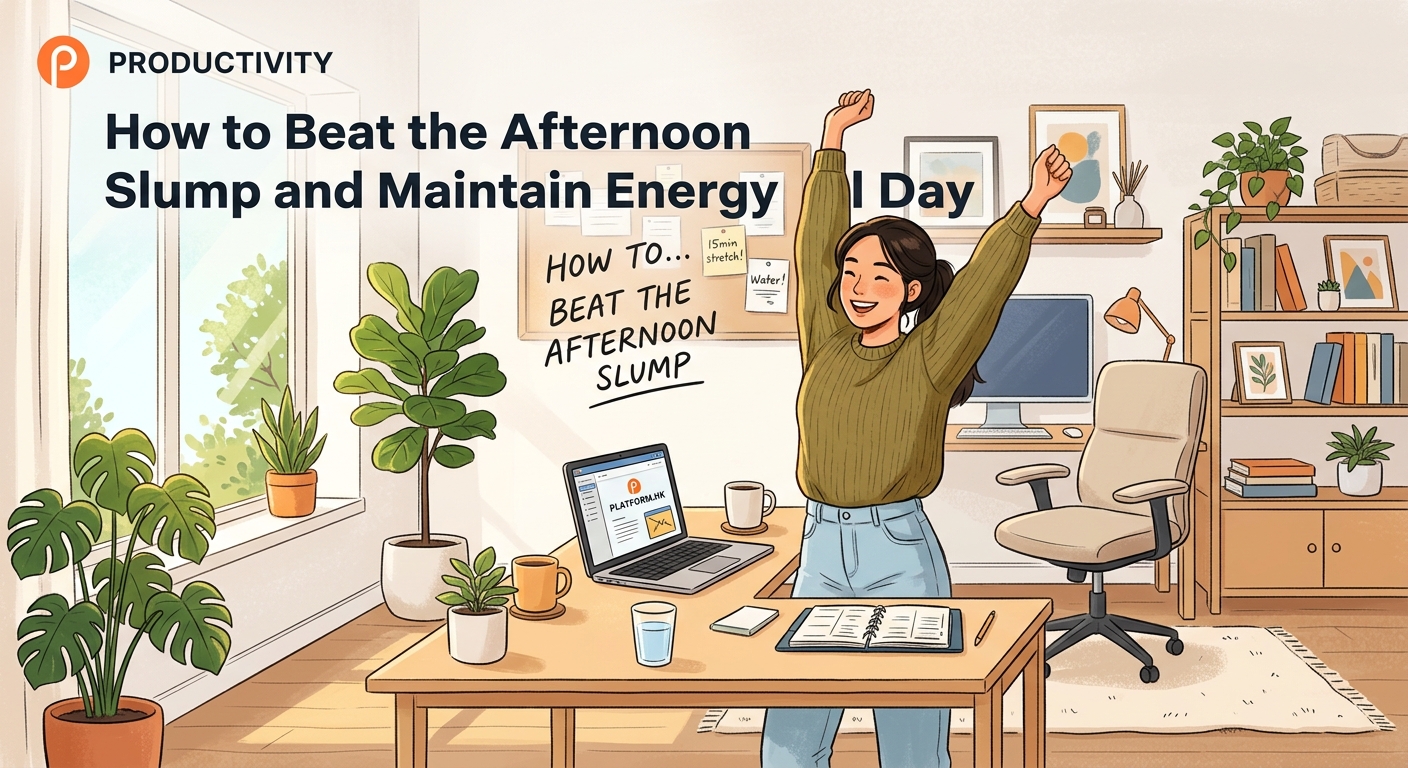
How to Beat the Afternoon Slump and Maintain Energy All Day

That 3 PM wall hits hard. Your eyes start to feel heavy, your brain turns to fog, and suddenly checking your phone becomes more appealing than finishing that report. You’re not imagining it. The afternoon slump is real, backed by science, and it affects nearly everyone who works a standard schedule.
The afternoon slump stems from natural [circadian rhythm](https://www.nhlbi.nih.gov/health/circadian-rhythm-disorders)s, [blood sugar](https://www.cdc.gov/nutrition/php/about/blood-sugar.html) crashes, and poor lifestyle habits. Combat it through strategic meal timing, proper hydration, movement breaks, and light exposure. Small changes to your morning routine and lunch choices create lasting energy throughout your workday without relying on caffeine or sugar for temporary fixes.
Why Your Body Crashes After Lunch
Your circadian rhythm naturally dips between 1 PM and 3 PM. This isn’t laziness. It’s biology. Your body temperature drops slightly, and your brain releases adenosine, a chemical that promotes sleep. Add a heavy lunch on top of that, and your digestive system pulls blood away from your brain to handle the food.
The type of lunch you eat matters enormously. A meal high in refined carbs and sugar spikes your blood glucose, which then crashes hard an hour later. Your pancreas releases insulin to handle the sugar rush, often overcompensating and leaving you with lower energy than before you ate.
Dehydration plays a bigger role than most people realize. By mid-afternoon, you’ve been awake for hours, probably drinking coffee instead of water. Even mild dehydration reduces cognitive performance and makes you feel tired.
Poor sleep quality compounds everything. If you didn’t sleep well last night, your afternoon will feel brutal no matter what strategies you try. The slump becomes a canyon.
Build Your Morning Defense
What you do in the morning determines how you’ll feel at 3 PM. Start by eating breakfast within an hour of waking up. This stabilizes your blood sugar from the beginning and prevents the roller coaster that leads to afternoon crashes.
Choose protein and healthy fats over sugary cereals or pastries. Eggs, Greek yogurt, nuts, or whole grain toast with avocado give you sustained energy. They digest slowly and keep your blood sugar stable for hours.
Get sunlight within 30 minutes of waking. Step outside for five minutes or sit by a window. Morning light resets your circadian rhythm and tells your body to produce cortisol, which helps you stay alert throughout the day. This single habit can shift your entire energy curve.
Move your body before work starts. A 10-minute walk, some stretches, or a few yoga poses increase blood flow and oxygen to your brain. You don’t need an intense workout. Gentle movement is enough to prime your system for sustained alertness.
Master Your Lunch Strategy
Your midday meal can either fuel your afternoon or destroy it. Here’s how to eat for sustained energy:
- Build your plate with half vegetables, a quarter protein, and a quarter complex carbohydrates
- Avoid white bread, pasta, and sugary drinks that spike blood sugar
- Include healthy fats like olive oil, nuts, or avocado to slow digestion
- Eat slowly over 20 minutes instead of rushing through your meal
- Stop eating when you’re 80% full rather than stuffed
The timing matters too. Eating at the same time each day helps regulate your metabolism and energy patterns. Your body learns when to expect fuel and manages it more efficiently.
“The biggest mistake I see is people skipping breakfast, then eating a massive lunch full of simple carbs. They’re setting themselves up for a crash. Consistent meal timing with balanced macronutrients is the foundation of stable energy.” – Nutritionist perspective on workplace energy management
Hydration Changes Everything
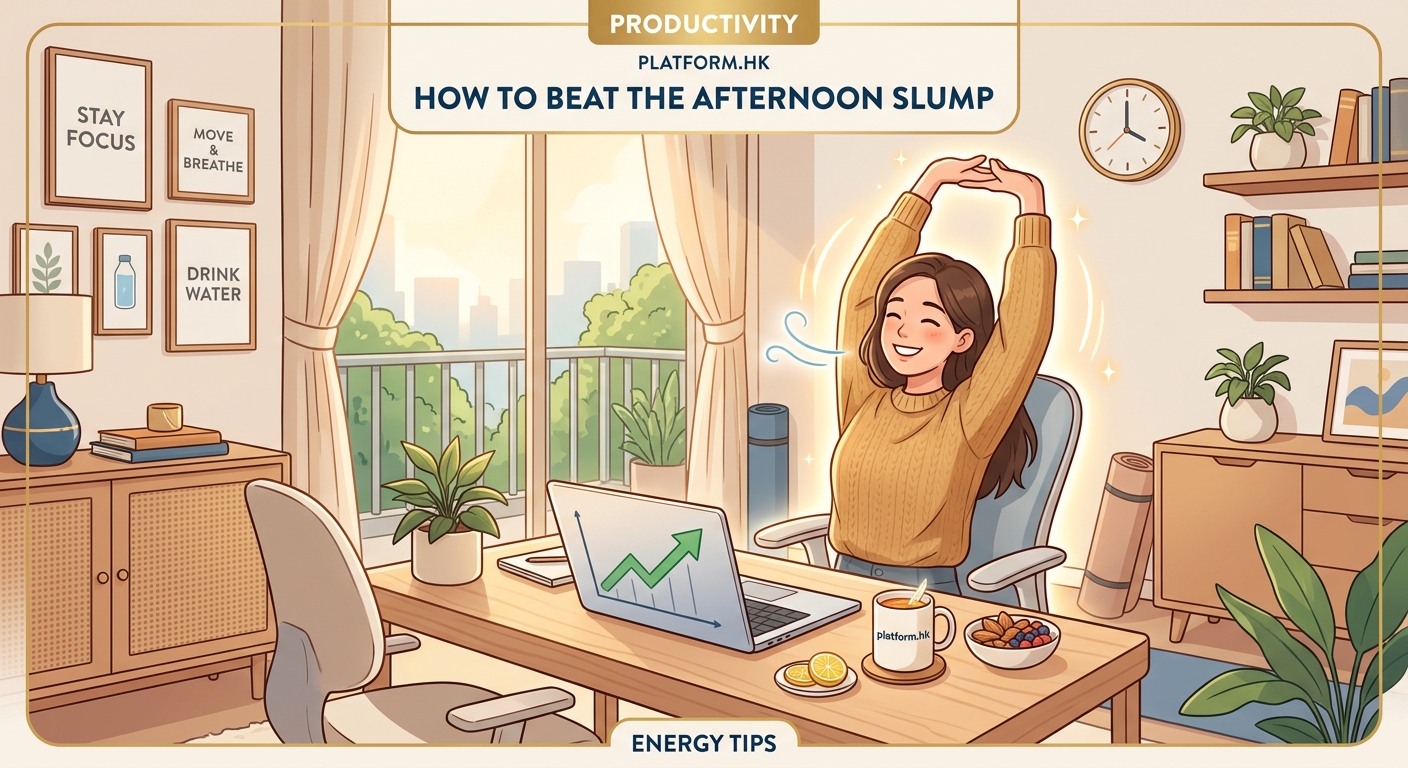
Most professionals are chronically dehydrated without realizing it. Coffee and tea don’t count toward your water intake because caffeine is a diuretic. You need actual water.
Keep a water bottle at your desk and aim for these targets:
- 16 ounces between waking and breakfast
- 16 ounces mid-morning
- 16 ounces with lunch
- 16 ounces mid-afternoon
- 16 ounces before dinner
That’s 80 ounces total, which covers most people’s needs. If you exercise or work in a hot environment, add more. The color of your urine is the best indicator. Pale yellow means you’re hydrated. Dark yellow means drink more.
Set reminders on your phone if you forget. After two weeks, drinking water becomes automatic. The difference in your afternoon energy will be noticeable within days.
Movement Breaks Are Non-Negotiable
Sitting still for hours makes you tired. Your blood pools in your legs, your metabolism slows, and your brain gets less oxygen. Standing up and moving resets everything.
Try this pattern throughout your day:
- Stand and stretch for two minutes every hour
- Walk for five minutes after lunch
- Do 10 desk squats or wall push-ups at 2 PM
- Take the stairs instead of the elevator
- Walk during phone calls when possible
The post-lunch walk is particularly powerful. It helps digestion, prevents blood sugar spikes, and increases alertness. Even a slow stroll around the office or outside for five minutes makes a measurable difference.
If you work from home, this is easier. Do a load of laundry, play with your dog, or step into your backyard. The change of scenery combined with movement wakes up your brain.
Light and Environment Control
Your workspace lighting affects your energy more than you think. Dim lighting signals your brain that it’s time to wind down. Bright, cool-toned light keeps you alert.
If possible, work near a window. Natural light is ideal. If you’re stuck in a windowless office or work remotely in a dark room, consider a daylight spectrum desk lamp. Position it to shine on your work surface, not directly in your eyes.
Temperature matters too. Rooms that are too warm make you drowsy. If you control the thermostat, keep it between 68 and 72 degrees Fahrenheit. If you don’t, dress in layers so you can adjust.
Open a window for fresh air when possible. Stale, recycled air with high CO2 levels makes you tired. A few minutes of fresh air circulation can sharpen your focus noticeably.
Strategic Caffeine Use
Caffeine isn’t the enemy, but timing and amount matter. Drinking coffee all day creates tolerance and disrupts sleep, which worsens tomorrow’s slump. Use it strategically instead.
The best time for afternoon caffeine is between 1 PM and 2 PM, right before the natural dip hits. This gives you a boost when you need it most without interfering with sleep later.
Keep the dose moderate. One cup of coffee or tea is enough. More than that and you risk jitters, anxiety, and a harder crash later.
Green tea offers a gentler alternative. It contains less caffeine than coffee but includes L-theanine, an amino acid that promotes calm focus without drowsiness. The combination prevents the jittery feeling while still boosting alertness.
Avoid caffeine after 3 PM. It has a half-life of five to six hours, meaning half of it is still in your system hours later. Late afternoon caffeine will interfere with sleep quality, creating a vicious cycle.
Smart Snacking Tactics
The right snack at the right time can prevent energy crashes. The wrong snack makes everything worse. Here’s what works:
| Energy-Boosting Snacks | Energy-Draining Snacks |
|---|---|
| Apple with almond butter | Candy bar |
| Handful of mixed nuts | Chips |
| Greek yogurt with berries | Cookies |
| Hummus with vegetables | Soda |
| Hard-boiled eggs | Pastries |
| Dark chocolate (70%+) | Energy drinks |
Notice the pattern. Snacks with protein, fiber, and healthy fats sustain energy. Snacks high in sugar and refined carbs cause crashes.
Time your snack for mid-afternoon, around 3 PM. This bridges the gap between lunch and dinner and provides fuel when your body naturally dips.
Keep healthy snacks visible and convenient. If nuts are on your desk and cookies are in the break room, you’ll choose nuts. Make the healthy choice the easy choice.
The Power Nap Option
If your work situation allows it, a 20-minute nap between 1 PM and 3 PM can reset your entire afternoon. Set an alarm. Anything longer than 25 minutes and you’ll enter deep sleep, waking up groggy instead of refreshed.
Find a quiet spot. Your car, an empty conference room, or even your desk with your head down works. Close your eyes and rest, even if you don’t fall fully asleep. The mental break alone helps.
Many high-performing professionals and companies embrace strategic napping. Google, Nike, and other innovative workplaces provide nap rooms because they recognize the productivity benefits.
If napping isn’t possible, try a meditation break instead. Five minutes of deep breathing or a guided meditation app can provide similar mental refreshment without actually sleeping.
Evening Habits That Prevent Tomorrow’s Slump
Your afternoon energy starts the night before. Poor sleep quality guarantees you’ll struggle the next day, no matter what strategies you use.
Create a consistent sleep schedule. Go to bed and wake up at the same time every day, including weekends. Your circadian rhythm thrives on consistency.
Stop using screens one hour before bed. The blue light from phones, tablets, and computers suppresses melatonin production and delays sleep onset. Read a book, listen to music, or talk with family instead.
Keep your bedroom cool, dark, and quiet. Use blackout curtains, a white noise machine, or earplugs if needed. Your body sleeps better in a cool environment, ideally between 65 and 68 degrees.
Avoid large meals, alcohol, and intense exercise within three hours of bedtime. All three can disrupt sleep quality, leaving you tired the next day despite spending enough time in bed.
Troubleshooting Common Problems
Sometimes you do everything right and still feel tired. Here are solutions for specific situations:
If you work night shifts: Your circadian rhythm is fighting you. Use blackout curtains during your sleep time, get bright light exposure during your wake time, and consider melatonin supplements after consulting a doctor.
If you have a long commute: Use that time for an audiobook or podcast that energizes you rather than drains you. Avoid news or content that stresses you out. Save your favorite music or comedy for the afternoon drive home.
If you’re in back-to-back meetings: Stand during virtual meetings when possible. Take notes by hand to stay engaged. Drink water throughout. If meetings are in person, suggest walking meetings for one-on-ones.
If you work from home: The lack of structure can worsen afternoon fatigue. Create clear boundaries between work and rest spaces. Get dressed as if going to an office. Take a real lunch break away from your desk.
If you have young kids: Sleep deprivation is real and unavoidable sometimes. Focus on the basics: hydration, movement, and protein-rich meals. Give yourself grace. This phase is temporary.
Building Your Personal Energy System
Not every strategy will work for everyone. Your job, schedule, preferences, and body are unique. The goal is to build a personalized system that fits your life.
Start by tracking your energy levels for one week. Note what you eat, when you move, how you sleep, and how you feel each afternoon. Patterns will emerge.
Then add one new habit at a time. Don’t try to overhaul everything at once. That leads to overwhelm and giving up. Pick the strategy that seems easiest or most impactful for you and commit to it for two weeks.
Once that habit sticks, add another. Over time, you’ll build a complete system that keeps your energy stable throughout the day. The afternoon slump won’t disappear entirely, but it will become manageable instead of debilitating.
Your Energy Is Under Your Control
The afternoon slump feels inevitable until you understand what causes it and how to prevent it. Small changes to your morning routine, lunch choices, hydration, movement, and environment add up to dramatic improvements in how you feel at 3 PM.
You don’t need expensive supplements, complicated biohacking protocols, or perfect discipline. You need consistent basics: balanced meals, regular water intake, brief movement breaks, and decent sleep. These fundamentals work because they align with how your body naturally functions.
Start with one change tomorrow. Maybe it’s drinking a glass of water when you wake up, or taking a five-minute walk after lunch, or keeping nuts at your desk instead of candy. That single change will make your afternoon better. Then add another change next week. Your energy compounds over time, just like your habits.