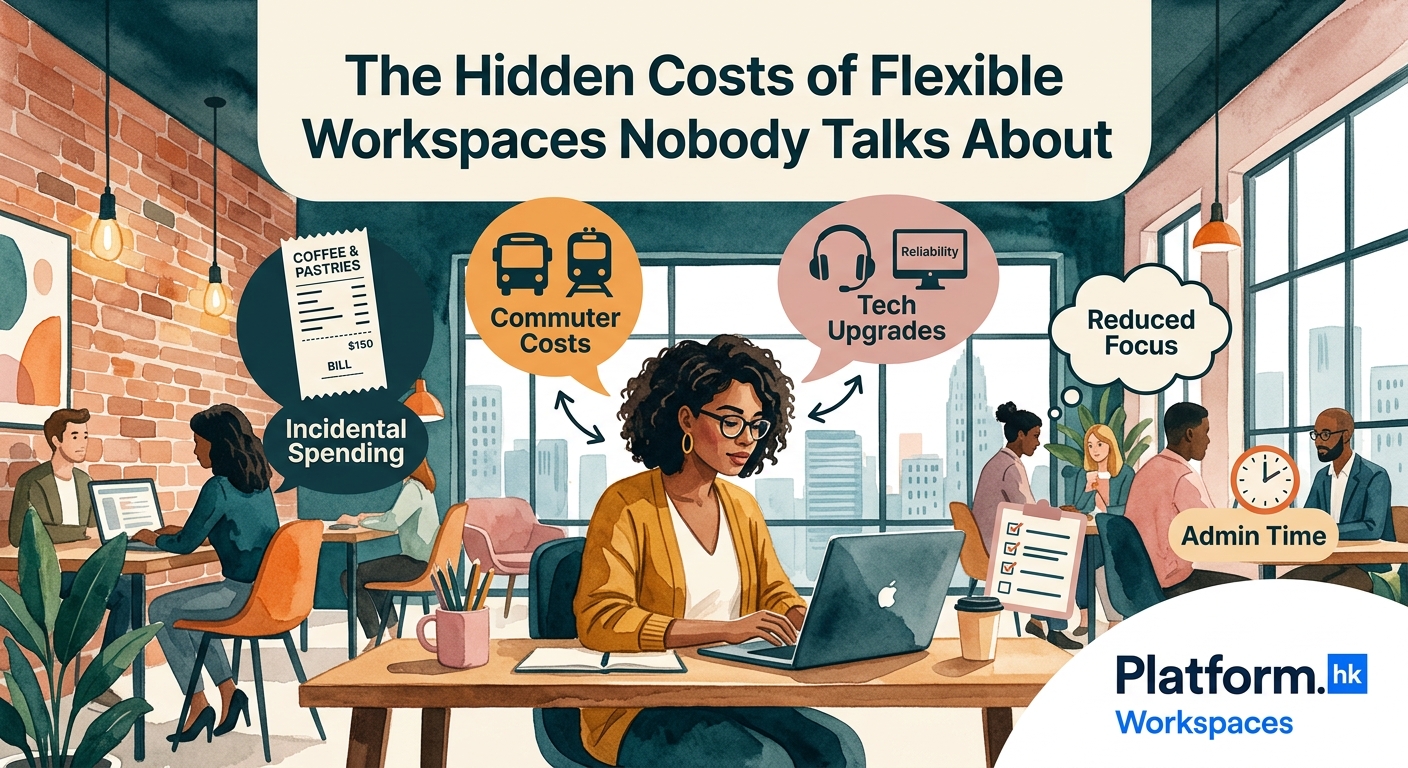
The Hidden Costs of Flexible Workspaces Nobody Talks About

You’ve seen the ads. A sleek coworking space with coffee bars, ergonomic chairs, and a monthly rate that looks too good to be true. Your current lease is bleeding cash, and the idea of paying per desk sounds like freedom. But here’s what the brochures won’t tell you: the advertised price is just the starting line.
Flexible workspaces advertise transparent pricing, but hidden costs lurk in booking fees, printing charges, meeting room premiums, and internet upgrades. Business owners often spend 30 to 50 percent more than the base rate once they factor in daily operational needs, team growth surcharges, and unexpected administrative expenses that traditional offices bundle into one predictable payment.
The base rate is never the real rate
Every flexible workspace lists a monthly fee. It looks clean. Simple. But that number covers a desk and basic WiFi. Nothing else.
Need to print a contract? That’s extra. Want a dedicated phone line? Another fee. Require a mailing address that doesn’t say “Suite 401B”? More money.
Most coworking spaces charge separately for:
- Mail handling and package acceptance
- Printing, scanning, and copying
- Phone booth or private call room access
- Locker or storage space
- Guest day passes
- Administrative support
A startup founder I spoke with last year thought she’d pay $400 per month for two desks. After three months, her average bill hit $620. The difference came from printing client proposals, booking meeting rooms twice a week, and paying for guest passes when freelancers visited.
Meeting rooms cost more than your mortgage
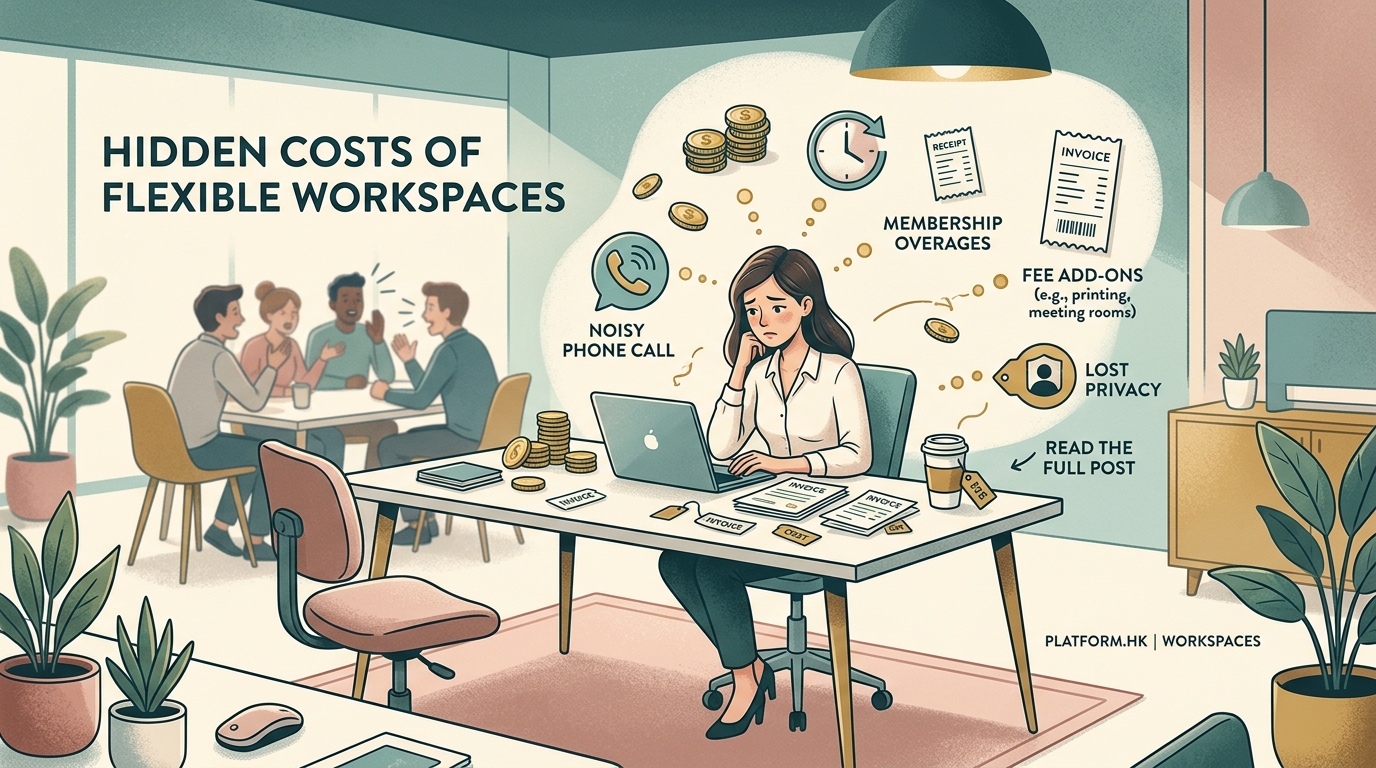
Flexible workspaces advertise “free meeting rooms” in their marketing. Then you read the fine print: free for one hour per month.
After that, you’re paying $25 to $75 per hour depending on the city and the room size. If you run a business that needs client meetings, team check ins, or video calls in a quiet space, those hours vanish fast.
Here’s what that looks like in real numbers:
| Meeting Frequency | Hours per Month | Cost at $40/Hour | Annual Total |
|---|---|---|---|
| Weekly team sync | 16 | $640 | $7,680 |
| Bi-weekly client calls | 8 | $320 | $3,840 |
| Monthly all-hands | 2 | $80 | $960 |
| Total | 26 | $1,040 | $12,480 |
That’s more than some small offices cost to lease outright.
And if you need a room on short notice? Good luck. Popular time slots book out days in advance. You’ll either reschedule your meeting or pay a premium for a larger room.
Internet upgrades aren’t optional
The “high speed internet” included in your membership works fine for email and web browsing. But try running a video call with five people, uploading design files, or hosting a webinar, and you’ll hit the throttle.
Most flexible workspaces offer tiered internet plans. The basic tier is included. The tier you actually need costs $50 to $150 extra per month per desk.
One HR manager told me her team of six couldn’t share screens during client demos without the connection freezing. She upgraded to the business tier for an extra $600 per month. That wasn’t in the budget she presented to her CEO.
Your team can’t grow without paying more
Traditional office leases lock you into square footage, but they don’t charge you more if you hire someone. Flexible workspaces do.
Every new team member means another desk, another access card, another monthly charge. And most spaces don’t offer volume discounts until you hit 10 or 15 desks.
So if you’re a growing startup, your workspace costs scale linearly with headcount. There’s no economy of scale. No negotiation. Just more desks at the same per-unit price.
Here’s the growth tax in action:
- You start with three desks at $350 each: $1,050 per month.
- You hire two people: now you’re at $1,750 per month.
- You bring on an intern for the summer: $2,100 per month.
- You hire a sales lead: $2,450 per month.
In six months, your workspace costs more than doubled. Your revenue didn’t.
Parking and commute costs shift to your team
Flexible workspaces in city centers rarely include parking. If they do, it’s an add-on that costs $100 to $300 per month per spot.
Your team pays for parking out of pocket, or they take public transit. Either way, it’s a cost that didn’t exist when you had a suburban office with a free lot.
And if your workspace is in a trendy neighborhood, lunch isn’t cheap. A $15 salad five days a week adds up to $3,900 per year per person. That’s not your problem as an employer, but it affects retention and morale.
One office manager I interviewed moved her team from a suburban office to a downtown coworking space. Three employees quit within four months. Two cited commute costs and parking stress as reasons.
You lose control over your environment
In a traditional office, you set the temperature. You control the music. You decide when to have a team lunch in the conference room.
In a flexible workspace, you’re a tenant among dozens of other companies. The thermostat is locked. The playlist is chosen by the space operator. And if another company books the lounge for an event, you’re out of luck.
This sounds minor until it’s not. One business owner told me his team couldn’t focus during a three day startup pitch event hosted in the shared lounge. The noise bled into the workspace. Productivity tanked. Deadlines slipped.
You can’t complain too much. You’re renting flexibility, not ownership.
Security and privacy come at a premium
Flexible workspaces market themselves as secure. But “secure” means different things to different industries.
If you handle sensitive client data, medical records, or financial information, the open floor plan and shared WiFi network are a liability. Most spaces offer private offices, but those cost two to three times the price of a hot desk.
And even in a private office, you’re sharing a building with other companies. Your conversations can be overheard. Your documents can be seen. Your clients might run into your competitor in the elevator.
One law firm I spoke with tried a coworking space for six months. They moved out after a client spotted a rival firm’s logo on the directory board. The perception of shared space hurt their brand.
The little fees that add up
Let’s talk about the nickel and dime charges that don’t show up in the sales pitch:
- Late payment fees: $25 to $50 if your credit card expires.
- Access card replacement: $20 if you lose your fob.
- After hours access: some spaces charge extra for 24/7 entry.
- Guest WiFi: free for the first guest, $10 per day for additional visitors.
- Kitchen supplies: coffee is free, but snacks and drinks cost extra.
- Event space rental: want to host a client happy hour? That’s $500 minimum.
None of these costs are huge on their own. But they add up to an extra $100 to $200 per month that you didn’t budget for.
Contract flexibility isn’t as flexible as it sounds
Flexible workspaces advertise month to month contracts. No long term commitment. Cancel anytime.
But “cancel anytime” usually means “give us 30 days notice.” And if you’re on a discounted rate for committing to three or six months, breaking that contract early triggers a penalty.
One startup CEO told me he signed a six month contract to get a 15 percent discount. His company pivoted three months in and needed to downsize. The early termination fee was two months of rent. He paid $2,800 to get out of a contract that was supposed to be flexible.
“We thought we were buying flexibility, but we were really buying a different kind of lock in. The penalties just came in smaller, more frequent doses.” – Office Manager, 40 person marketing agency
What traditional offices include that flexible spaces charge for
Here’s a comparison table that shows what you’re actually trading when you switch:
| Feature | Traditional Office | Flexible Workspace |
|---|---|---|
| Meeting rooms | Included | $25 to $75 per hour |
| Parking | Often included | $100 to $300 per month |
| Private phone calls | Included | $5 to $15 per hour |
| Mail handling | Included | $20 to $50 per month |
| Kitchen supplies | Included | Coffee free, rest extra |
| Storage | Included | $50 to $150 per month |
| Conference room setup | Included | $25 to $100 per event |
When you add it all up, the “expensive” traditional office might actually cost less per employee once you factor in everything your team needs to work effectively.
How to calculate your true flexible workspace cost
Don’t trust the advertised rate. Here’s how to estimate what you’ll actually pay:
- Start with the base desk rate and multiply by your team size.
- Add $50 to $100 per desk for meeting room usage based on your meeting frequency.
- Include internet upgrades if your team does video calls or large file transfers.
- Factor in $20 to $50 per desk for printing, mail, and administrative fees.
- Add parking costs if your team drives to work.
- Include one time fees like access cards, deposits, and setup charges.
For a five person team in a mid-sized city, that might look like this:
- Base rate: 5 desks x $400 = $2,000
- Meeting rooms: $400
- Internet upgrade: $150
- Admin fees: $100
- Parking: 3 spots x $150 = $450
- Total monthly cost: $3,100
That’s 55 percent higher than the advertised base rate.
When flexible workspaces actually save money
This article isn’t meant to scare you away from flexible workspaces. They work brilliantly for certain situations:
- Solo founders who need a professional address and occasional meeting space
- Remote teams that need a monthly gathering spot but not daily desks
- Companies testing a new market before committing to a long term lease
- Businesses with wildly unpredictable headcount that changes month to month
But if you’re a stable team of five or more people who need consistent meeting space, private calls, and reliable internet, run the numbers carefully. The flexibility premium might not be worth it.
What to ask before you sign
Before you commit to a flexible workspace, get answers to these questions in writing:
- What’s included in the base rate, and what costs extra?
- How much do meeting rooms cost per hour, and how many hours are included?
- What’s the cancellation policy, and are there early termination fees?
- Is parking included, and if not, what are the nearby options?
- What internet speed is included, and how much does an upgrade cost?
- Are there guest fees, and how many visitors can I bring per month?
- What happens if I need to add or remove desks mid-month?
The answers will tell you whether the advertised price is honest or just the entry fee.
The real cost of not knowing
The biggest risk isn’t overpaying for a flexible workspace. It’s budgeting for one cost and getting surprised by another.
When your actual workspace bill runs 40 percent higher than you planned, that money comes from somewhere. Maybe it’s marketing. Maybe it’s hiring. Maybe it’s your own salary.
One founder told me she almost missed payroll because her coworking space bill was $800 higher than expected three months in a row. She hadn’t budgeted for meeting rooms, guest passes, and mail forwarding. Those costs were invisible until the invoice arrived.
Making the math work for your business
Flexible workspaces aren’t inherently expensive. They’re expensive when you don’t account for the full picture.
Before you sign, build a spreadsheet. List every service your team uses in a typical month. Price each one. Add 20 percent for things you didn’t think of.
Then compare that total to a traditional office lease with utilities, internet, and parking included. You might be surprised which option actually costs less.
And if the flexible workspace still wins, great. You’re making an informed choice with your eyes open. That’s the only way to make workspace decisions that don’t blow up your budget six months later.