How Coworking Spaces Are Adapting to Hybrid Work Models in 2026
The way we work changed forever in the past few years. Companies now juggle remote employees, office-based teams, and everyone in between. This shift created a massive challenge for HR managers and business owners trying to find workspace solutions that actually work for hybrid teams.
Coworking spaces saw this coming and adapted fast.
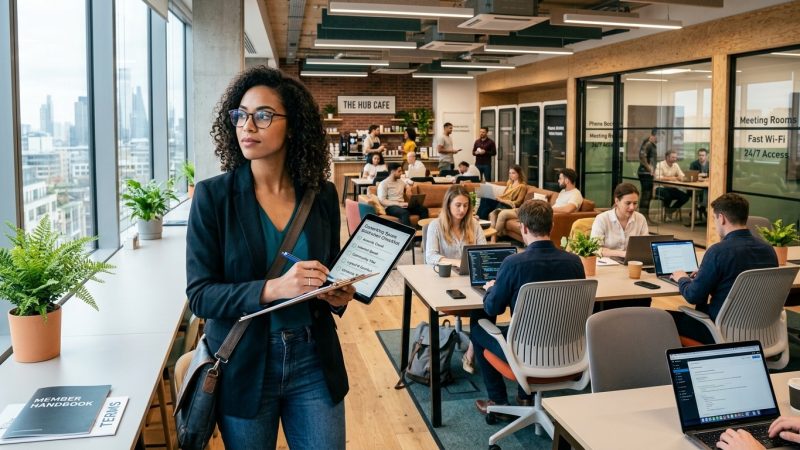
Coworking spaces are transforming their business models to serve hybrid workforces through flexible membership tiers, smart booking systems, and redesigned layouts that prioritize collaboration zones. These adaptations help companies reduce real estate costs while maintaining productive work environments. The most successful spaces now offer day passes, team rooms, and technology that integrates seamlessly with corporate IT infrastructure, making them viable alternatives to traditional office leases.
Why Traditional Office Models Failed Hybrid Teams
Most companies signed long-term leases for office space based on full-time attendance. When hybrid work became the norm, those same offices sat half-empty on Mondays and Fridays. Employees complained about commuting to empty buildings. Finance teams watched rent payments drain budgets for underutilized square footage.
The old model assumed everyone would show up at the same time. Hybrid work threw that assumption out the window.
Coworking spaces had a natural advantage here. They already operated on flexibility. Their entire business model was built around variable occupancy and short-term commitments. When companies needed workspace solutions that could scale up or down based on daily attendance, coworking operators were ready.
How Membership Structures Changed for Hybrid Workers
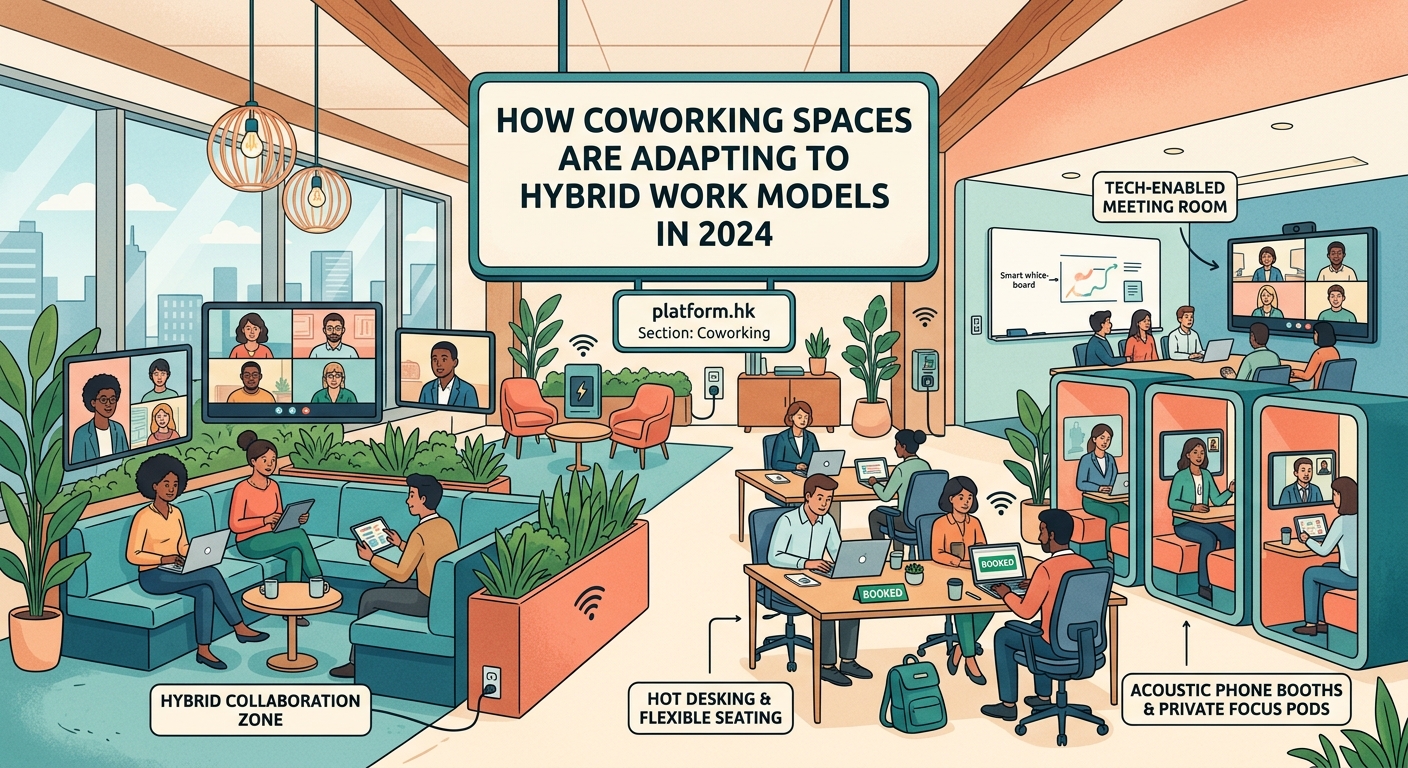
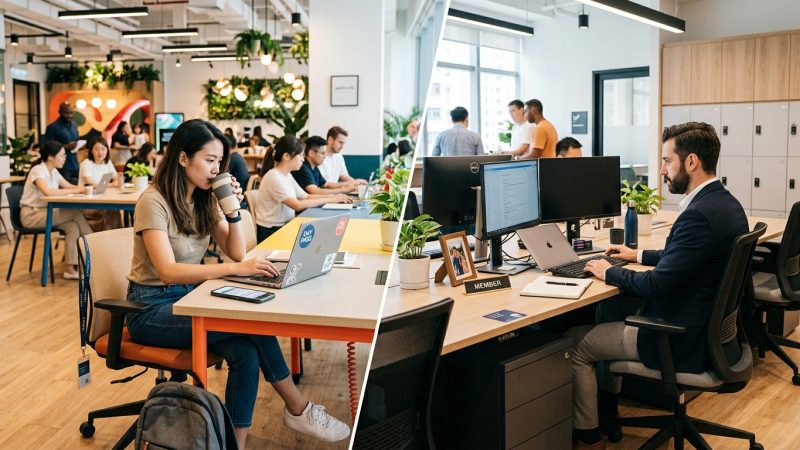
The biggest shift happened in pricing and access models. Traditional coworking memberships came in two flavors: full-time dedicated desks or occasional drop-in access. Neither option worked well for hybrid teams that needed consistent access for 10 employees on Tuesday and Thursday, but only 3 on other days.
Smart operators introduced new membership tiers:
- Team flex passes that allow a set number of employees to use the space on any given day without assigning permanent desks
- Hybrid packages that combine guaranteed desk space for core team members with day pass credits for rotating staff
- Enterprise agreements that provide access across multiple locations, letting employees choose the most convenient space based on their schedule
These changes solved a real problem. A marketing agency with 15 employees might need space for everyone during campaign launches but only 5 desks during planning phases. Instead of paying for 15 permanent desks or scrambling to book day passes, they can now purchase a package that matches their actual usage patterns.
The financial impact matters too. Companies typically save 30-40% compared to traditional office leases when they match workspace costs to actual attendance through flexible coworking memberships.
Technology Integration That Makes Hybrid Work Smoother
Coworking spaces invested heavily in booking systems and space management platforms. These tools became essential for hybrid teams trying to coordinate who works where and when.
Modern coworking spaces now offer:
- Mobile apps that show real-time desk availability and let employees reserve spots before arriving
- Integration with corporate calendars so teams can see which colleagues will be in the space on any given day
- Meeting room booking systems that sync with Zoom, Microsoft Teams, and other collaboration tools
- Visitor management that streamlines guest access for client meetings
The technology layer matters more than most people realize. When an HR manager can see occupancy data showing which days their team actually uses the space, they can make informed decisions about membership levels and budget allocation.
Some spaces took this further by offering API access that lets companies build custom integrations with their internal systems. A software company might connect their project management tool to the coworking space booking system, automatically suggesting in-office days when the whole product team needs to collaborate.
Design Changes That Support Collaboration and Focus
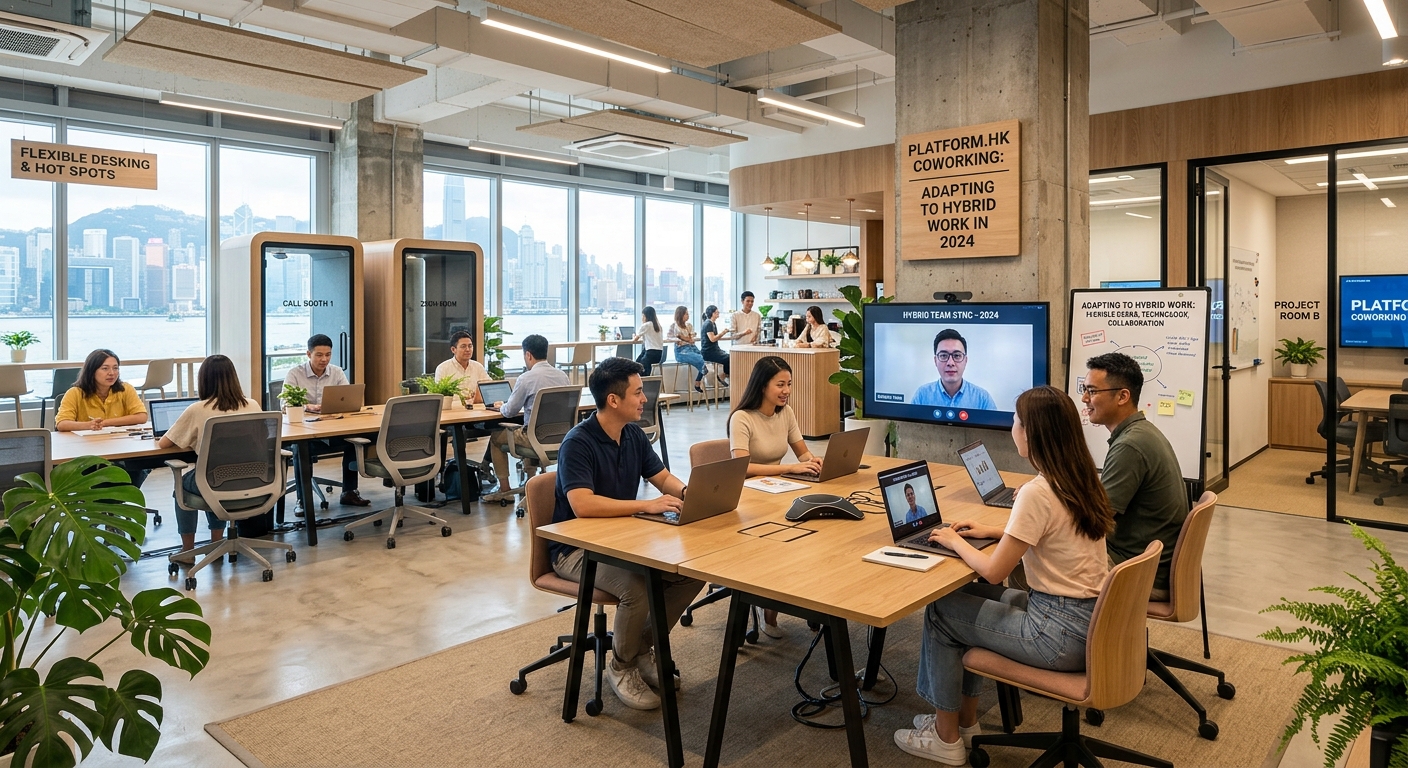
Walk into a coworking space designed in 2019 and compare it to one renovated for hybrid work. The difference is obvious.
Older spaces maximized desk count. Every square foot was optimized for individual workstations. The assumption was that people came to the space primarily for a place to sit and work on their laptop.
Hybrid workers have different needs. They can work on their laptop from home. They come to a coworking space for things they can’t get remotely: face-to-face collaboration, focused work away from home distractions, and spontaneous interactions with colleagues.
Modern coworking spaces now dedicate more square footage to:
- Collaboration zones with whiteboards, large displays, and comfortable seating for team discussions
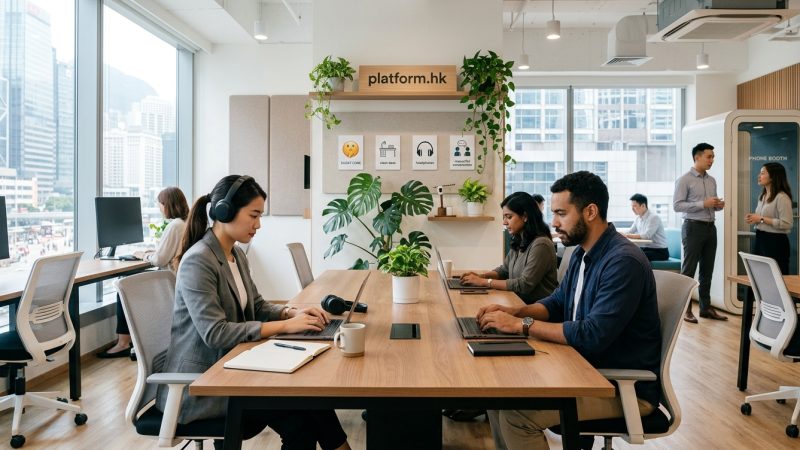
- Phone booths and privacy pods for video calls that don’t disturb neighbors
- Social areas designed to encourage informal networking and team bonding
- Quiet zones with strict noise policies for deep focus work
The ratio shifted dramatically. Spaces that once allocated 80% of their floor plan to desks now aim for 60% desks and 40% collaborative and social areas.
“The office is no longer about providing a desk and a computer. It’s about creating spaces where people want to be because they can’t replicate that experience at home. Coworking spaces figured this out faster than traditional landlords.” – Sarah Chen, Workplace Strategy Consultant
The Community Factor That Keeps Hybrid Teams Connected
One unexpected challenge of hybrid work is team cohesion. When half the team works from home on any given day, building company culture becomes harder. Random hallway conversations disappear. New employees struggle to feel connected.
Coworking spaces adapted by becoming community builders rather than just space providers. They started hosting events specifically designed for hybrid teams:
- Monthly networking mixers that give employees from different companies a chance to connect
- Skill-sharing workshops that provide professional development opportunities
- Team-building activities that companies can book for days when everyone comes to the office
- Slack channels and digital communities that keep members connected even on remote days
This community aspect provides value that traditional offices and home setups can’t match. An employee working from a coworking space on Tuesday might grab coffee with someone from another company and end up forming a valuable professional connection. That same interaction would never happen in an isolated corporate office or home office.
Practical Steps for Choosing a Coworking Space for Your Hybrid Team
If you’re evaluating coworking spaces for a hybrid workforce, here’s what actually matters:
-
Calculate your true occupancy needs by tracking how many employees typically work in-office each day over a month. Don’t guess. Use actual data from badge swipes, calendar analysis, or simple surveys.
-
Test the booking system before committing. Sign up for a day pass and try to reserve a desk, book a meeting room, and invite a guest. If the process feels clunky during a trial, it will frustrate your team daily.
-
Visit on the days your team would actually use the space. A coworking space might feel perfect on a quiet Wednesday morning but be overcrowded and noisy on Tuesday afternoon when your team needs to collaborate.
-
Check the cancellation and scaling terms carefully. The whole point of coworking for hybrid teams is flexibility. Make sure the contract allows you to adjust your membership level quarterly or even monthly as your needs change.
-
Evaluate the commute time for your entire team, not just headquarters location. A space that’s convenient for your CEO might add an hour to the commute for three junior employees who live across town.
Common Mistakes Companies Make With Hybrid Coworking
Even with flexible options available, companies still make predictable errors when implementing coworking solutions for hybrid teams.
| Mistake | Why It Happens | Better Approach |
|---|---|---|
| Buying too many permanent desks | Overestimating how often employees will come to the office | Start with flex passes and add dedicated desks only after tracking actual usage for 2-3 months |
| Choosing the cheapest option | Focusing only on cost per desk without considering amenities | Calculate total value including meeting rooms, printing, coffee, and community events that replace separate vendor costs |
| Ignoring location diversity | Selecting one central location for convenience | Consider multiple locations if your team lives in different neighborhoods, reducing commute friction |
| Failing to set clear expectations | Assuming employees will figure out when to use the space | Create team norms around collaboration days when everyone should be in-office together |
| Not tracking utilization | Paying for access without measuring if the team actually uses it | Review monthly occupancy reports and adjust membership levels based on real data |
The location diversity point deserves extra attention. A company with employees spread across a metro area might get better results from memberships at three different coworking spaces rather than one central location. The total cost might be similar, but employee satisfaction improves dramatically when commute times drop from 45 minutes to 15 minutes.
How Coworking Economics Work for Hybrid Models
Understanding the financial structure helps you negotiate better deals and make smarter decisions.
Traditional office leases lock you into paying for square footage whether anyone uses it or not. A typical lease commits you to 3-5 years at a fixed rate. If your team shrinks or grows, you’re stuck with the space you signed for.
Coworking spaces for hybrid work typically offer:
- Month-to-month agreements with 30-day cancellation
- Tiered pricing that scales with actual usage
- All-inclusive rates covering utilities, internet, cleaning, and amenities
- Access to meeting rooms and event spaces included in membership fees
The math works out favorably for most hybrid teams. A company with 20 employees might pay $15,000 monthly for a traditional office lease plus another $3,000 for utilities, internet, and maintenance. That same company could get flexible coworking access for 20 people at roughly $10,000 monthly with better amenities and zero maintenance headaches.
The savings come from shared resources. When you lease traditional office space, you pay for conference rooms that sit empty 80% of the time. In a coworking space, those rooms are shared across dozens of companies, making the economics work better for everyone.
What 2024 Data Reveals About Hybrid Coworking Adoption
Recent industry surveys show clear trends in how companies are using coworking spaces for hybrid work.
About 67% of companies with hybrid policies now use coworking spaces in some capacity. That’s up from 41% in 2022. The growth is concentrated in companies with 10-100 employees, where the flexibility matters most.
Average usage patterns show employees visiting coworking spaces 2.4 days per week. Tuesday, Wednesday, and Thursday are the most popular days, with Monday and Friday seeing significantly lower traffic. Smart coworking operators now offer discounted rates for Monday and Friday access to smooth out occupancy curves.
The typical hybrid worker spends about 60% of their coworking time in collaboration activities and 40% in focused individual work. This ratio flips for employees working from home, where 75% of time goes to individual tasks and 25% to video calls and collaboration.
Companies report satisfaction scores of 4.2 out of 5 for coworking solutions compared to 3.6 for traditional office spaces. The higher satisfaction comes primarily from commute flexibility and better amenities.
Regional Differences in Hybrid Coworking Adoption
Not every market embraced hybrid coworking at the same pace. Tech hubs like San Francisco, Austin, and Seattle saw the fastest adoption, with coworking occupancy rates recovering to 85-90% of pre-pandemic levels by mid-2023.
Secondary markets took longer but are now catching up. Cities like Nashville, Boise, and Raleigh saw coworking space openings increase 40% in 2023 as companies relocated employees to lower-cost areas while maintaining flexible workspace access.
International markets show interesting variations. European coworking spaces tend to emphasize community and sustainability more than North American counterparts. Asian markets, particularly Singapore and Tokyo, focus heavily on technology integration and premium amenities.
These regional differences matter if you’re managing a distributed team. A coworking membership that works well for your San Francisco employees might not translate directly to your team in Berlin or Singapore. Local preferences around workspace design, community events, and even coffee quality vary significantly.
The Role of Amenities in Hybrid Coworking Success
When employees choose whether to work from home or commute to a coworking space, amenities often tip the decision.
Basic amenities that every hybrid-focused coworking space should offer:
- Reliable high-speed internet with backup connections
- Professional-grade coffee and basic refreshments
- Printing and scanning equipment
- Secure storage for employees who don’t have assigned desks
- Comfortable ergonomic seating
- Climate control that actually works
Premium amenities that differentiate top-tier spaces:
- On-site cafe or restaurant
- Fitness facilities or gym partnerships
- Podcast recording studios
- Event spaces for team gatherings
- Outdoor work areas
- Shower facilities for bike commuters
The amenity calculation is personal. A parent with young kids might value a coworking space with childcare services above everything else. A cyclist prioritizes bike storage and showers. A sales team needs impressive meeting rooms for client presentations.
Ask your team which amenities would actually influence their decision to come to the office. You might be surprised that the expensive espresso machine matters less than adequate phone booths for private calls.
How Coworking Spaces Handle Security for Corporate Clients
Security concerns initially held back some companies from adopting coworking for hybrid teams. Sharing space with other companies raised questions about data protection, physical security, and compliance requirements.
Modern coworking operators addressed these concerns head-on:
- Dedicated secure areas within shared spaces for companies handling sensitive information
- Private networks separated from general coworking WiFi
- Access control systems that restrict entry to authorized members only
- Security cameras and on-site staff during business hours
- Compliance certifications for industries like healthcare and finance that have strict requirements
Some spaces now offer private suites within coworking facilities. These give companies a dedicated area with lockable doors while still providing access to shared amenities and community events. It’s a middle ground between fully private offices and open coworking floors.
For most companies, standard coworking security measures are adequate. If your team works with highly sensitive data, look for spaces that specifically market to corporate clients and can provide documentation of their security protocols.
Making the Transition Smooth for Your Team
Switching from traditional offices or fully remote work to a hybrid coworking model requires change management. Even good changes create friction if not handled well.
Start with a pilot program. Select 5-10 employees who are enthusiastic about trying coworking and give them access for two months. Gather detailed feedback about what works and what doesn’t. Use that information to refine your approach before rolling out to the entire team.
Create clear guidelines about when and how to use the space. Some teams designate specific days as “collaboration days” when everyone should be in the coworking space together. Other teams leave it flexible but encourage people to update their calendars so colleagues know who will be around.
Provide an onboarding session that covers practical details: how to book desks, where to find supplies, how to access meeting rooms, parking or transit options, and what to do if something breaks. These mundane details become friction points if people have to figure them out on their own.
Budget for a transition period where you might overlap costs. You might pay for both your old office and new coworking memberships for a month or two while you work out the kinks. That’s normal and usually worth it to avoid rushing the change.
Future Trends Shaping Hybrid Coworking
Looking ahead, several trends will likely influence how coworking spaces continue adapting to hybrid work.
Artificial intelligence is starting to play a role in space optimization. Some operators now use predictive algorithms to forecast occupancy and suggest optimal membership levels for corporate clients. These systems analyze historical usage patterns, calendar data, and even weather forecasts to predict how many employees will show up on any given day.
Sustainability is becoming a bigger factor in space selection. Companies with environmental commitments are evaluating coworking spaces based on energy efficiency, waste reduction programs, and green building certifications. Spaces that can document their sustainability practices have a competitive advantage.
Wellness features are expanding beyond basic ergonomics. Some spaces now offer meditation rooms, standing desk options, air quality monitoring, and even partnerships with mental health services. The focus is shifting from just providing a place to work to supporting overall employee wellbeing.
The line between coworking and traditional office space is blurring. Some landlords are converting traditional office buildings into flexible spaces that operate more like coworking environments. Meanwhile, successful coworking operators are offering longer-term commitments and more customization options that resemble traditional leases.
Why This Matters for Your Hybrid Strategy
The coworking industry adapted to hybrid work faster than most expected. What started as a temporary solution during pandemic uncertainty has become a permanent fixture in how companies think about workspace.
For HR managers and business owners, this creates real opportunities. You’re no longer stuck choosing between expensive long-term office leases and fully remote work with no physical presence. Coworking spaces designed for hybrid models give you a third option that combines flexibility, cost efficiency, and community.
The companies seeing the best results treat coworking as a strategic advantage rather than just a cost-saving measure. They use the flexibility to test new markets, support distributed teams, and create work environments that actually match how their employees want to work.
Start by evaluating your current workspace costs and usage patterns. If you’re paying for space that sits empty more than two days a week, or if you’re struggling to accommodate a hybrid team in a traditional office, coworking solutions designed for hybrid work deserve serious consideration. The options available in 2024 are more sophisticated, secure, and cost-effective than ever before.