10 Data-Driven Strategies to Reduce Churn in Your Coworking Space

Member retention can make or break your coworking business. When someone cancels their membership, you lose more than monthly revenue. You lose the community energy they brought, the referrals they might have made, and the months of relationship building you invested. The good news? Most churn is preventable when you know what to look for and how to act on it.
Reducing churn in coworking spaces requires tracking the right metrics, identifying at-risk members early, and taking proactive steps to address their needs. Successful operators combine data analysis with personal touchpoints, flexible offerings, and community building to keep members engaged. Small changes in onboarding, communication, and space management can dramatically improve retention rates and create sustainable growth for your business.
Understanding Why Members Leave
Before you can reduce churn in your coworking space, you need to understand why people cancel in the first place.
The most common reasons fall into a few clear categories. Financial constraints top the list, especially during economic uncertainty. Members also leave when their work situation changes, like returning to a traditional office or relocating to another city. But the preventable reasons matter most: poor community fit, lack of engagement, or feeling like the space doesn’t meet their needs.
Exit interviews reveal patterns you can’t see from your desk. When members give notice, schedule a brief conversation or send a structured survey. Ask specific questions about what worked, what didn’t, and what might have kept them around. Track these responses in a simple spreadsheet with categories.
You’ll start seeing trends after 10 to 15 exits. Maybe multiple people mention slow internet in the afternoon. Or several note they never really connected with other members. These patterns become your action plan.
Track the Metrics That Actually Matter

Raw numbers tell the story your gut feelings can’t.
Start with your monthly churn rate. Calculate it by dividing the number of members who left by your total members at the start of the month. A healthy coworking space typically sees 5 to 10 percent monthly churn. Anything above 12 percent signals a problem that needs immediate attention.
But churn rate alone doesn’t give you the full picture. Track these additional metrics:
- Member lifetime value (how much revenue each member generates before leaving)
- Time to first cancellation (how long new members stay before churning)
- Engagement scores (event attendance, community interaction, amenity usage)
- Net Promoter Score (how likely members are to recommend your space)
- Desk utilization rates (which areas get used and which sit empty)
Create a simple dashboard that updates monthly. Google Sheets works fine. You don’t need fancy software to spot concerning trends. When you see engagement dropping for specific members, that’s your early warning system.
Build a Stronger Onboarding Process
The first 30 days determine whether someone stays or goes.
Members who don’t connect with your community during their first month are three times more likely to cancel within 90 days. Your onboarding sets the foundation for everything that follows.
Here’s a framework that works:
- Send a welcome email before their first day with practical details (WiFi password, parking info, door codes).
- Schedule a personal tour on day one, introducing them to at least three other members who work in similar fields.
- Check in at the one-week mark to address any friction points or questions.
- Invite them to a community event or lunch during week two.
- Conduct a 30-day review to gather feedback and ensure they’re getting value.
Assign each new member a community buddy for their first month. This person answers questions, makes introductions, and helps them feel less like an outsider. The buddy system costs nothing but creates accountability for integration.
Identify At-Risk Members Before They Cancel
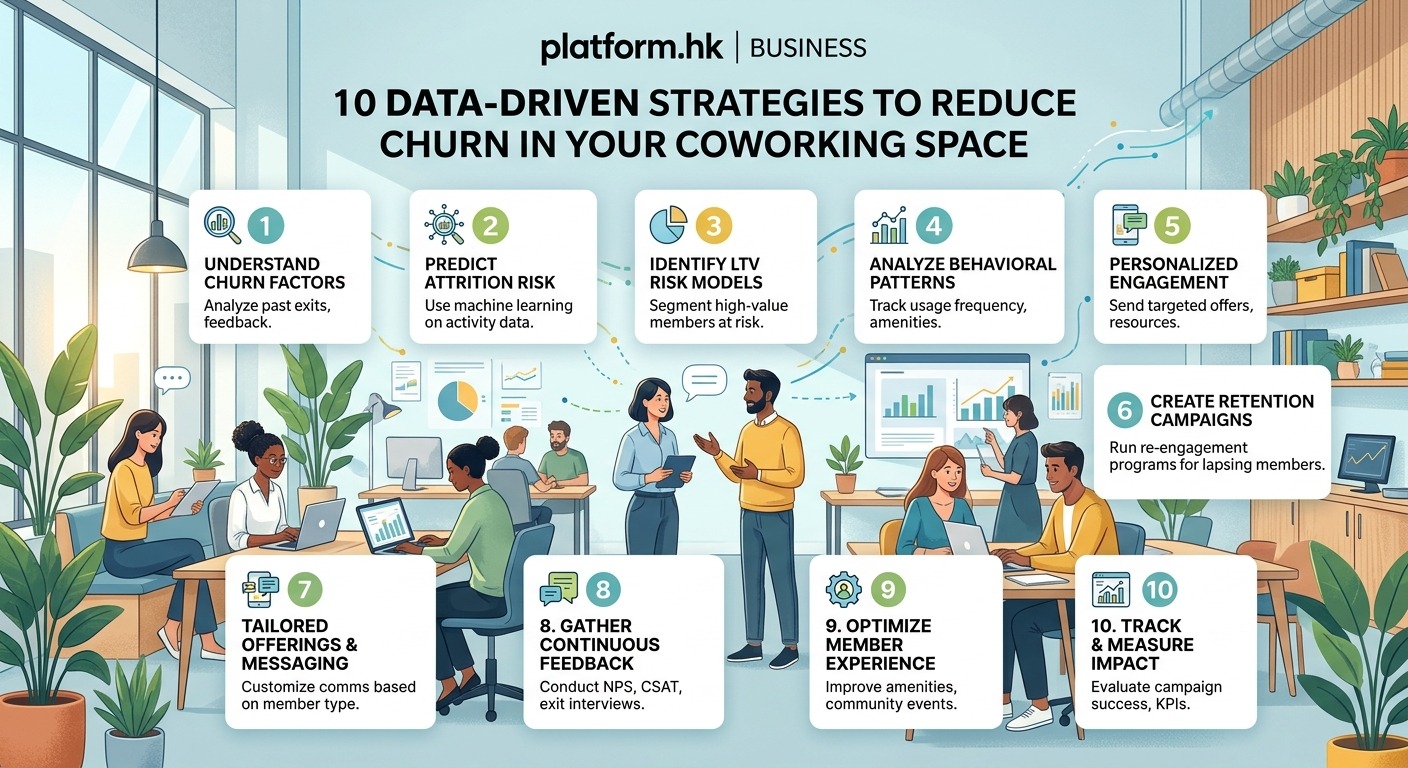
Cancellations rarely come out of nowhere. Warning signs appear weeks or months earlier.
Watch for these red flags:
- Decreased check-ins or space usage compared to their first three months
- No event attendance in the past 60 days
- Overdue payments or payment issues
- Complaints or support tickets that went unresolved
- Lack of interaction with other members
Set up automated alerts when members cross these thresholds. Most coworking management software can trigger notifications based on behavior changes. When someone who used to come four days a week drops to one, reach out within 48 hours.
The conversation matters more than the script. Ask open-ended questions about how things are going. Listen for dissatisfaction with specific aspects of the space. Sometimes a simple fix, like moving them to a quieter area or adjusting their plan, prevents a cancellation.
“We reduced churn by 40 percent after implementing a simple traffic light system. Green members are engaged and happy. Yellow members show warning signs. Red members are at high risk. Every Monday, our team reviews the yellow and red members and assigns personal outreach tasks. It takes two hours a week but saves us thousands in lost revenue.” — Sarah Chen, Operator of a 150-desk space in Austin
Create Flexible Membership Options
Rigid plans force people out when their needs change.
The freelancer who needed a dedicated desk might shift to part-time work. The startup that took a private office might downsize after losing funding. If your only option is “keep paying the same amount or leave,” you’ll lose members who would have stayed at a different tier.
Offer clear pathways between membership levels. Make it easy to upgrade or downgrade without penalties or complicated processes. Some spaces even allow members to “pause” their membership for one to three months during slow periods or extended travel.
Consider these flexible options:
- Day passes for former members who left but occasionally need space
- Seasonal memberships for consultants with variable workloads
- Hybrid plans that combine some dedicated time with pay-as-you-go days
- Team plans that flex up or down as companies hire or contract
The goal is keeping people in your ecosystem even when their circumstances change. A member who downgrades to a basic plan still refers others, attends events, and might upgrade again later. A member who cancels completely is gone.
Invest in Community Building
People stay for the connections, not just the desk.
Coworking spaces compete with home offices and coffee shops on price and convenience. You win on community. Members who have genuine friendships or professional relationships in your space are significantly less likely to leave.
But community doesn’t happen automatically. It requires intentional programming and facilitation.
Host regular events that encourage interaction:
- Weekly community lunches where everyone eats together
- Monthly skill shares where members teach each other
- Quarterly social events outside the space
- Industry-specific meetups that attract your target members
- Collaboration sessions where people work together on projects
Create digital spaces too. A Slack channel or WhatsApp group keeps members connected even when they’re working remotely. Share member wins, make introductions, and facilitate collaboration online.
The most effective community managers spend 30 percent of their time simply talking to members. Not about payments or logistics, but about their work, their challenges, and their goals. These conversations build loyalty that survives price increases and competitive offers.
Address Space Quality Issues Proactively
Physical environment problems drive silent churn.
Members often won’t complain about minor annoyances. They’ll just decide not to renew. Temperature issues, noise problems, unreliable internet, uncomfortable furniture, or cleanliness concerns accumulate until someone decides it’s not worth the money.
Conduct monthly walkthroughs with fresh eyes. Better yet, ask a new member to point out everything that seems off. You’ve adapted to the flickering light in the corner or the door that sticks. They notice it immediately.
Create a simple feedback loop. Put a suggestion box (physical or digital) in a visible location. Review and respond to every suggestion within a week. You don’t need to implement everything, but acknowledging concerns shows you’re listening.
| Issue Category | Warning Signs | Retention Impact |
|---|---|---|
| Internet connectivity | Multiple complaints, visible frustration, members using hotspots | High |
| Noise levels | Requests to move desks, members wearing headphones constantly, empty quiet areas | Medium |
| Cleanliness | Trash overflow, dirty bathrooms, food waste in common areas | High |
| Temperature | Members in coats indoors, complaints about AC, empty zones | Low |
| Furniture comfort | Members bringing own chairs, frequent position changes, requests for alternatives | Medium |
Fix high-impact issues immediately. Medium and low-impact items can wait, but put them on a roadmap and communicate your plans.
Use Data to Personalize Member Experience
Generic communication gets ignored. Personal outreach gets responses.
Your management software contains valuable information about each member’s behavior, preferences, and usage patterns. Use it to tailor your approach.
Send birthday messages with a small gift or discount. Recognize work anniversaries at your space. Notice when someone hits a milestone, like 100 check-ins or their first year as a member.
Segment your communications based on member type. Your messaging to freelancers should differ from what you send to small teams. Remote workers have different needs than local entrepreneurs. New members need different information than veterans.
Track which amenities each member uses most. If someone always books the podcast room, let them know when you upgrade the equipment. If another member never misses yoga class, give them early access to next month’s schedule.
This level of personalization is impossible without data. But when done right, it makes members feel seen and valued as individuals rather than account numbers.
Handle Cancellation Requests Strategically
How you respond to cancellation notices affects whether someone actually leaves.
First, make cancellation easy but not invisible. Don’t hide the process or make people jump through hoops. That creates resentment. But do require a conversation or brief form explaining why they’re leaving.
When someone submits notice, respond within 24 hours. Thank them for their time as a member. Ask if there’s anything that would change their decision. Listen without being pushy.
Offer alternatives before accepting the cancellation:
- A discounted rate for the next three months
- A downgrade to a less expensive plan
- A one-month pause to see if they miss the space
- A referral bonus if they bring in a new member to replace their spot
About 20 to 30 percent of cancellation requests can be saved with the right offer at the right time. The key is understanding the real reason they’re leaving and addressing it directly.
For members who do leave, stay in touch. Send a quarterly newsletter to former members. Invite them to special events. Make it easy to come back without awkwardness or penalties. Boomerang members (those who leave and return) often become your most loyal advocates.
Compare Prevention Strategies
Different retention tactics work better for different churn causes. Match your efforts to your specific problems.
| Churn Cause | Most Effective Strategy | Implementation Difficulty | Typical Results |
|---|---|---|---|
| Poor community fit | Improved onboarding and buddy system | Medium | 30-40% reduction |
| Price sensitivity | Flexible membership tiers | Low | 20-30% reduction |
| Lack of engagement | Regular events and personal outreach | High | 40-50% reduction |
| Space quality issues | Facility improvements and maintenance | Medium-High | 25-35% reduction |
| Changed work situation | Pause options and easy downgrades | Low | 15-25% retention of at-risk |
| Better competing offer | Value-add services and community strength | High | 10-20% retention of at-risk |
Focus your energy where you’ll see the biggest impact. If your exit interviews reveal that 60 percent of cancellations stem from lack of connection, pour resources into community building before renovating your lounge.
Measure Your Progress Over Time
Retention improvements take months to show up in your numbers.
Set a baseline by calculating your current churn rate and average member lifetime. Then implement changes and track the same metrics monthly. Look for trends over quarters rather than month-to-month fluctuations.
Create a simple retention dashboard that shows:
- Monthly churn rate
- Average member tenure (in months)
- Percentage of members who stay past 90 days
- Percentage of members who renew after their first term
- Revenue retention rate (accounts for upgrades and downgrades)
Celebrate small wins with your team. When you see churn drop from 12 percent to 10 percent, that might not sound dramatic. But over a year, it means keeping 24 more members in a 100-person space. That’s substantial revenue and community impact.
Test one major change at a time so you can attribute results. If you overhaul onboarding, improve your space, and launch new events simultaneously, you won’t know which intervention worked.
Make Retention Everyone’s Job
Reducing churn can’t be one person’s responsibility.
Your front desk staff interact with members daily. They notice mood changes, hear complaints, and see who’s using the space. Train them to flag concerns and make members feel welcomed every single visit.
Your cleaning crew maintains the environment that keeps people comfortable. Empower them to report maintenance issues immediately rather than waiting for someone to complain.
Your community manager builds relationships, but every team member should know member names and basic details about their work. Small gestures, like remembering someone’s coffee order or asking about a project they mentioned last week, build the cumulative experience that prevents churn.
Hold monthly retention meetings where the entire team reviews at-risk members and assigns action items. Make retention metrics visible to everyone. When the whole team understands how churn affects the business and their jobs, they become invested in preventing it.
Keeping Members Means Building Something Bigger
Every member who stays another month strengthens your entire community. They make introductions, attend events, refer friends, and contribute to the energy that attracted them in the first place.
Reducing churn in your coworking space isn’t about manipulating people into staying longer than they should. It’s about creating an environment so valuable that leaving feels like a genuine loss. When you track the right data, act on early warning signs, and build authentic relationships, retention becomes a natural outcome rather than a constant struggle.
Start with one strategy from this guide. Implement it fully over the next 30 days. Measure the results. Then add another. Sustainable retention improvements come from consistent effort over time, not dramatic overhauls that exhaust your team and budget.
Your members chose your space for a reason. Your job is making sure that reason gets stronger every month they stay.